7749 OLD GEORGETOWN ROAD
PROJECT DETAILS
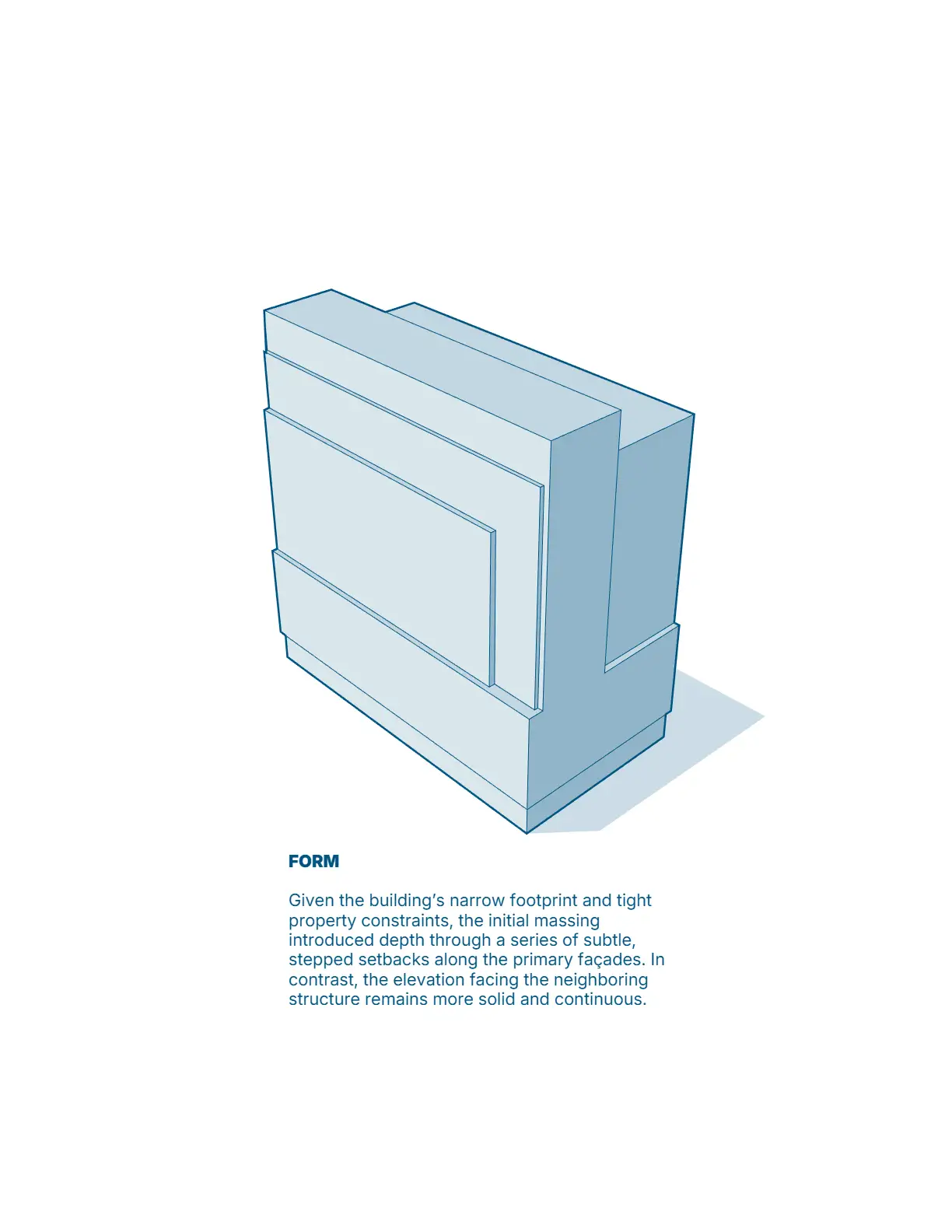
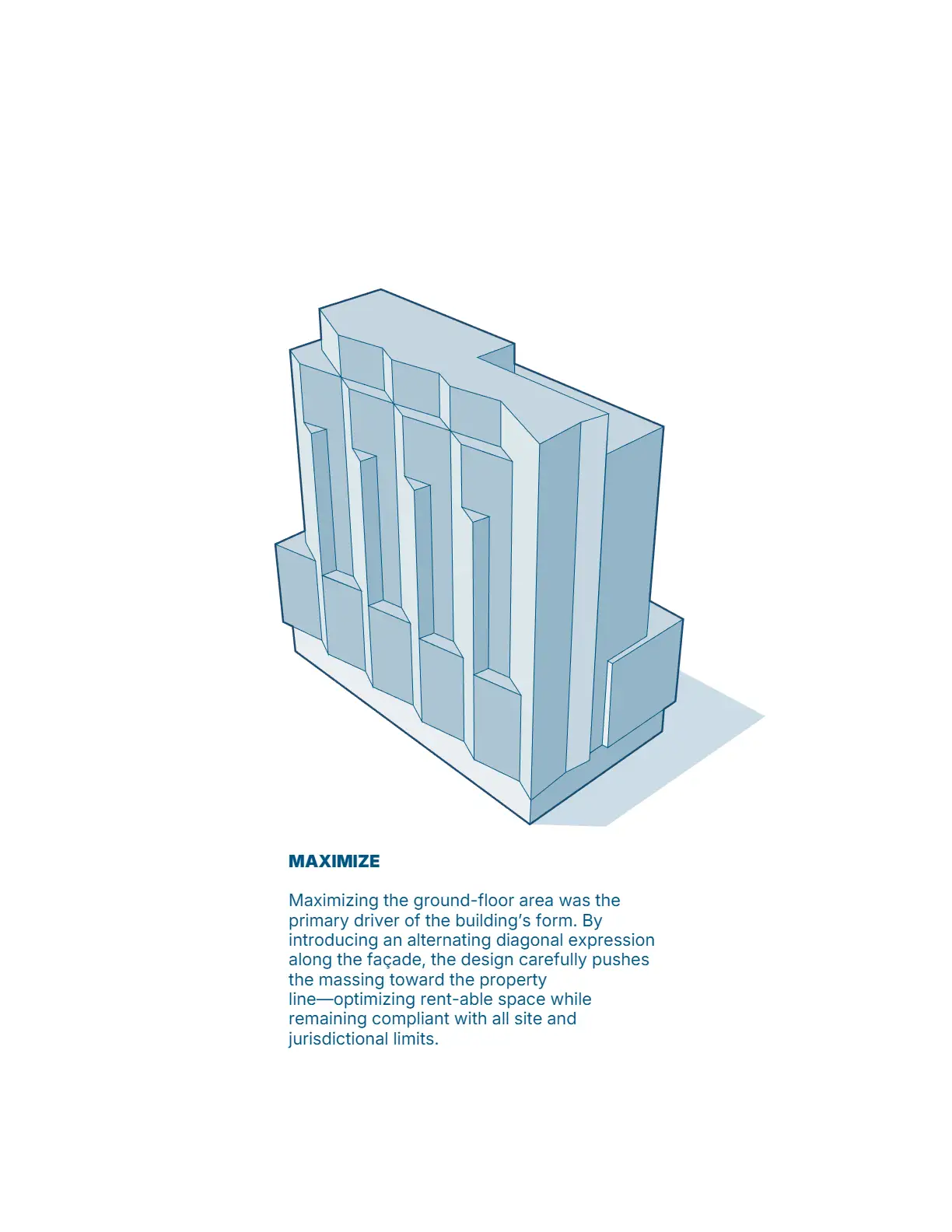
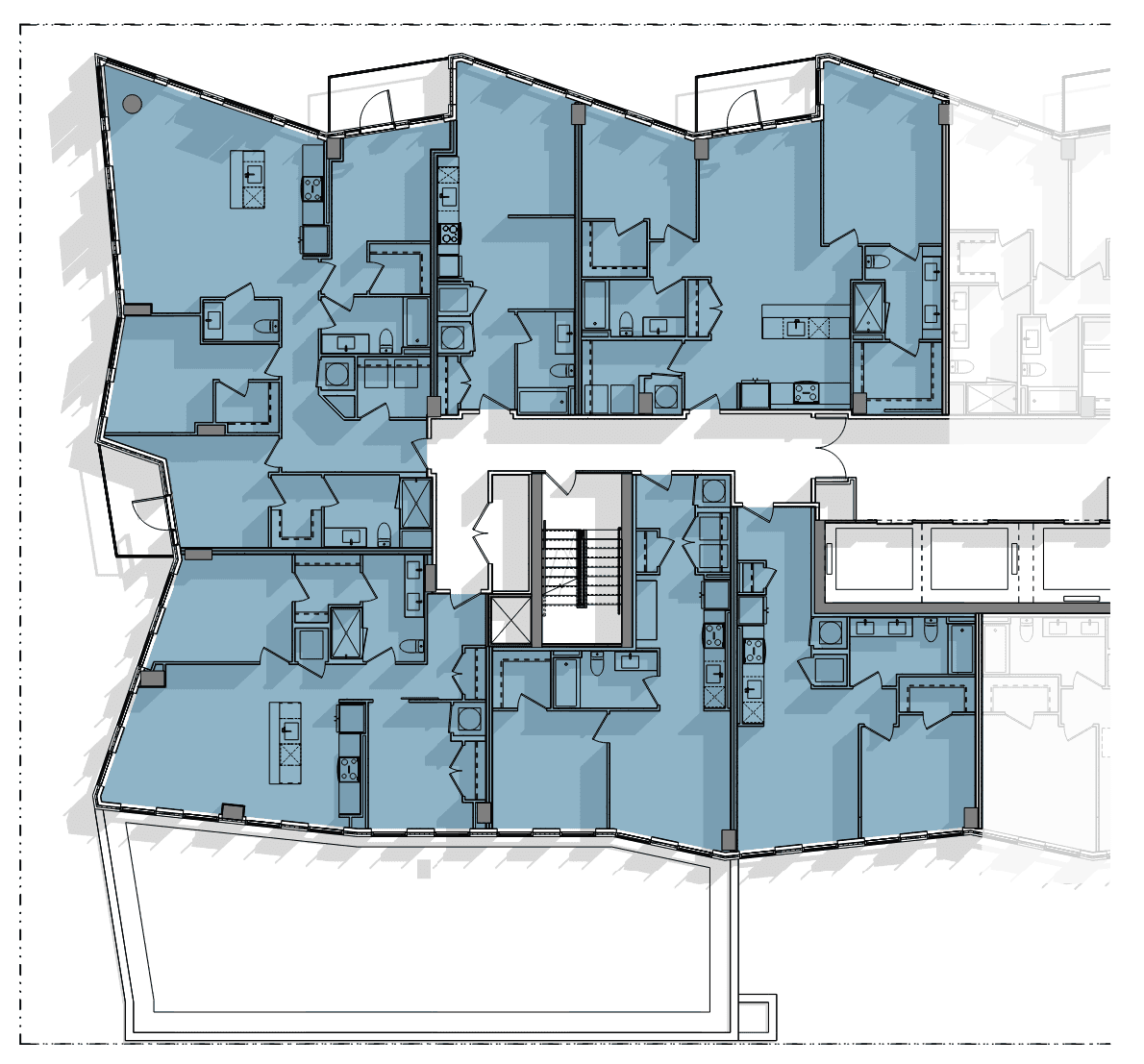
This project’s exceptionally narrow footprint posed significant design constraints. To meet the client’s goal of maximizing square footage, the design team employed an inventive façade strategy using alternating diagonal planes that expanded the usable area while remaining fully code-compliant.
Within this framework, I played a key role in developing the building’s column grid and structural layout. The shifting façades, stepped setbacks, and internal program requirements created a complex series of constraints, which I approached through multiple iterative studies to identify the most efficient and buildable solutions.
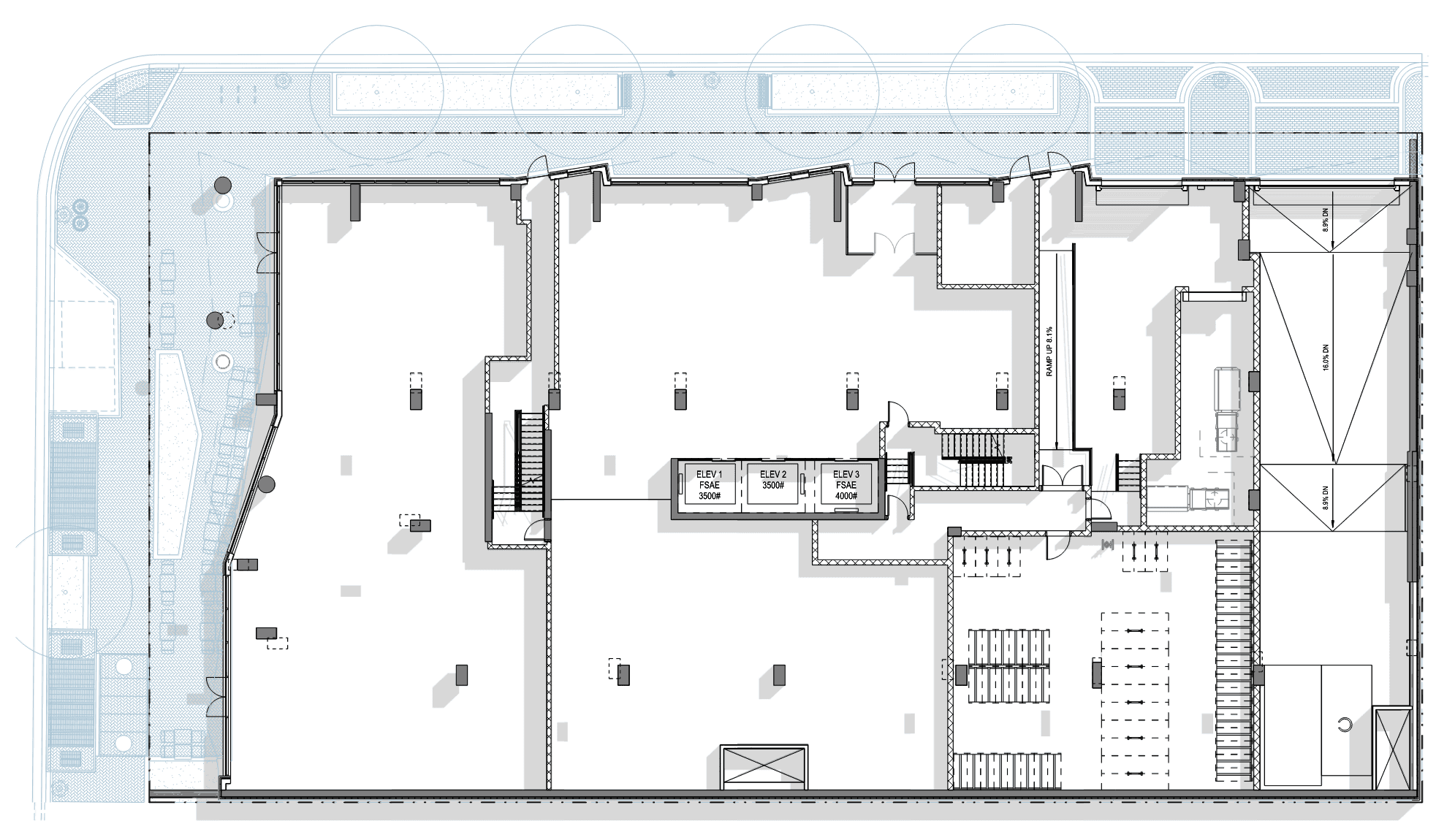
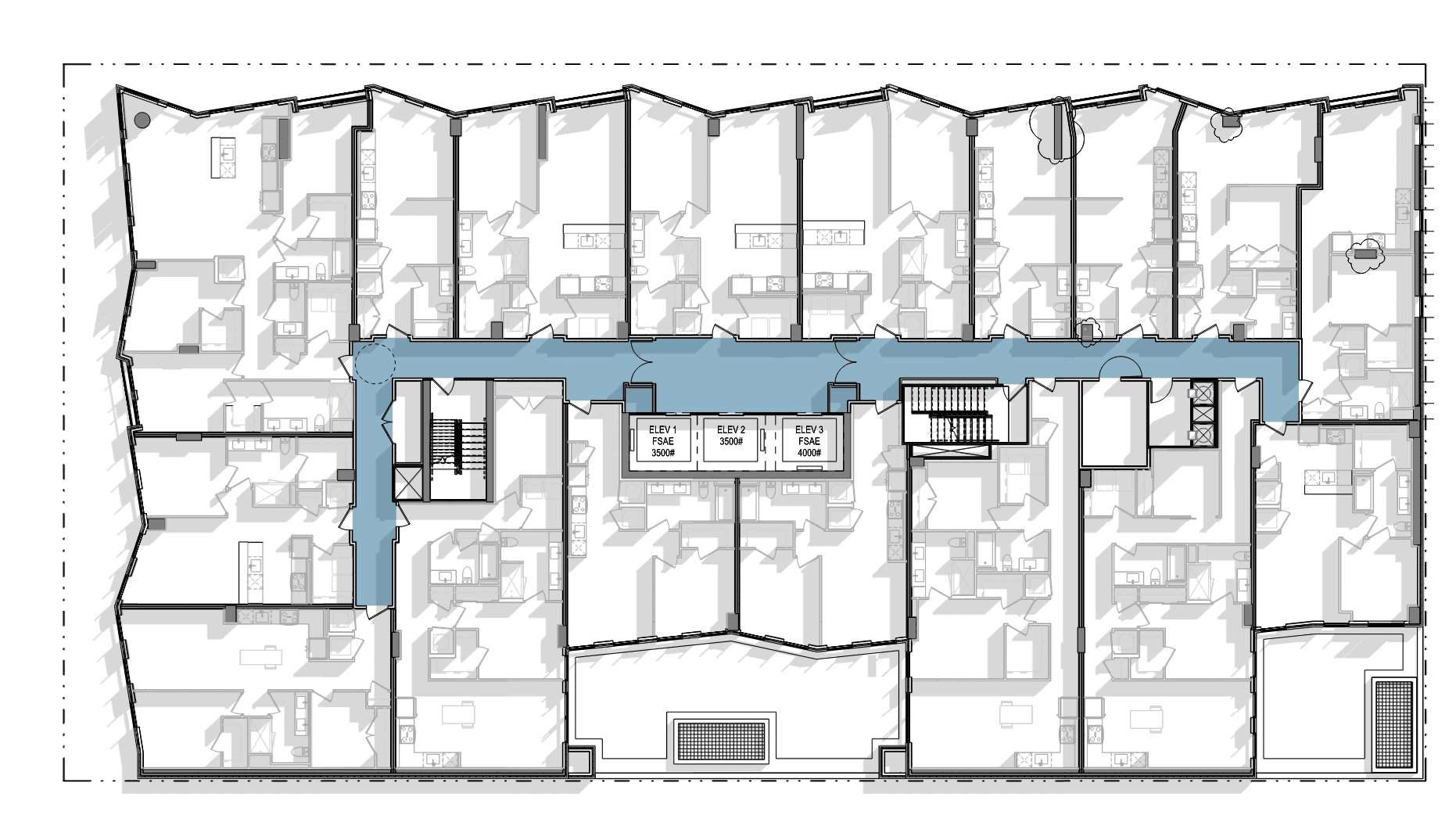
In addition, I assisted with unit layout adjustments and first-floor planning to protect structural integrity and maintain code-compliant egress paths. I also conducted stair-offset and garage-layout studies to optimize parking capacity. Overall, my involvement centered on resolving the structural and programmatic “puzzles” that allowed this design to function successfully within its tight parameters.
AREA | 228,373 ft2 |
CLIENT | Stonebridge |
STATUS | Design Development |
TOOLS | Revit | BIM | Bluebeam |
ARCHITECT | SK+I Architecture |

STUDIES & EXERCISES
COLUMN GRID STUDY
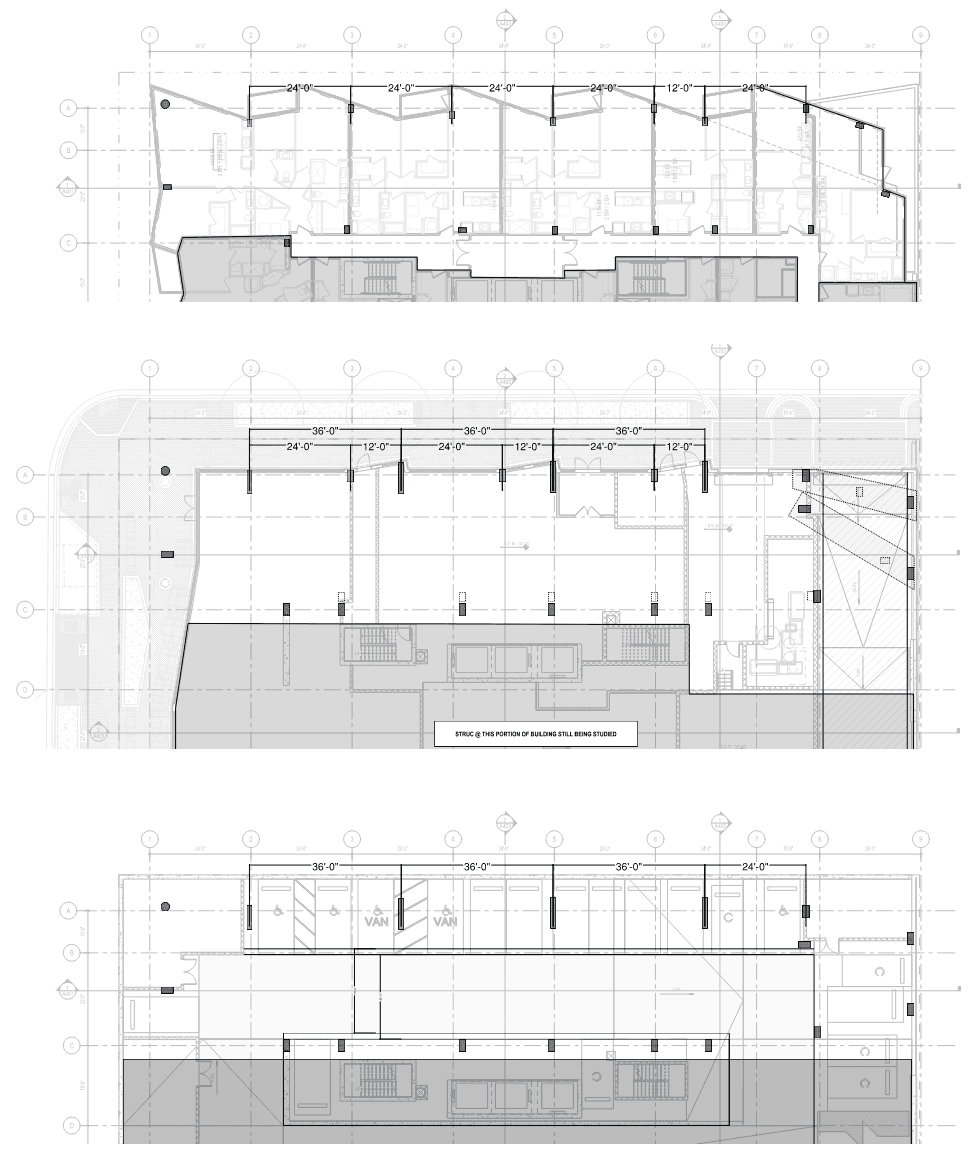
Due to the façade’s unique, shifting geometry at each level, establishing a consistent column grid required a deeper structural study than on typical projects.
Multiple options were tested to evaluate whether a standard 24-foot grid could adequately support the diagonal façade conditions, or if larger columns that reduced in size at upper levels would be more effective. The final solution utilized a hybrid approach, minimizing column impacts within residential units while maintaining structural efficiency.
STAIR RUN EXERCISE
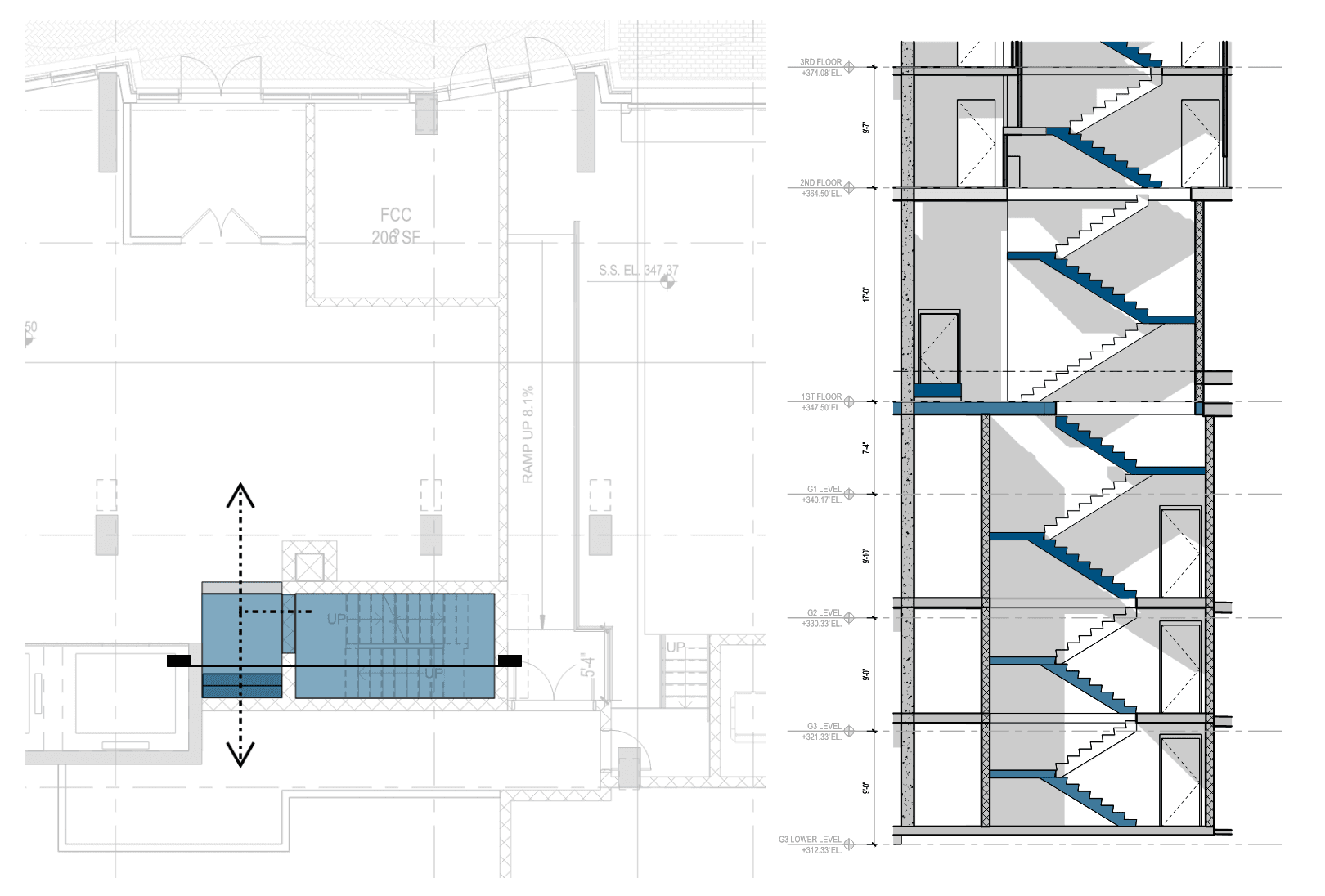
This stair location presented an early design challenge due to its tight placement between the elevator core and the loading dock, leaving minimal flexibility to accommodate the required three stair runs. In addition, Montgomery County code requirements for stair separation distances required careful coordination to maximize door spacing between egress paths.
The study also accounted for split first-floor elevations, ensuring the stair landed correctly between back-of-house and amenity levels while maintaining code compliance throughout.
1ST FLOOR PROGRAM
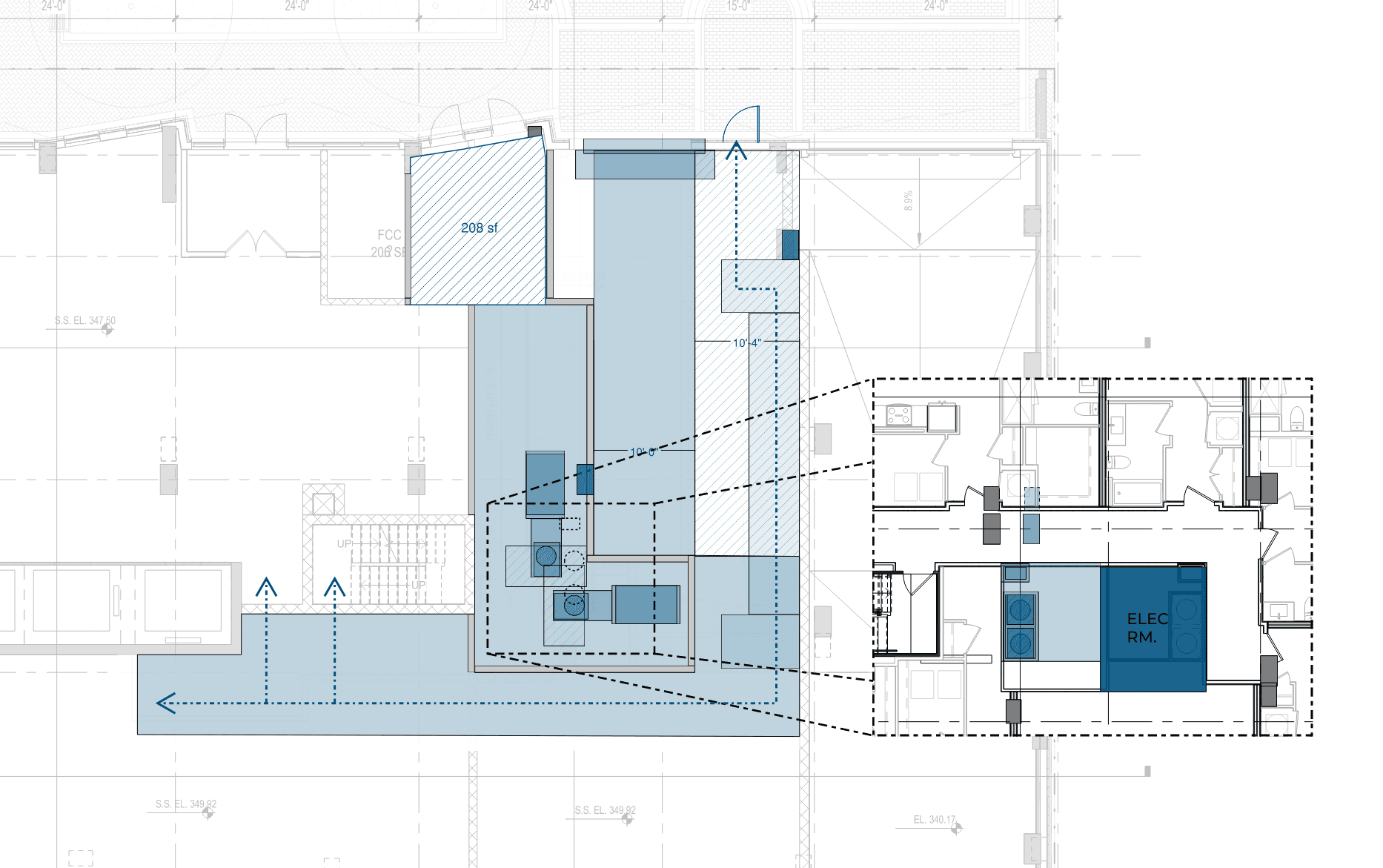
Column placement challenges extended beyond the façade, creating conflicts at the ground level where structural elements intersected with the entry drive aisle and loading dock clearances. I conducted a schematic design study to test whether swapping the locations of the trash room and loading dock could alleviate several of these conflicts.
Although the project remains in early design, this exercise applied first-principles thinking to explore solutions that balanced structure, circulation, and functionality.