Green Stormwater Infrastructure
Job / Company Overview
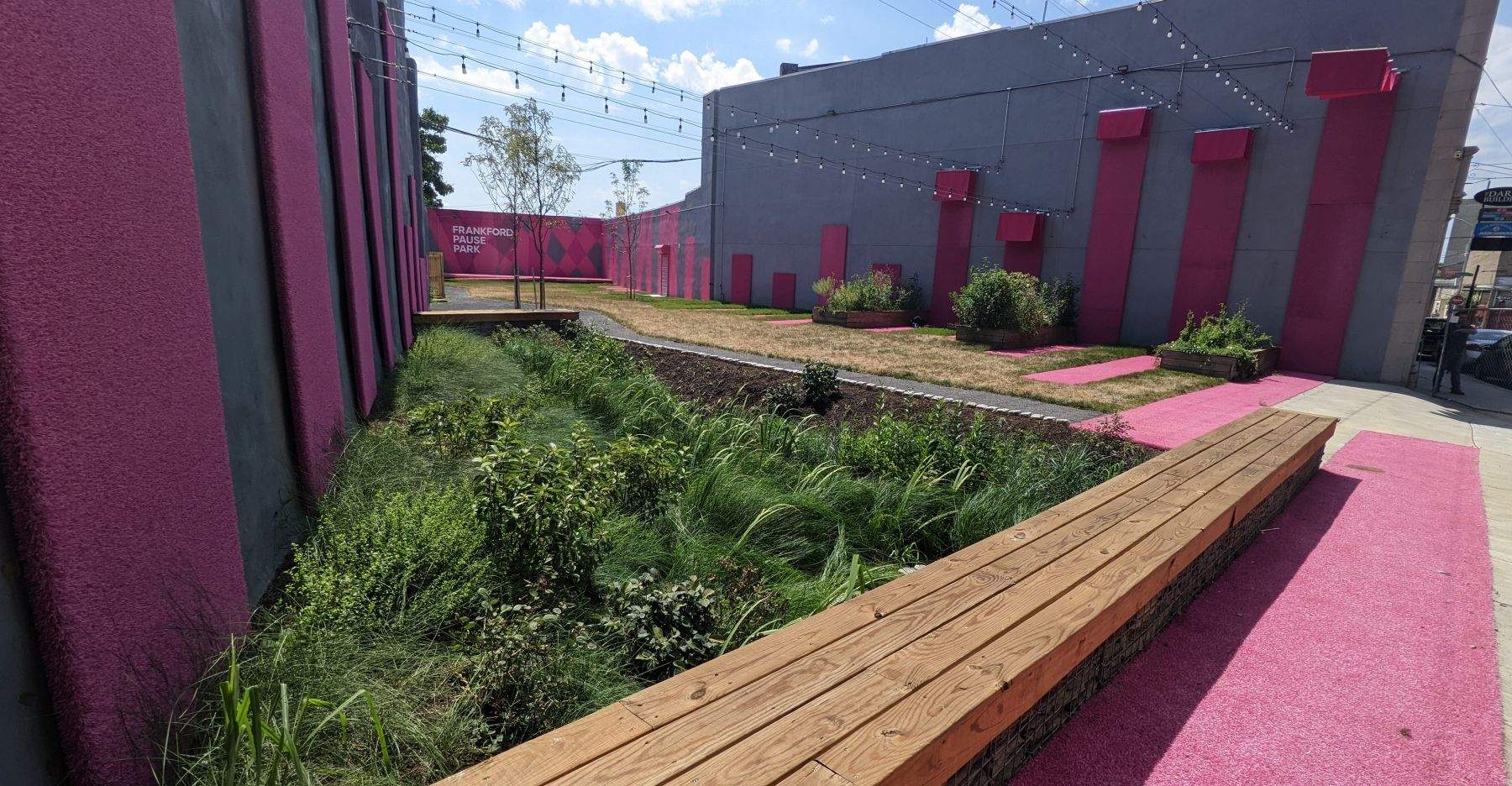
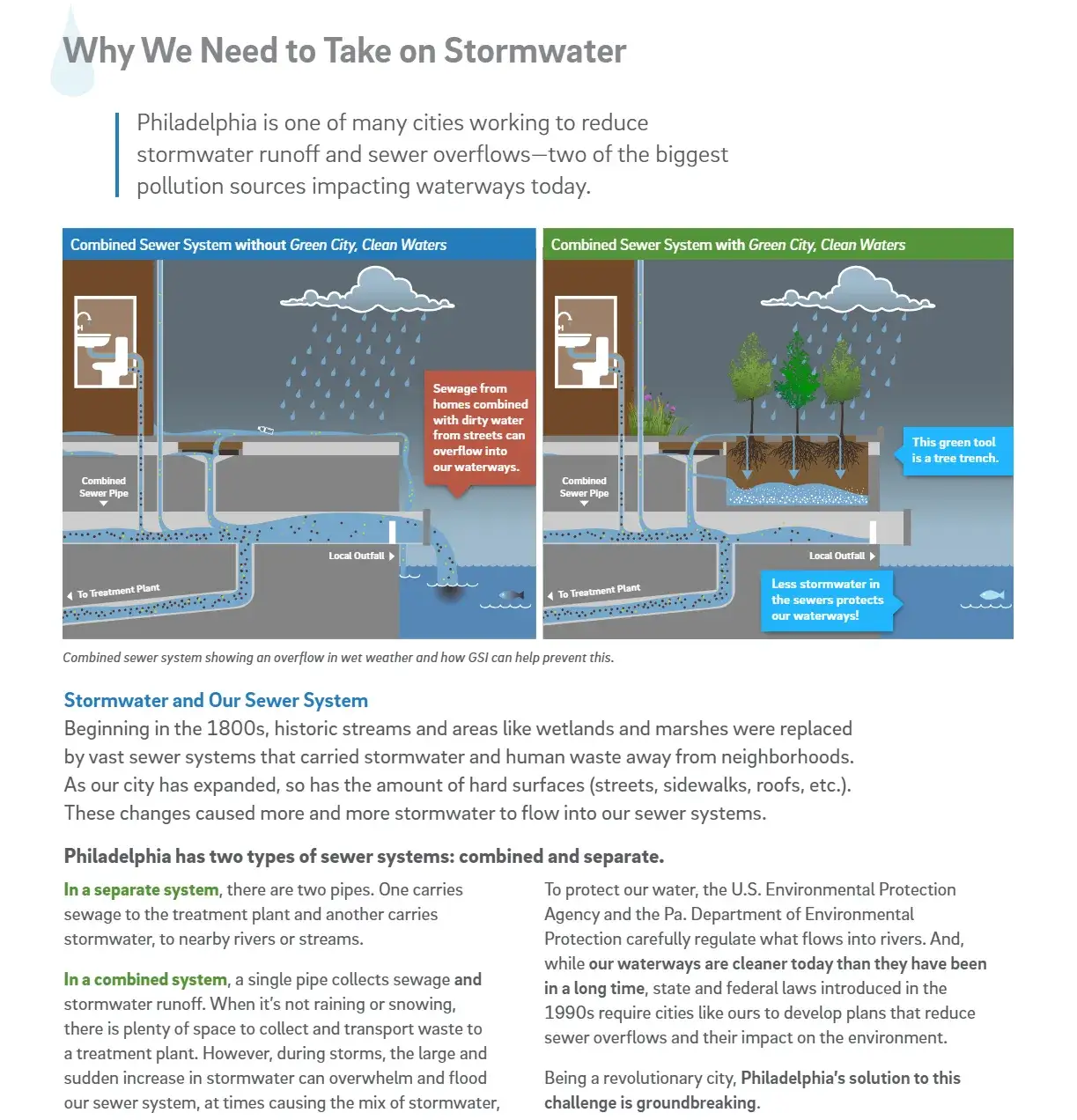
The Philadelphia Water Department's Green City Clean Water's program is a 25 year mission to reduce the amount of harmful combined sewer overflow events into the city's water ways. It is the most robust Green Infrastructure program of it's kind, providing more residential benefits than the typical gray water infrastructure. In addition to intercepting water from reaching Philadelphia's aging sewers, our work attacks the Urban Heat Island by planting more trees with capital dollars than any other city entity. Furthermore, our work contributes to placemaking in neighborhoods around the city, and creates jobs to design and maintain each projects, rounding out the "triple bottom line" benefits of GSI.
While our primary goal is to manage stormwater, my role is to design stormwater systems that go beyond their primary function, delivering as many community co-benefits as possible to our community. I serve as a Project Manager, and work to enhance the environmental, social, and economic impact of our projects every stage of the design and construction process, while staying on schedule and under budget. I am directly involved starting with early stage planning concepts and community outreach through design, construction, landscape installation, and life cycle maintenance. This requires a litany of skills in order to conduct successful public outreach, concept development, graphic production, schematic design, project closeout, construction punchlists, as-built drawings, and long term maintenance.
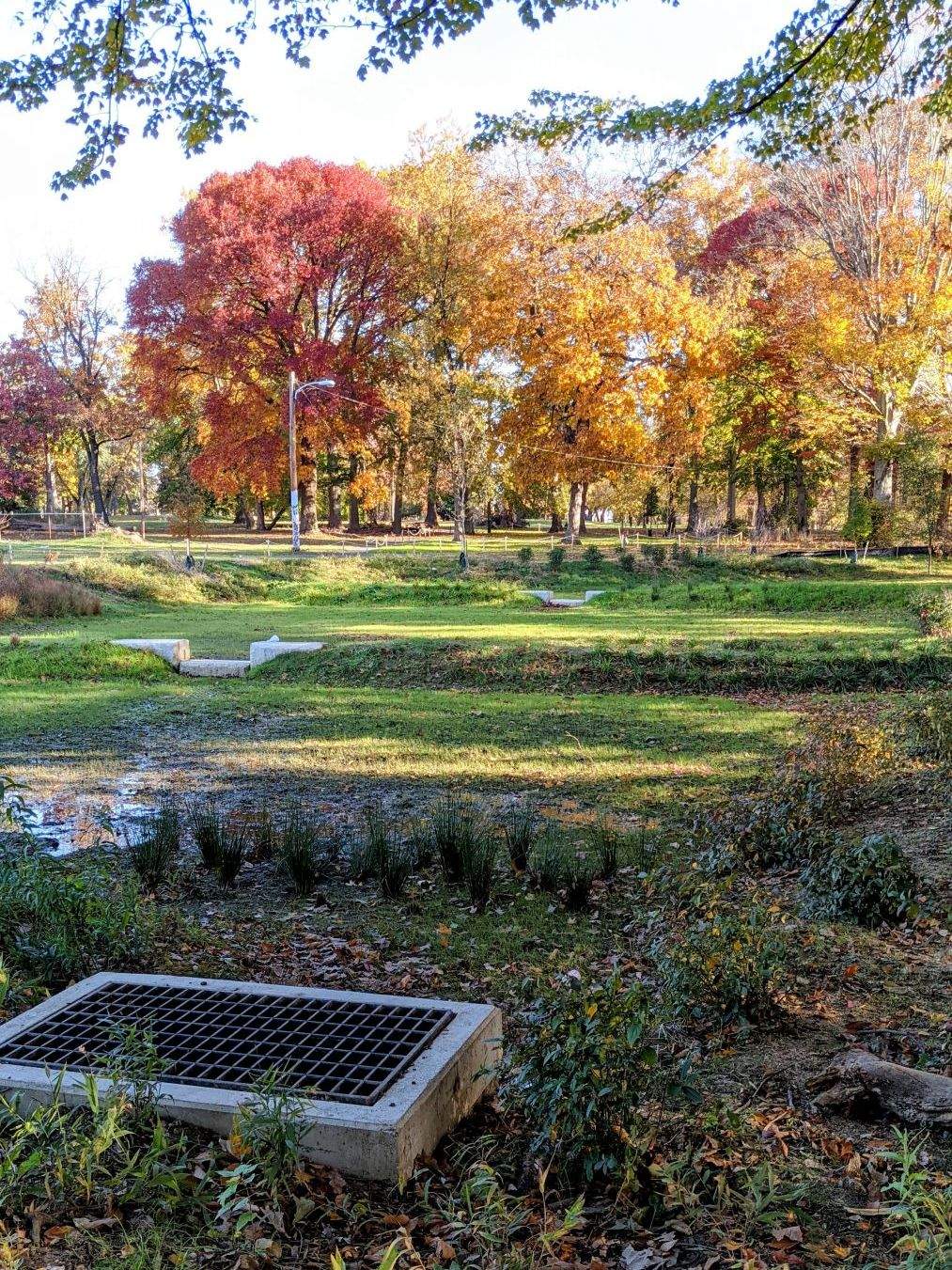
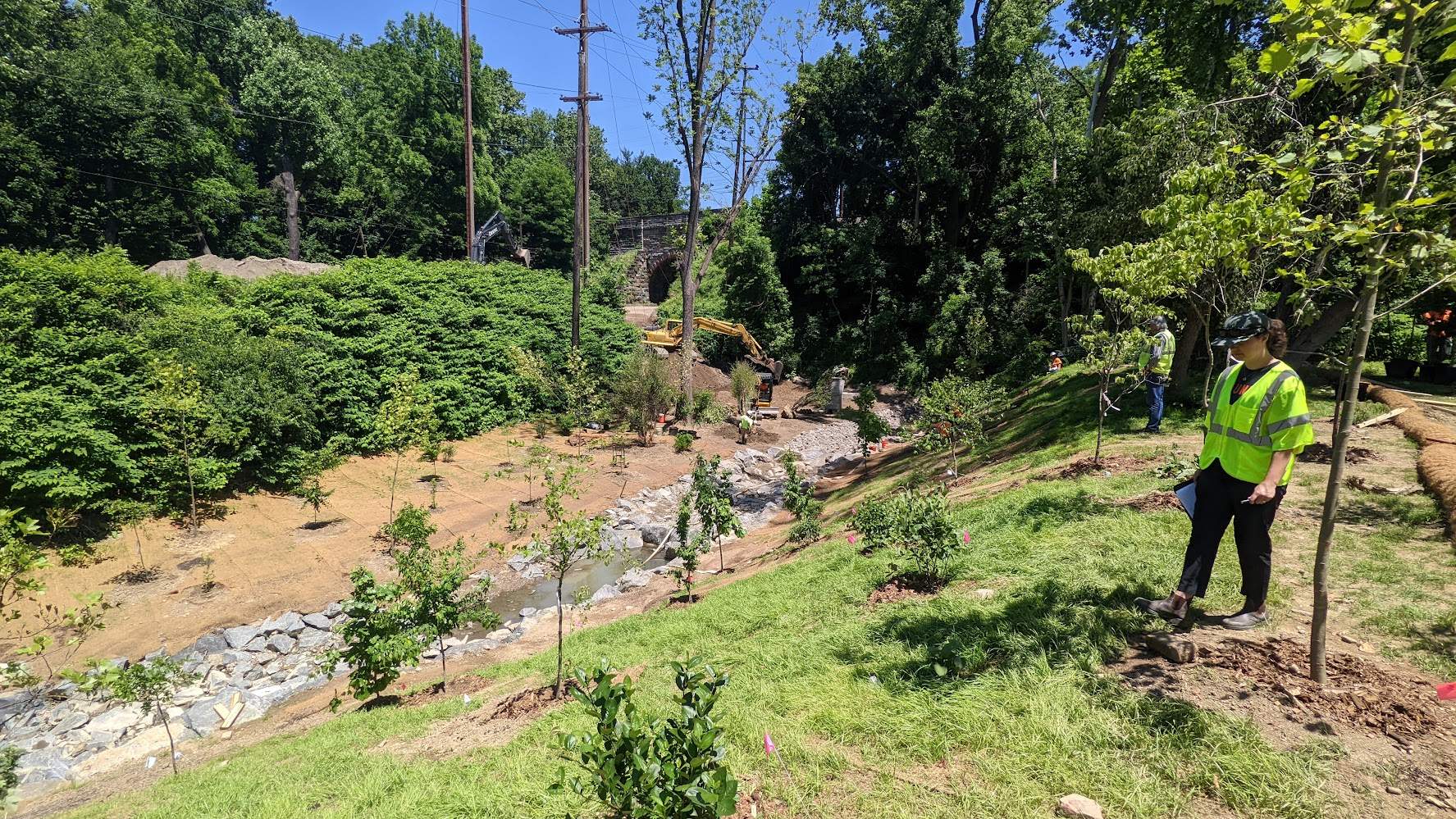
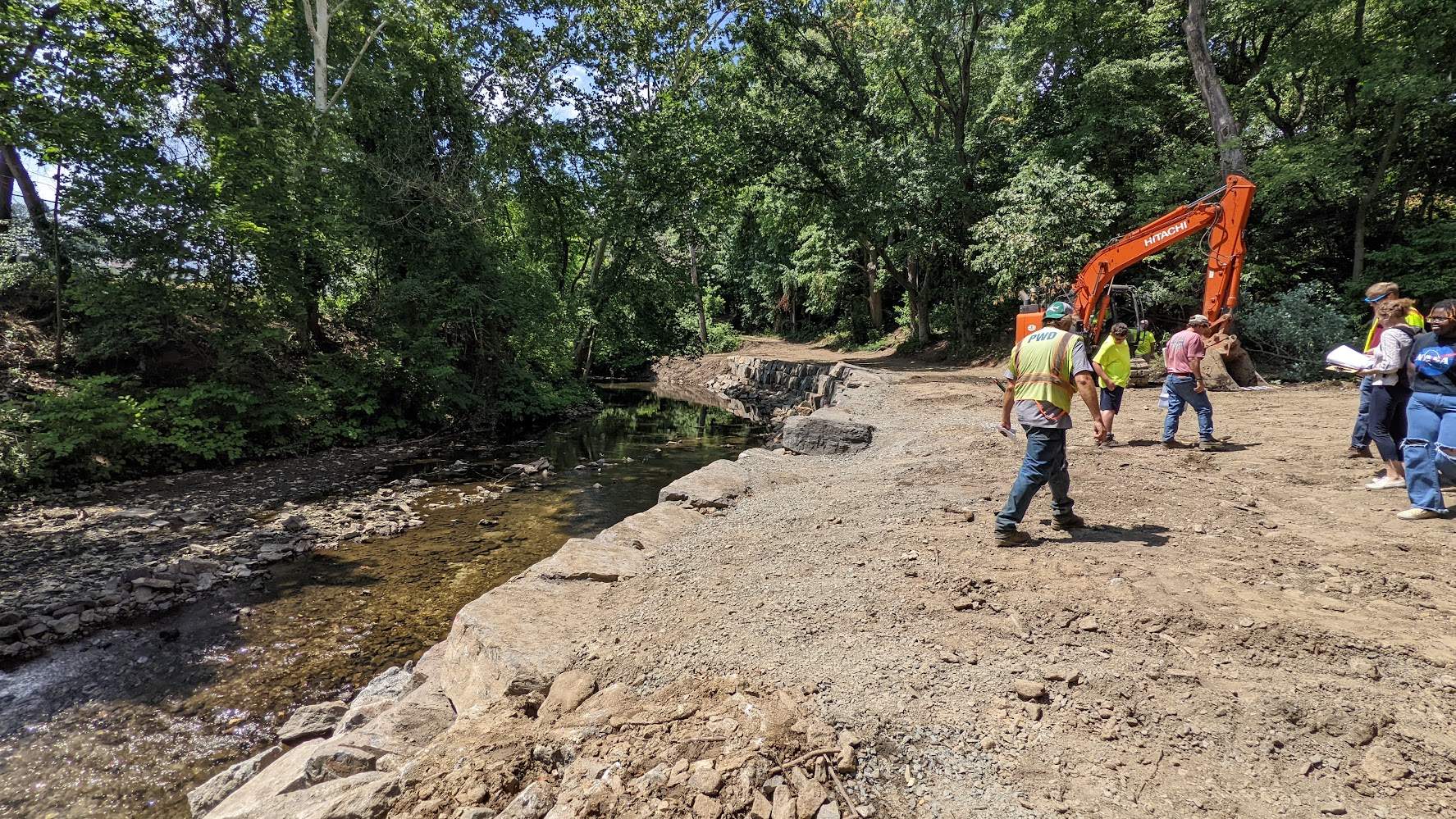
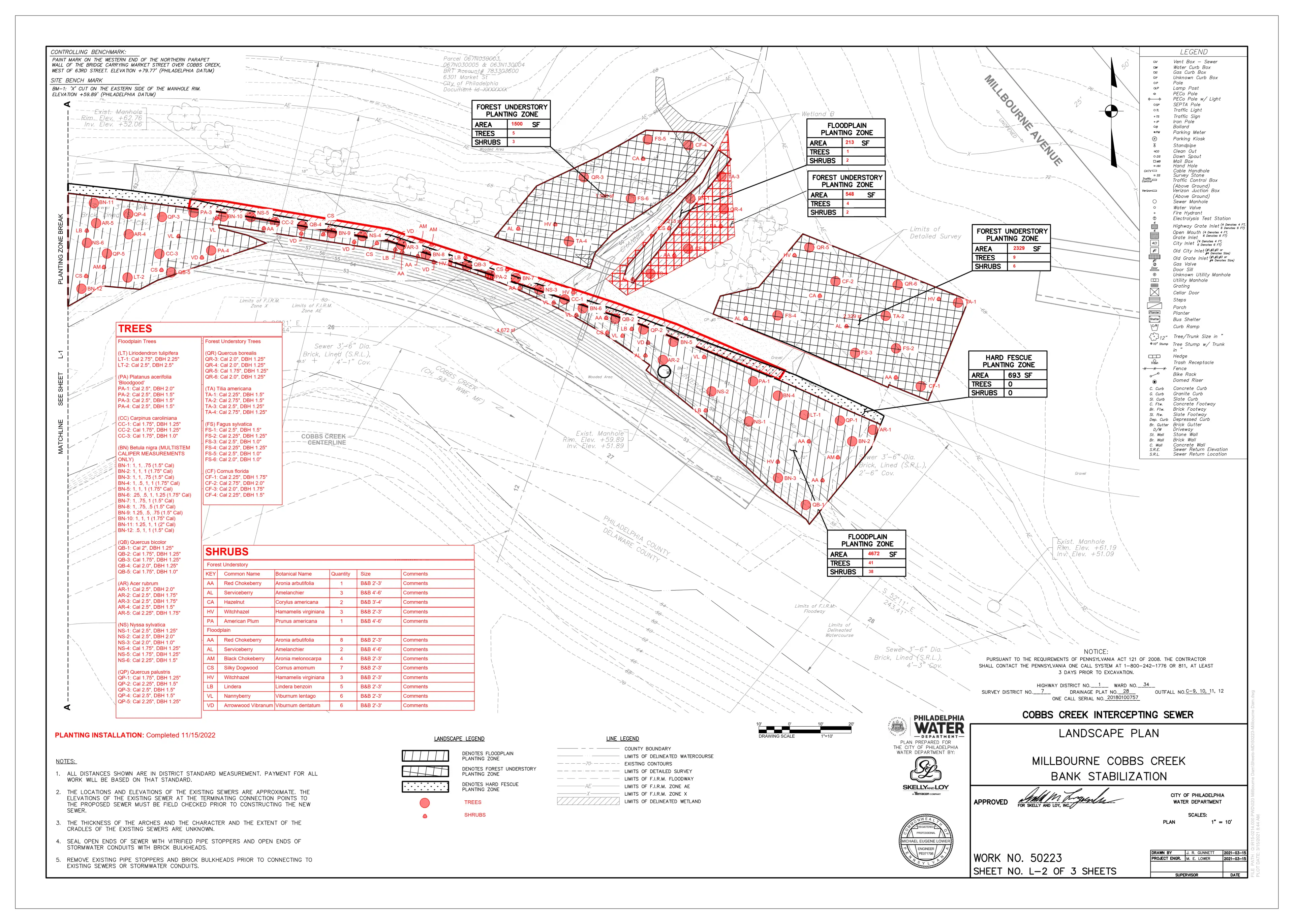
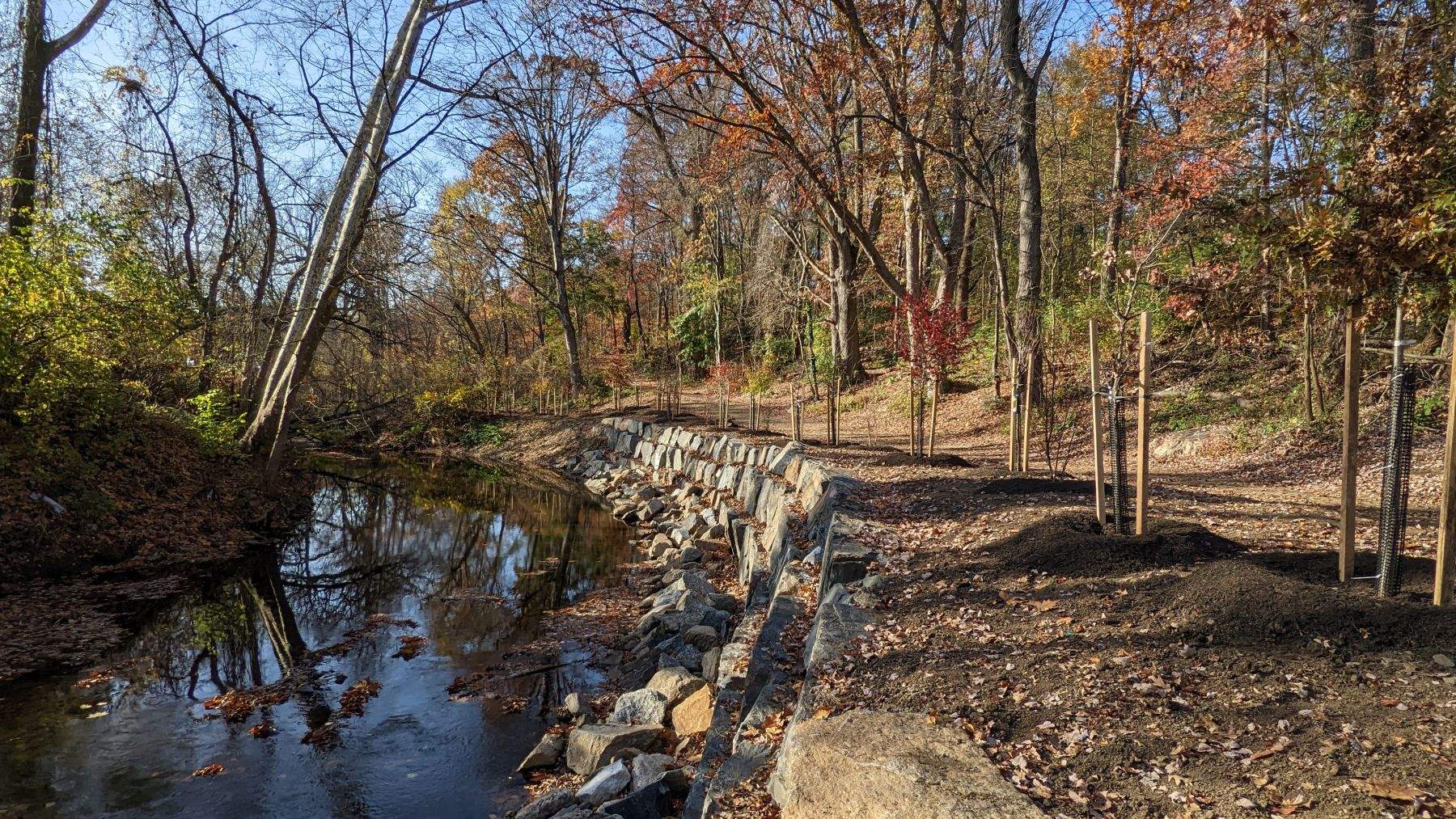
In addition to the typical Urban GSI, our unit is also responsible for Ecological Restoration projects throughout Philly's various streams and waterways. These projects typically involve streambank stabilization, floodplain restoration, and reforestation of degraded natural lands.
When not working directly on projects, I support the program with a variety of resource development, innovation, and efficiency boosting endeavors. Some of these tasks include typical work, such as specification writing or policy/standards development. Others represent improvements that I was able to bring to the department from other experiences, including but not limited to:
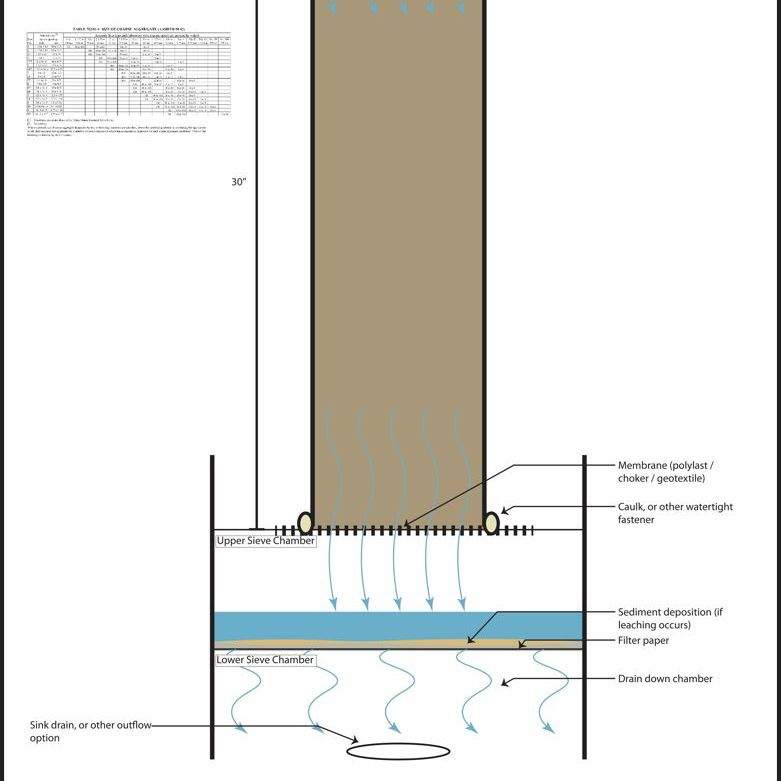
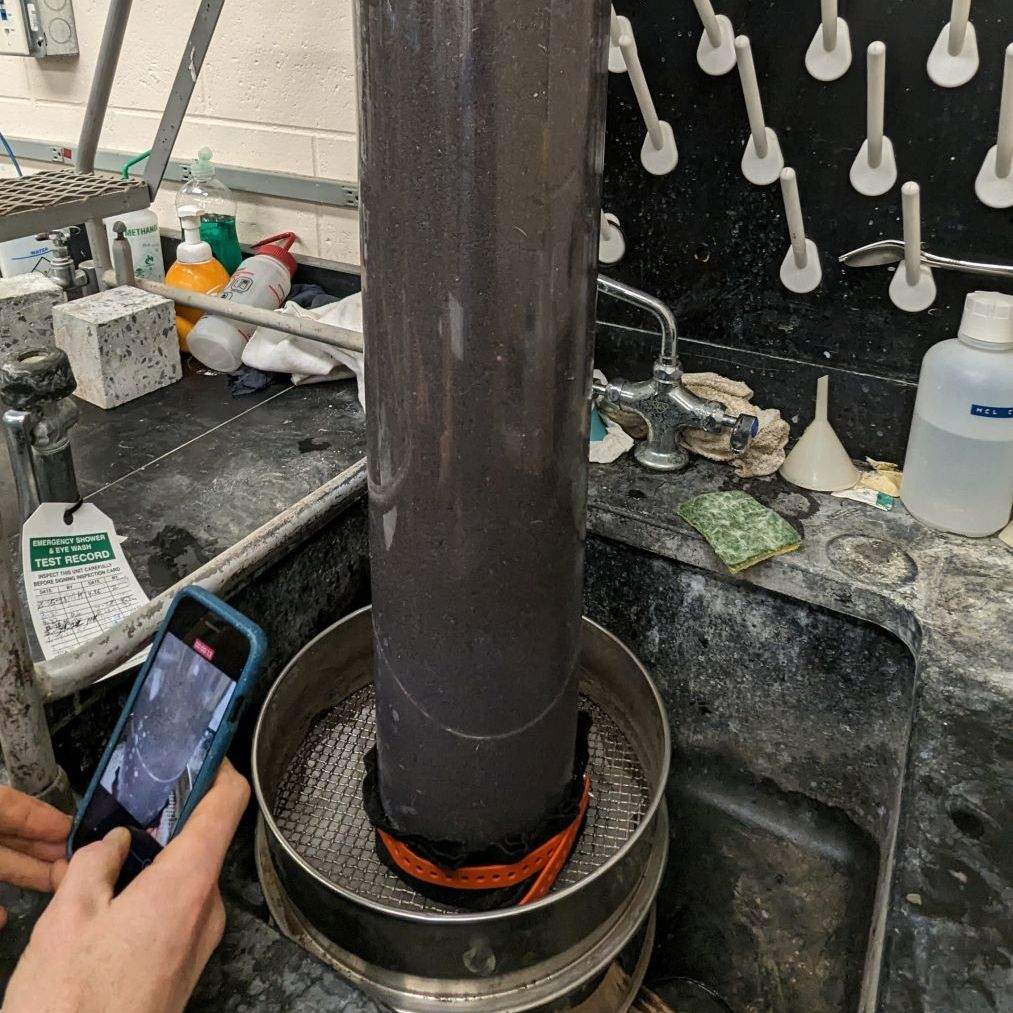
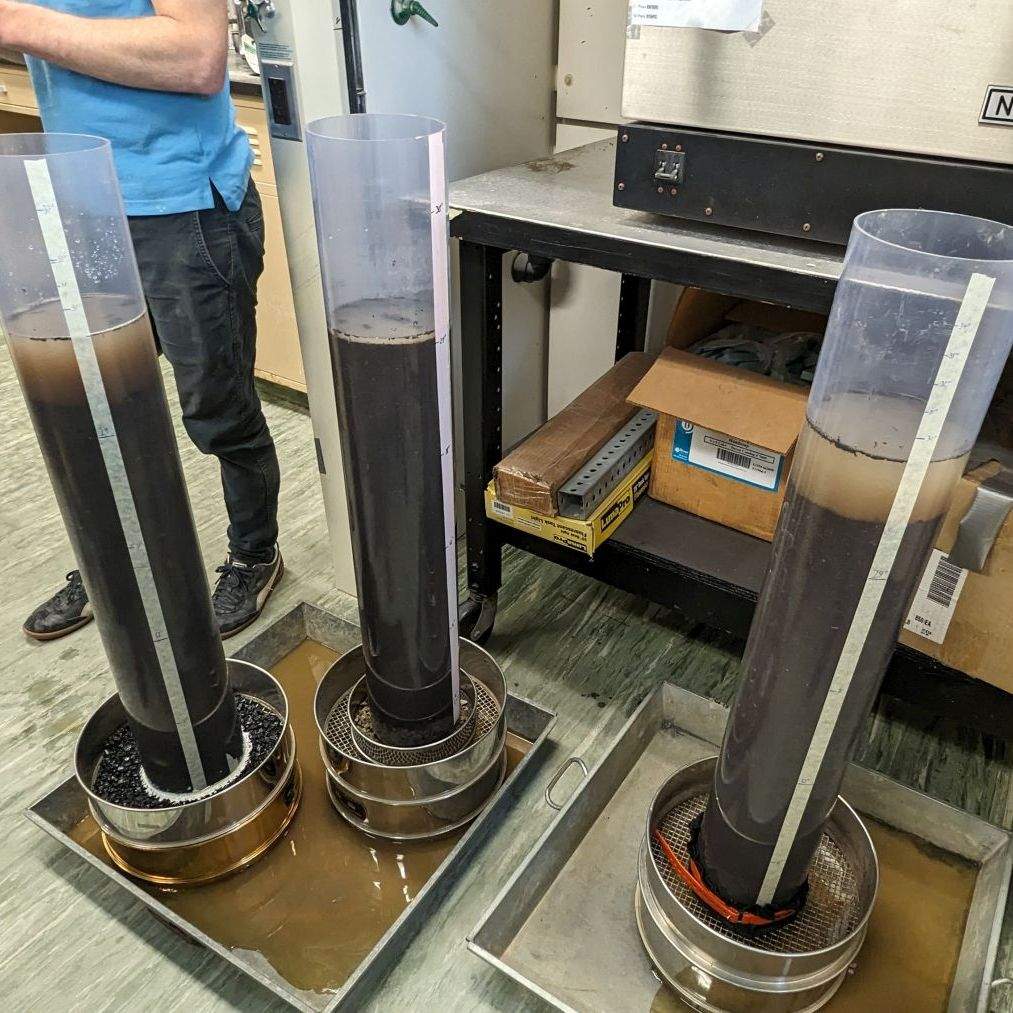
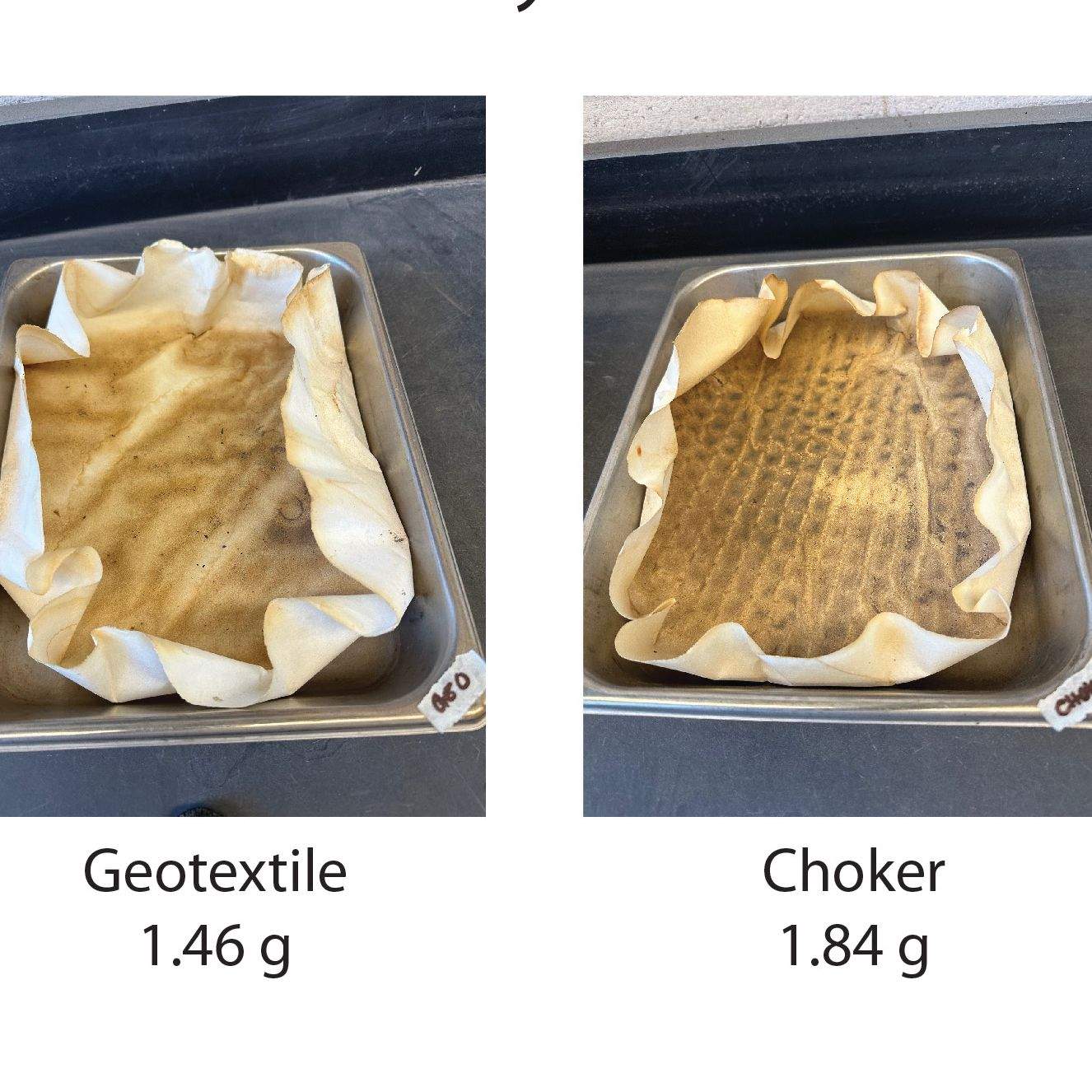
Designed and conducted a lab trial to expose the vulnerabilities of geotextile fabric in infiltration systems while identifying stronger alternatives.
Created a language of As-Planted and Warranty markups to clearly track and communicate built conditions and plant survivorship across projects.
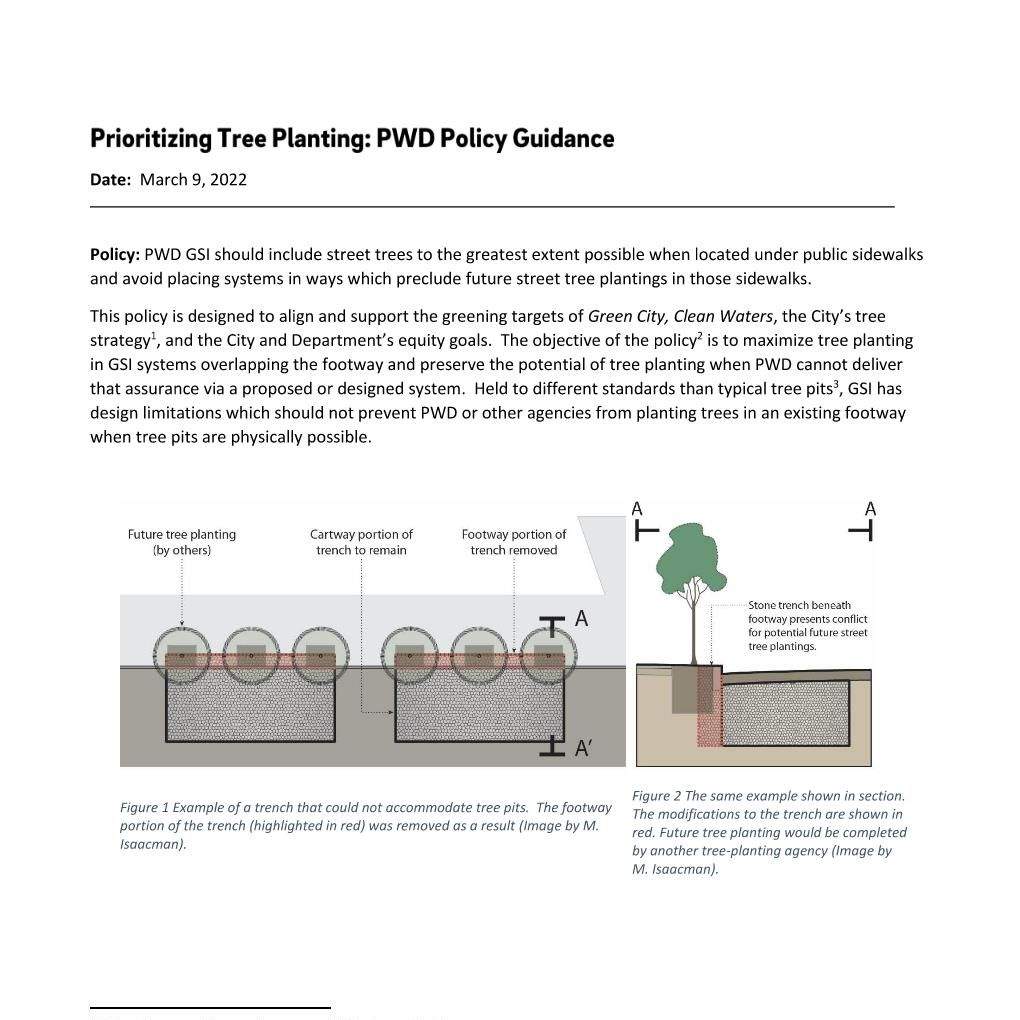
Contributed to the theory and production of various policy documents.
Initiated research and development of alternative design methods in light of recent ADA ROW changes.
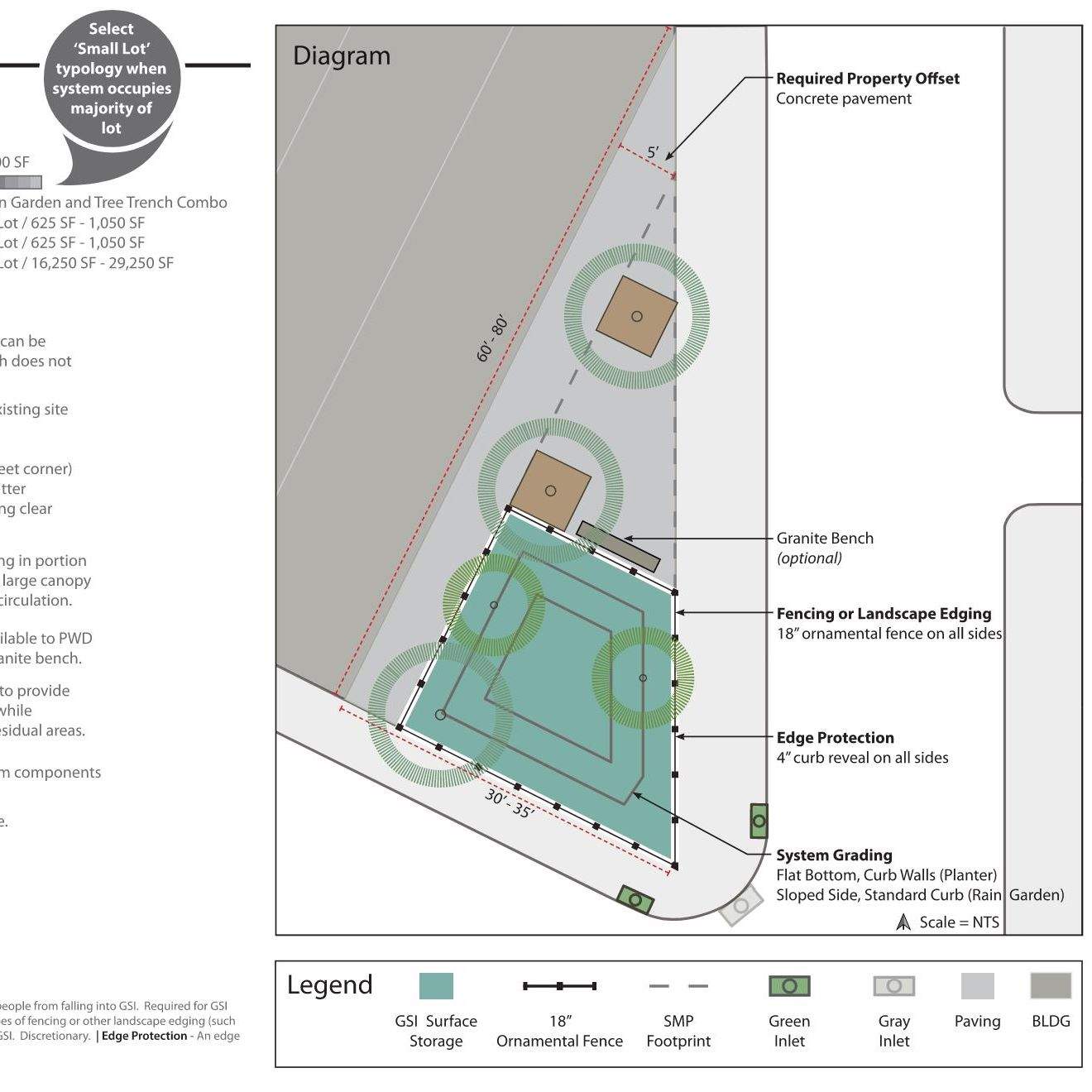
Typical Planning and Design Documents
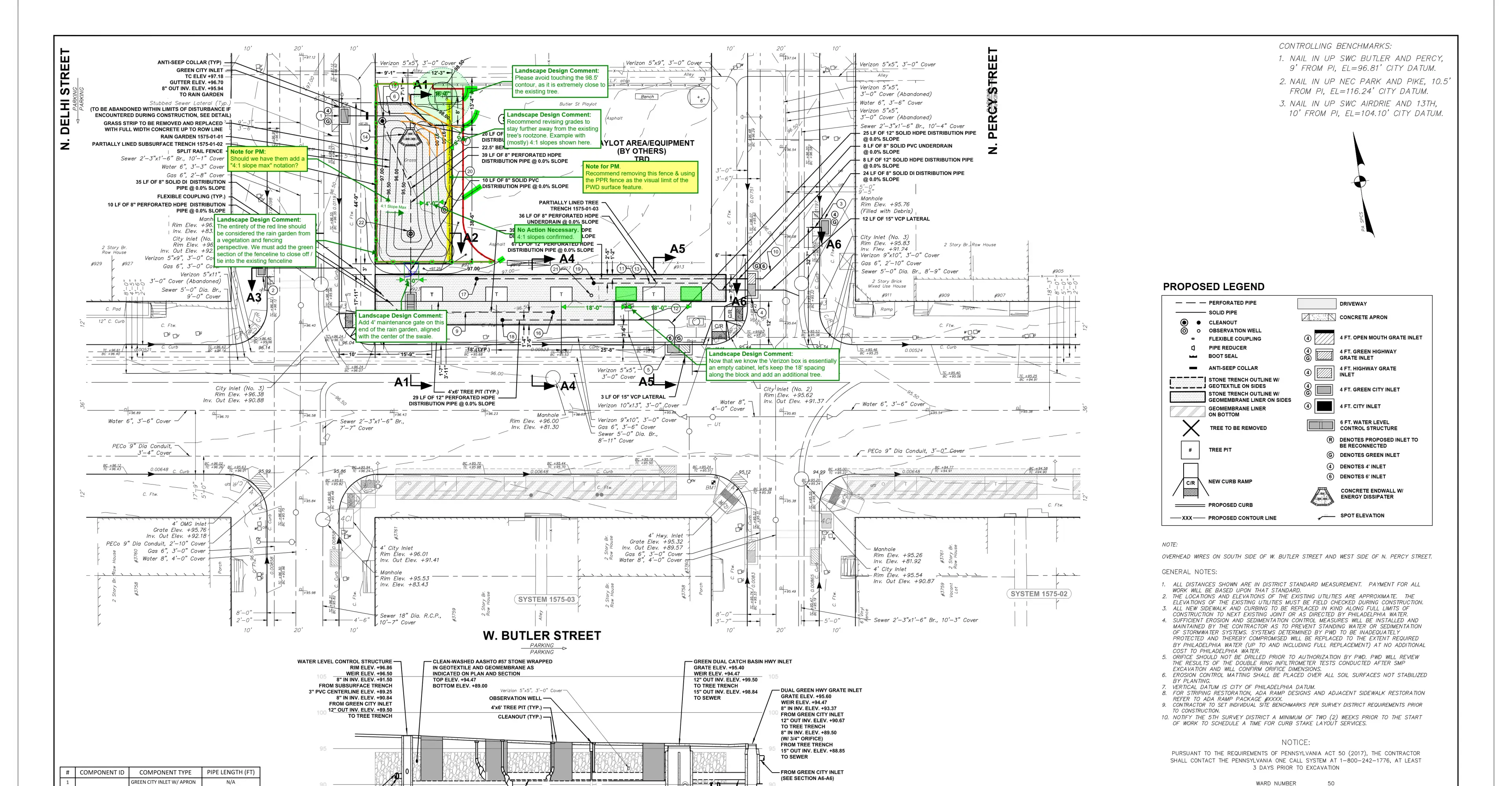
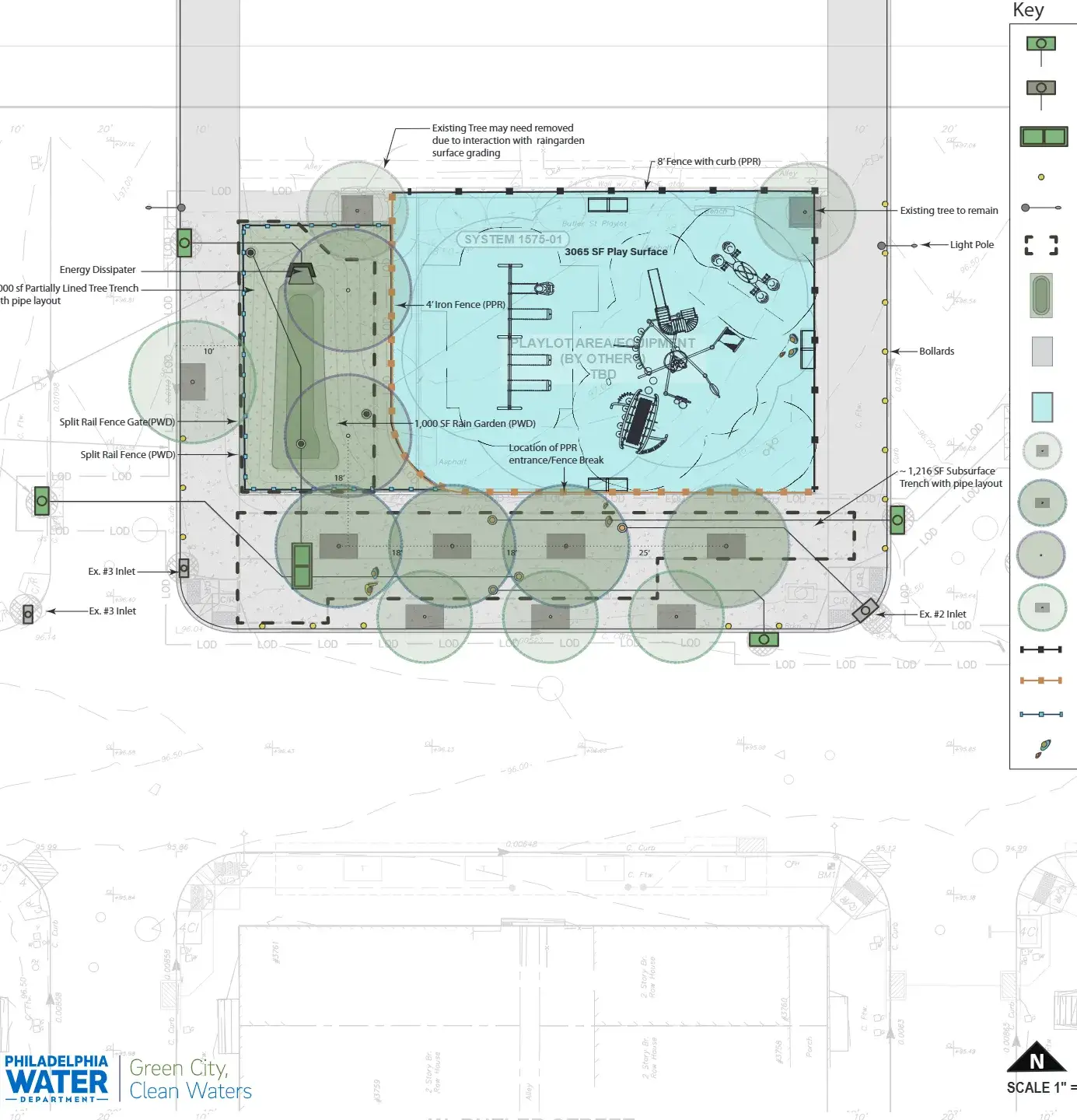
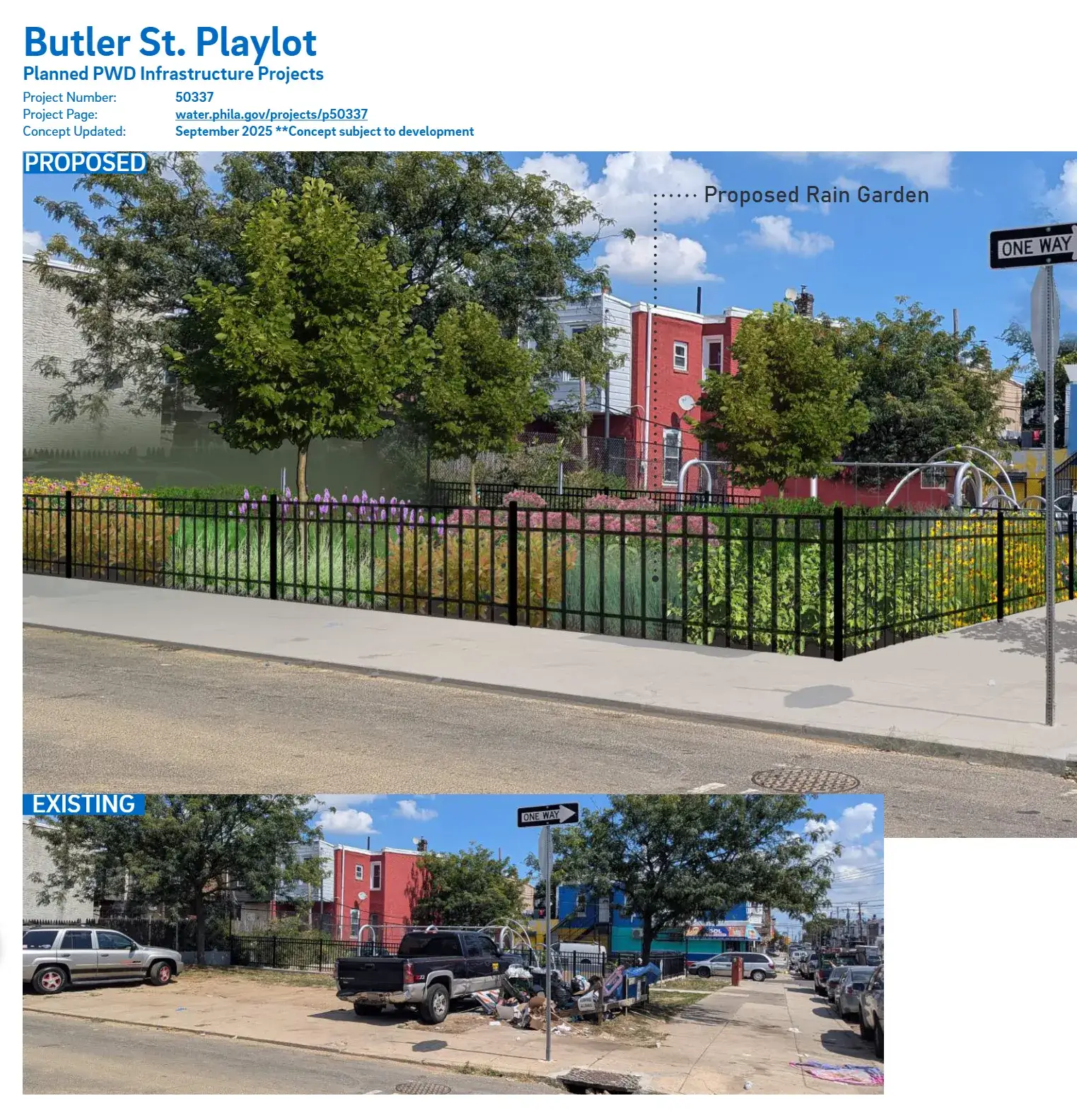
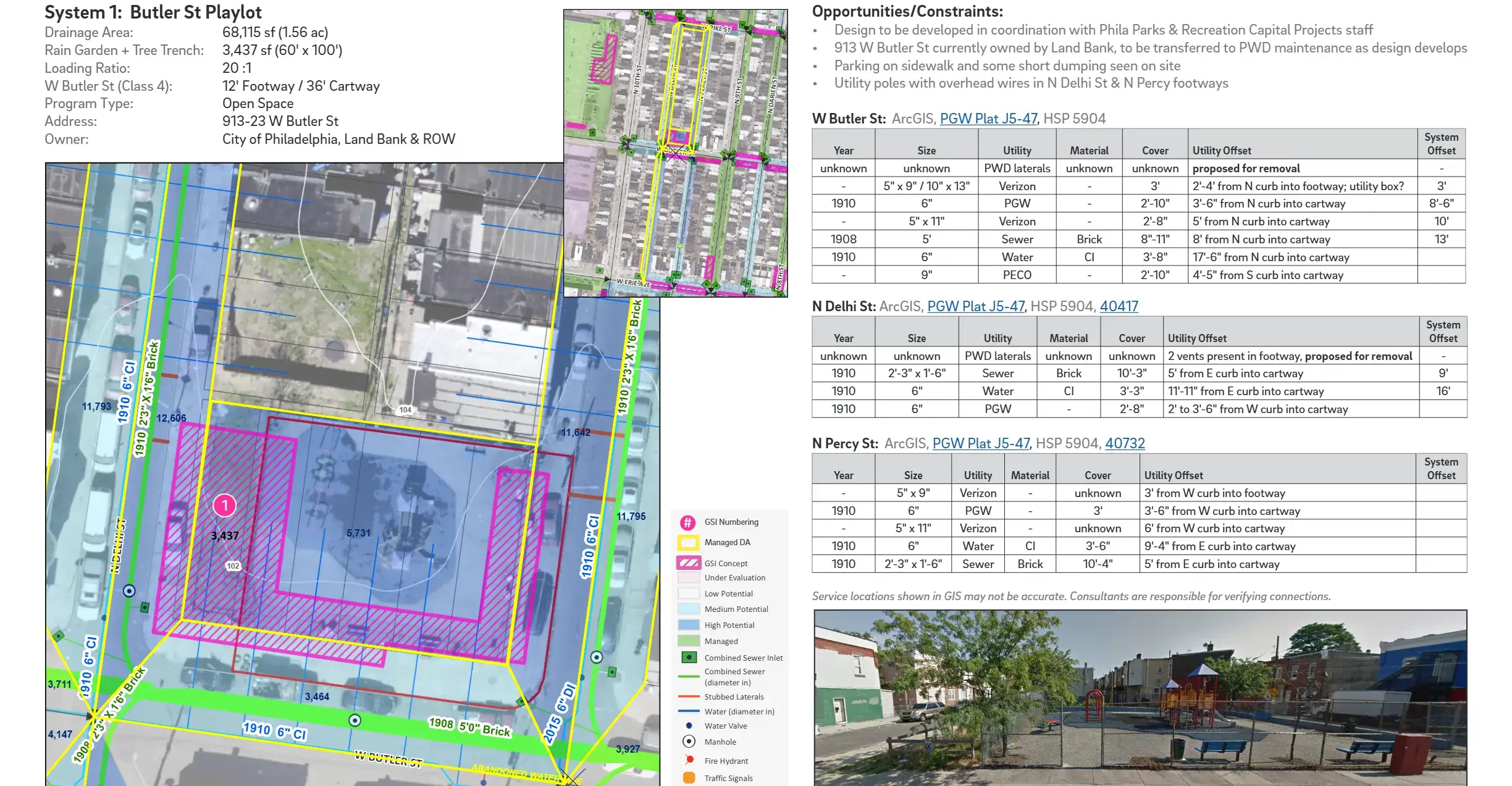
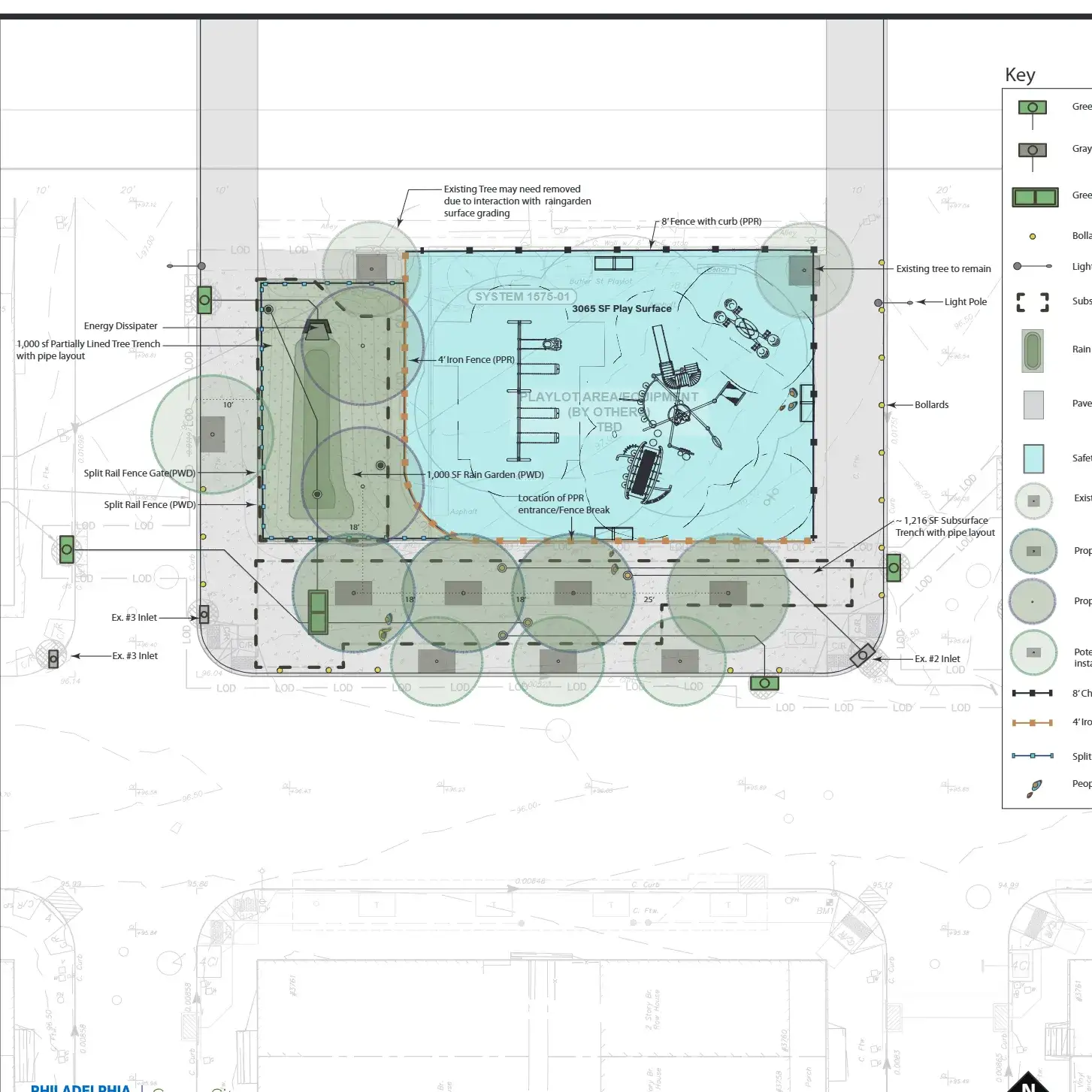
Percy and Butler Playlot: Philadelphia, PA. https://water.phila.gov/projects/all/p50337/
Ecological Restoration Projects
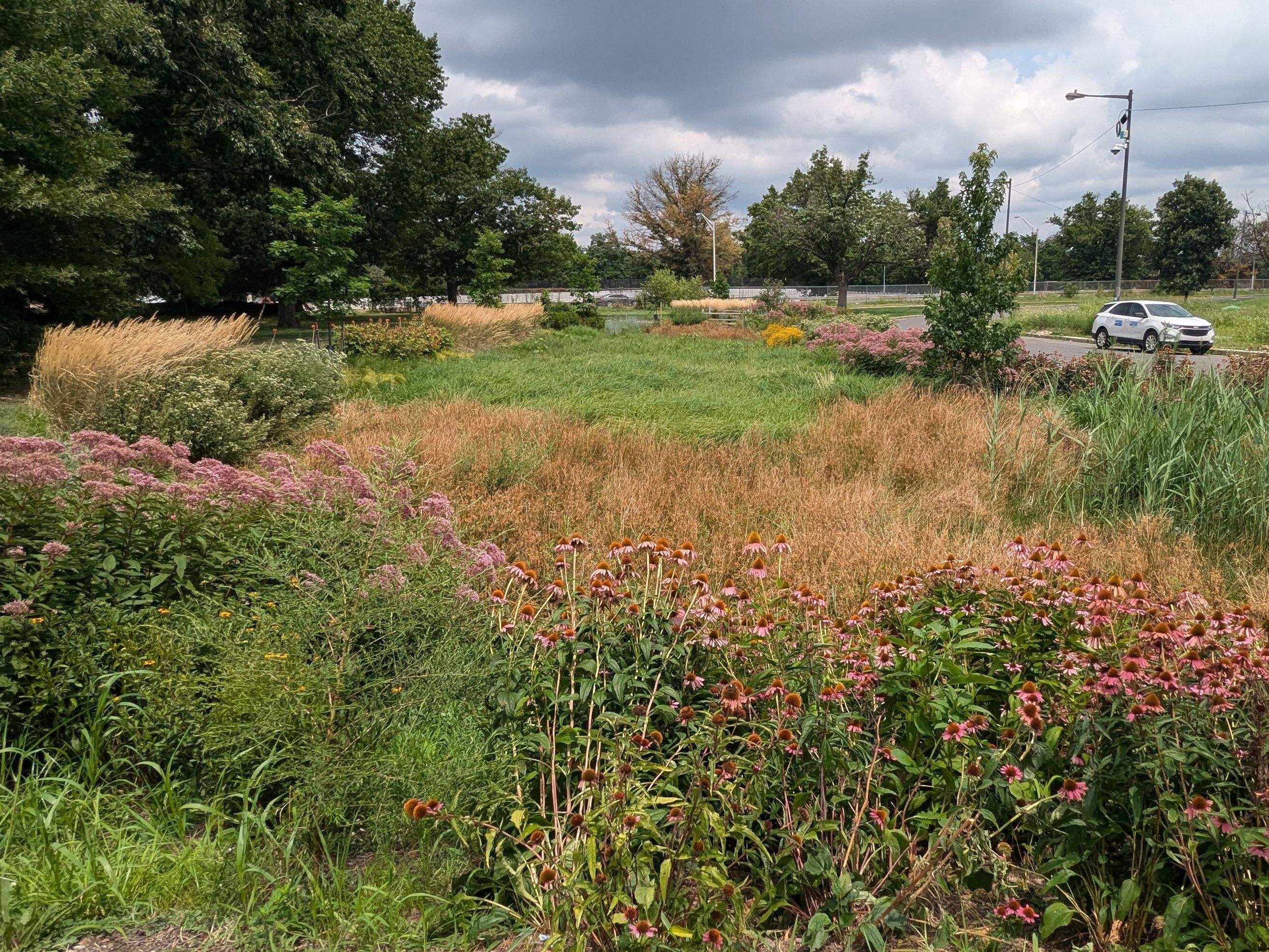
In-House Design: West Philly Median Bioswales
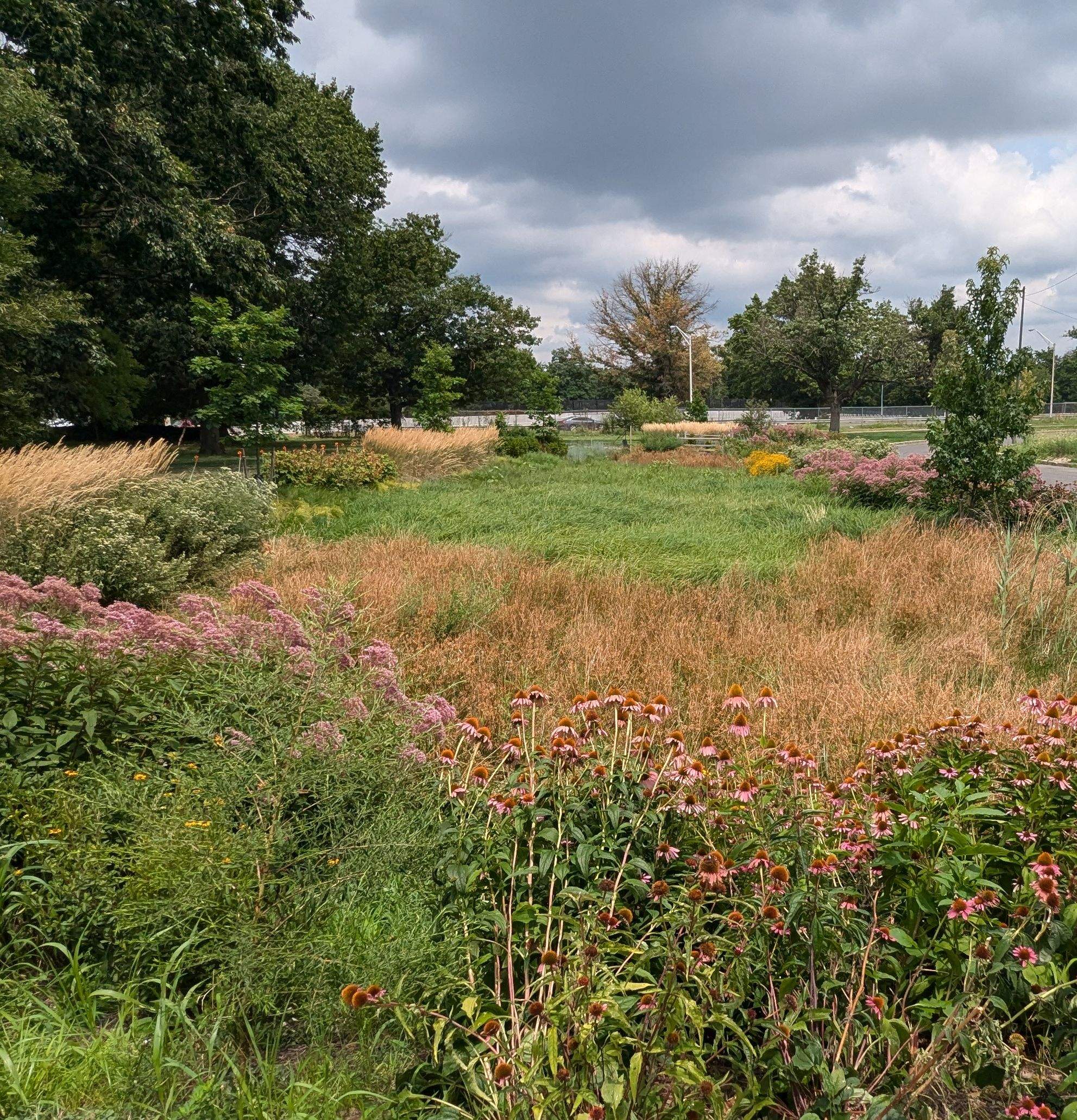
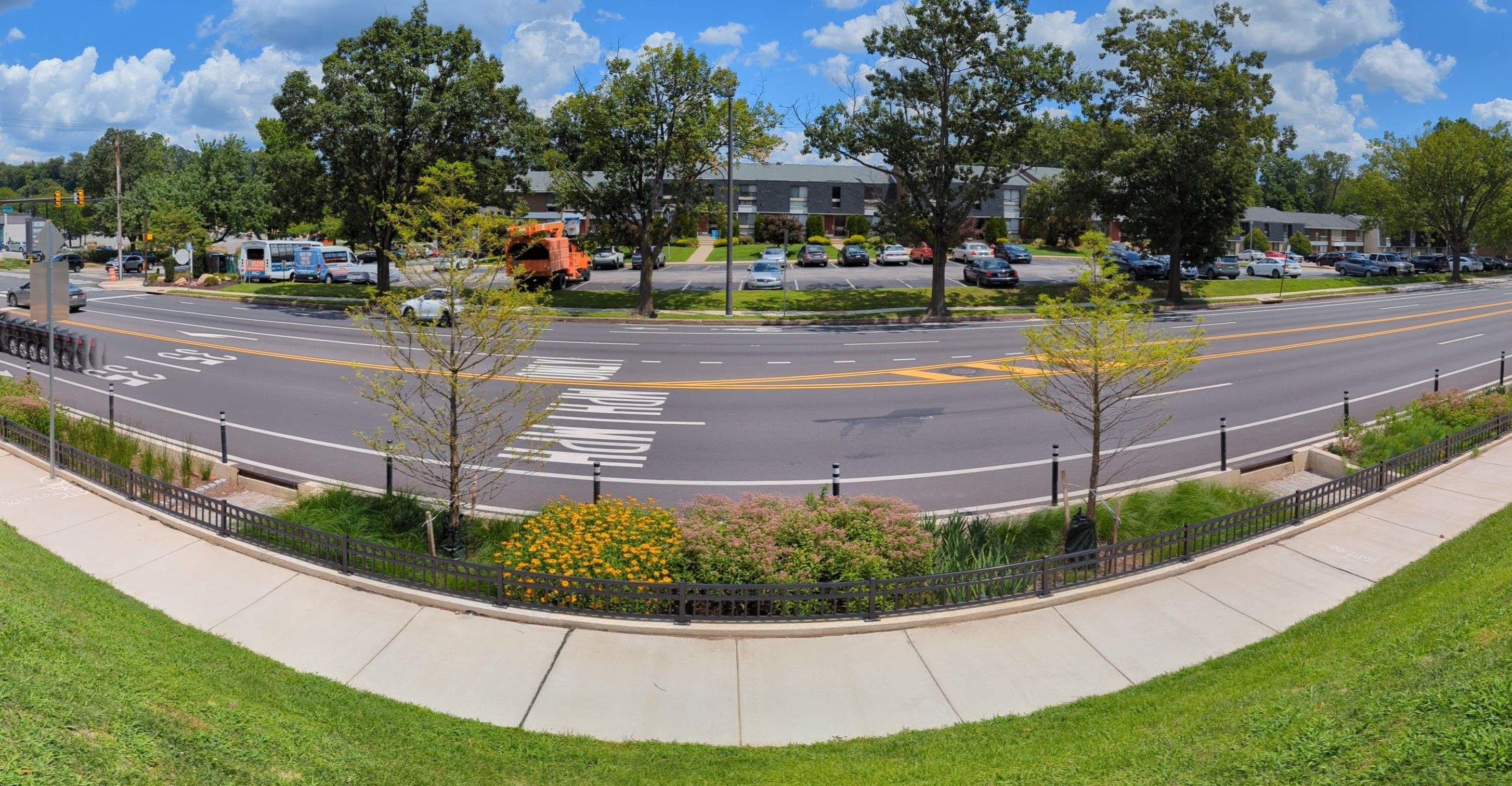
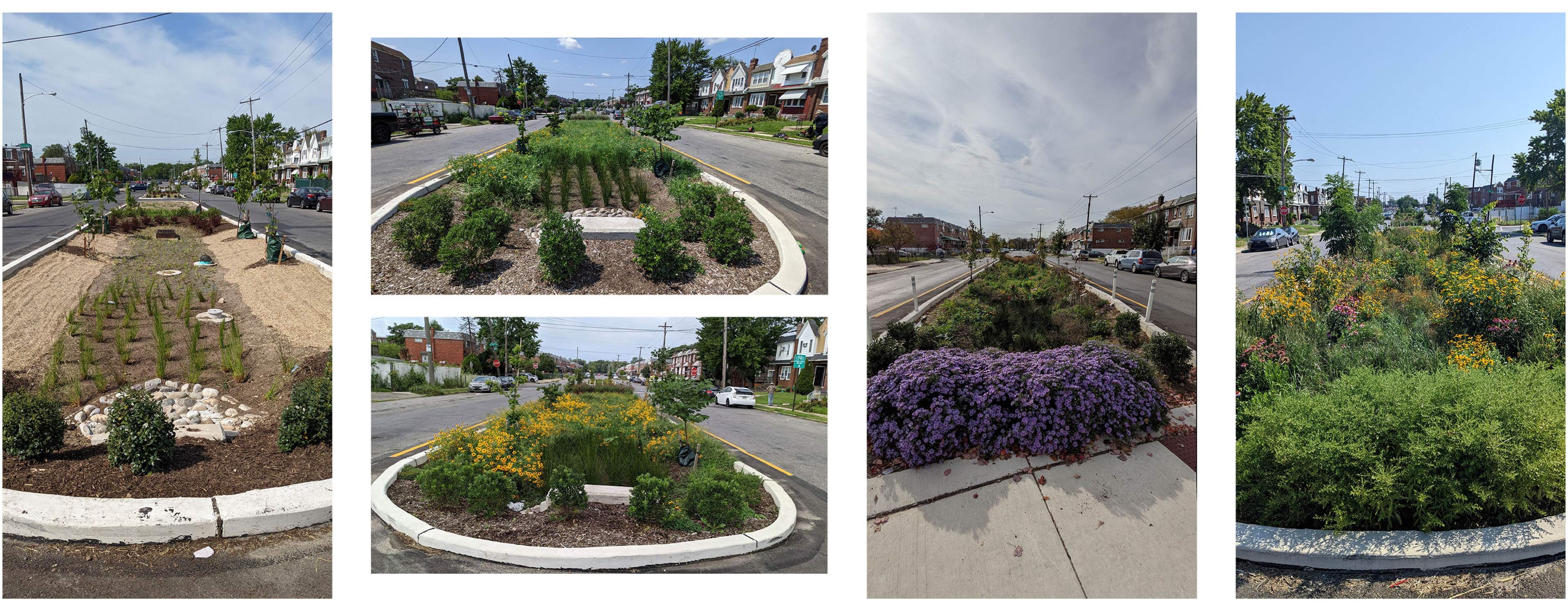
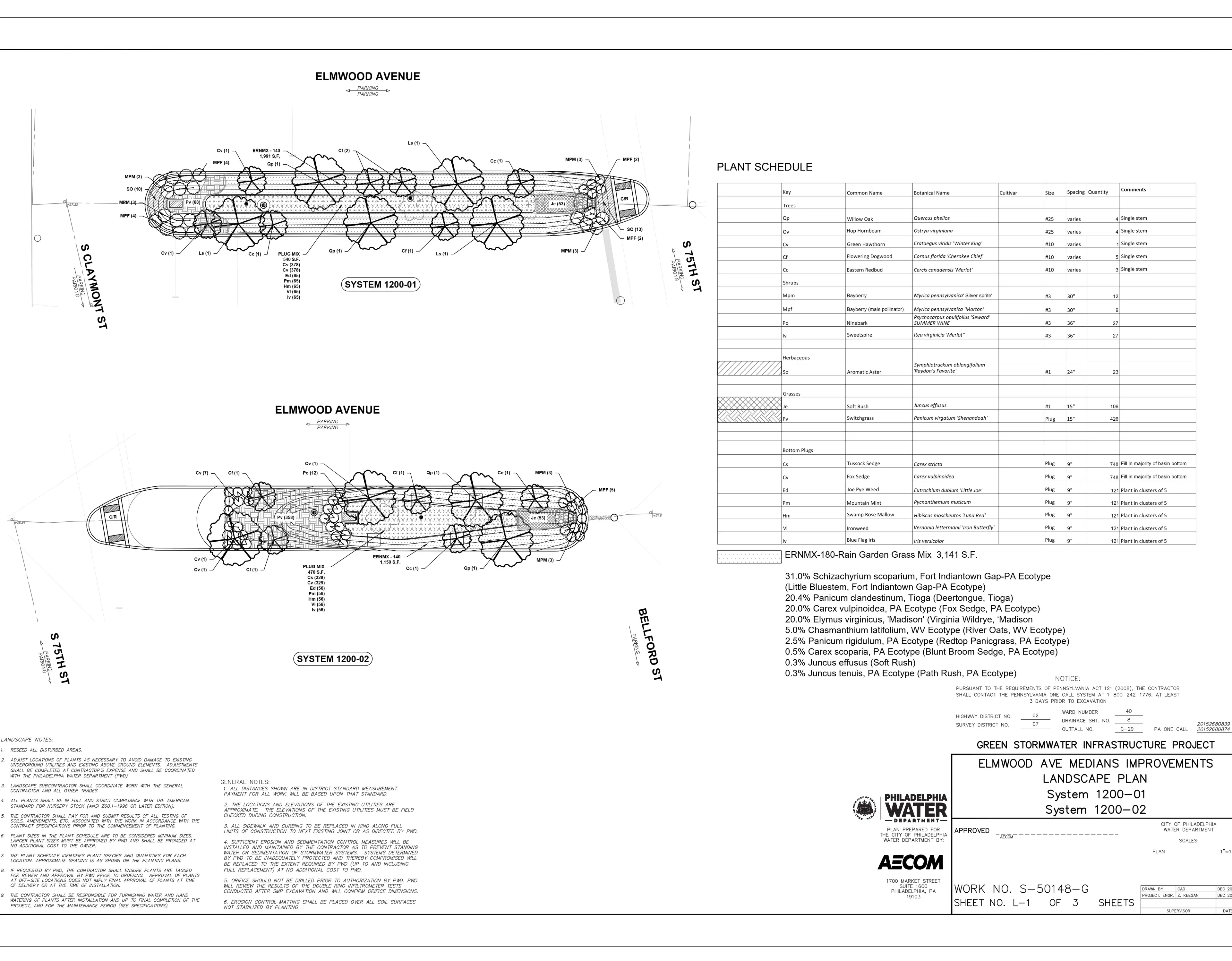
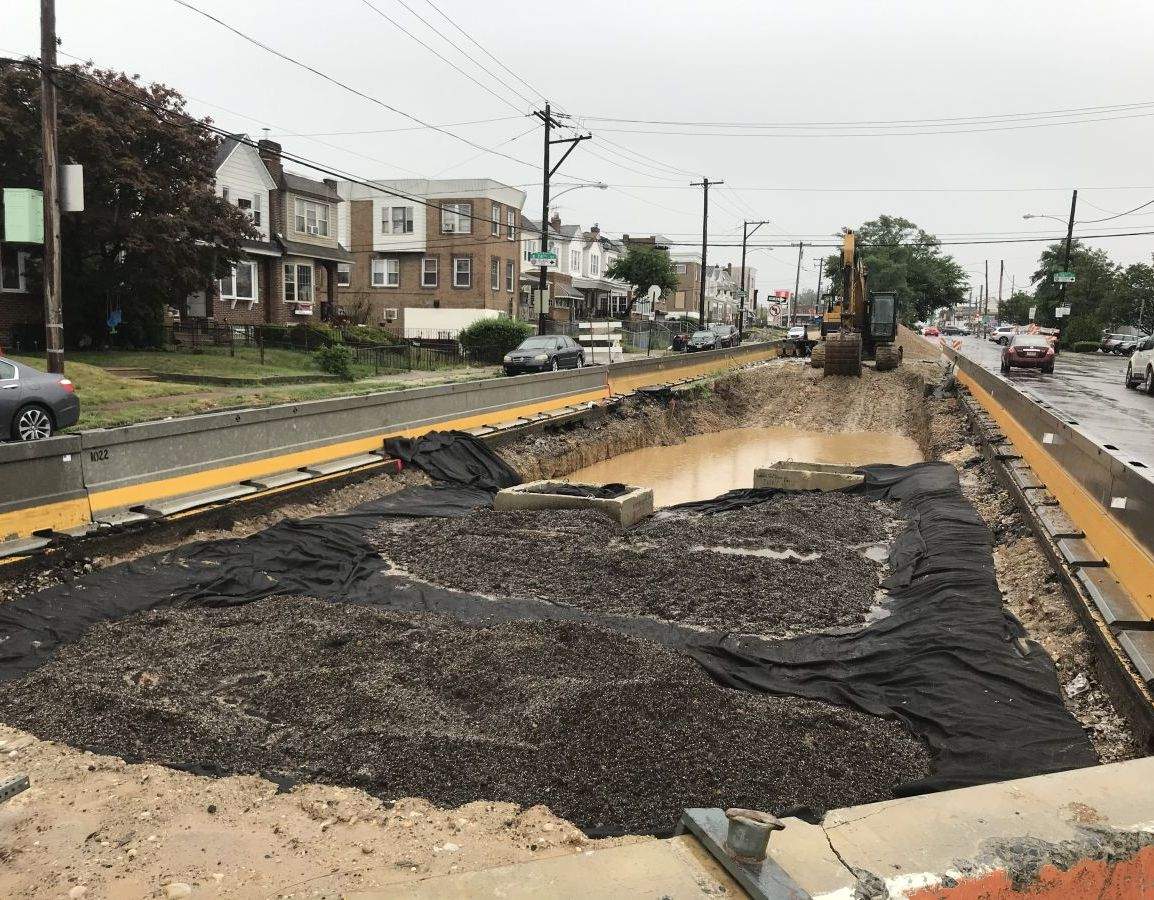
This project represents a set of fairly typical GSI medians, with a large vegetated swale suspended over a stone storage trench. Due to the size of the systems, seed and plugs were used instead of a typical container planting that PWD more frequently utilizes. The swales were designed with biodiversity and resiliency at the forefront, due the the variability of extreme wetness and extreme drought depending on the elevation of a given point in the system.
Green Infrastructure installations can be a bit of a nuisance for adjacent residents, as they involve lengthy road closures, construction noise and dust, and potential removal of street parking spaces. In order to reduce the shock to the residents, I visited the medians before construction began and took inventory of the existing trees, noting Pink and White Dogwoods, Redbuds, and a few other species compatible with GSI. When designing the landscape plans, I placed new trees of the same species in the locations where those trees previously existed, to give continuity and familiarity to the landscape. The community has responded quite positively to the plantings after enduring the lengthy construction process, and the plants have been thriving for years since installation.
Public Outreach and Community Engagement
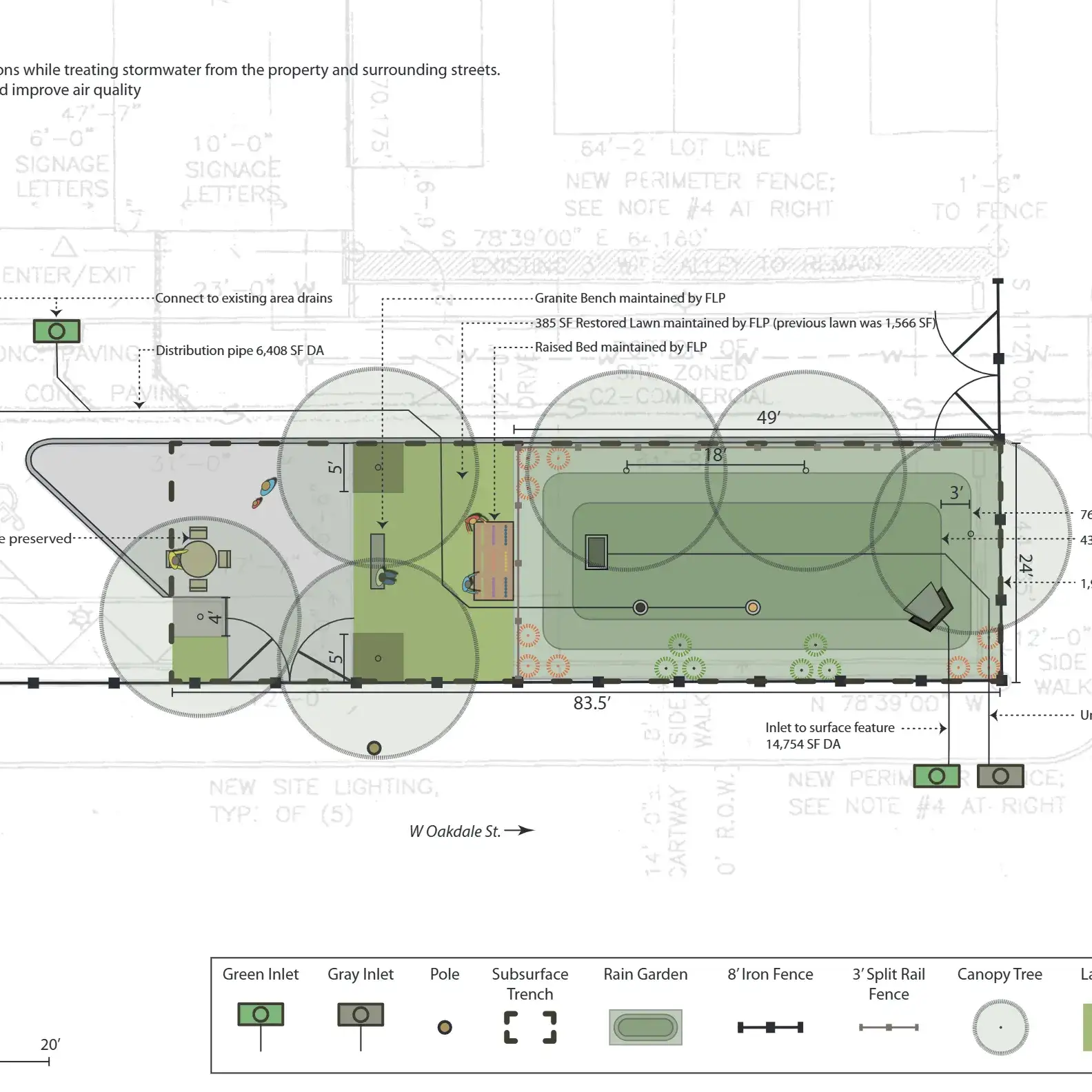
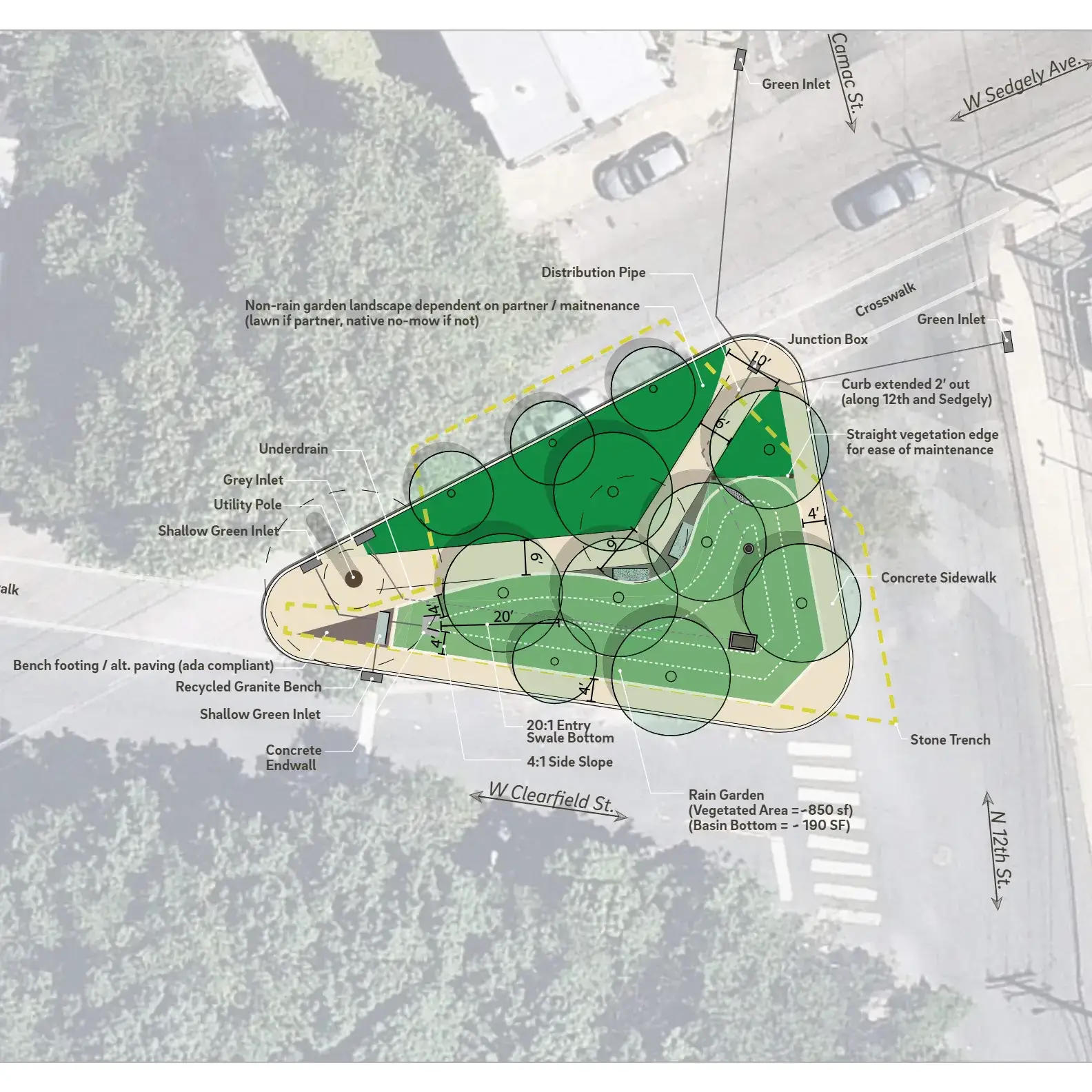
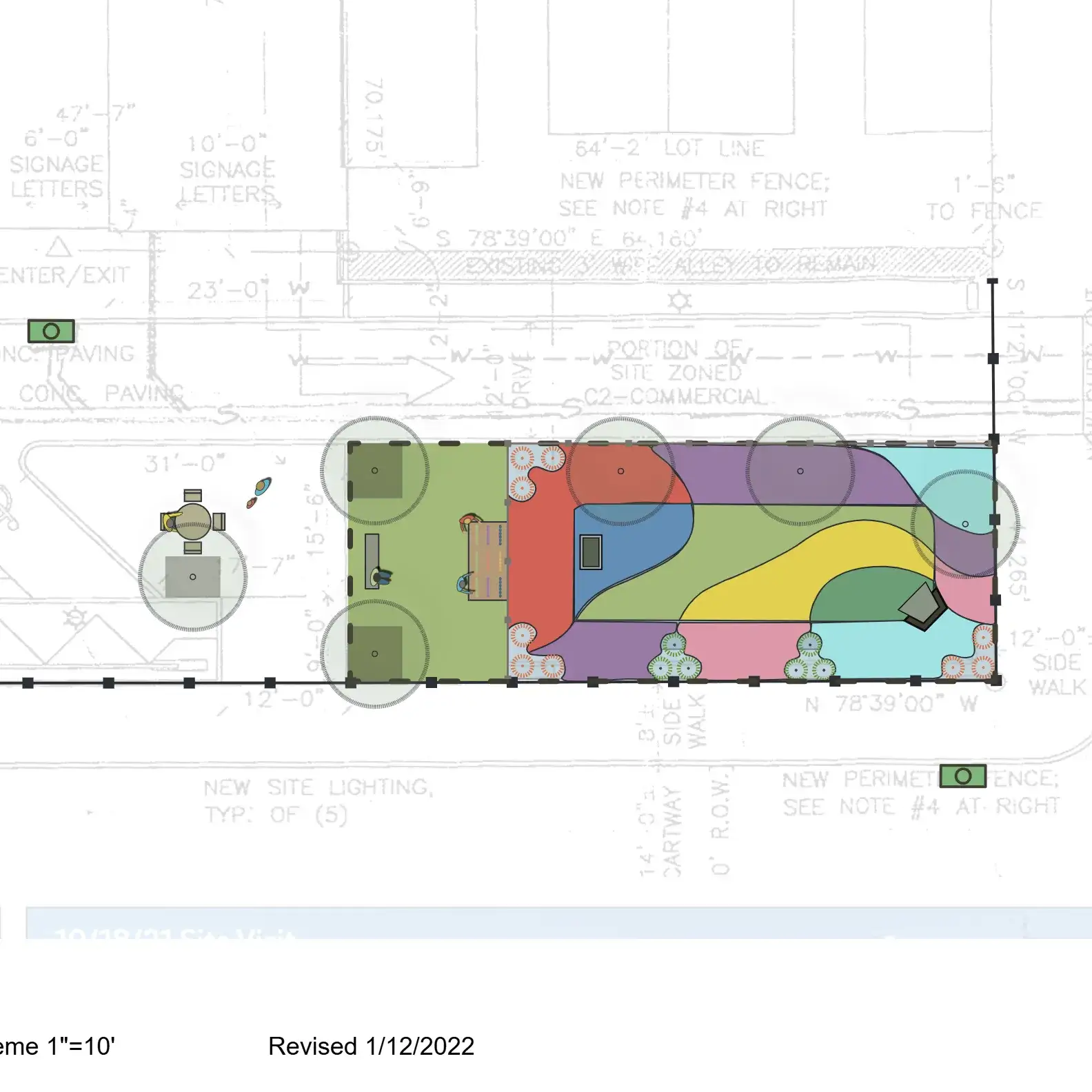
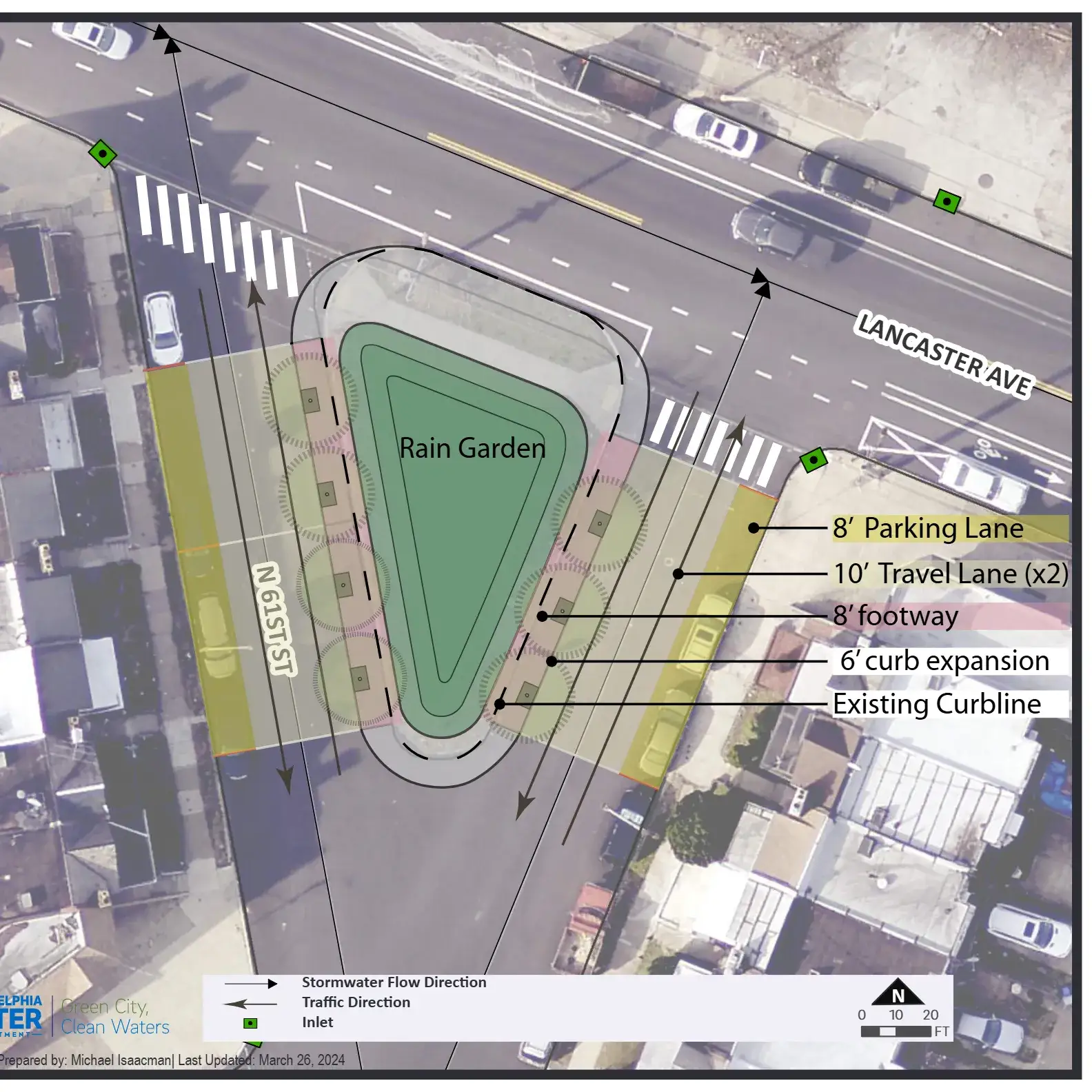
Engaging with community stakeholders is an essential part of public work. All GSI projects make use of some form of outreach, whether it be with other city agencies, community meetings / charrettes, or construction complaints from unhappy residents. In order to make our complex infrastructure digestible for the lay person, simple functional graphics are often best. Easy to understand graphics can also help break down language barriers, enabling communication with all types of communities. Below are some examples of early stage concepts for community meetings, simple perspectives for residents weary of new trees, and other resources that have been helpful with communicating with the public.
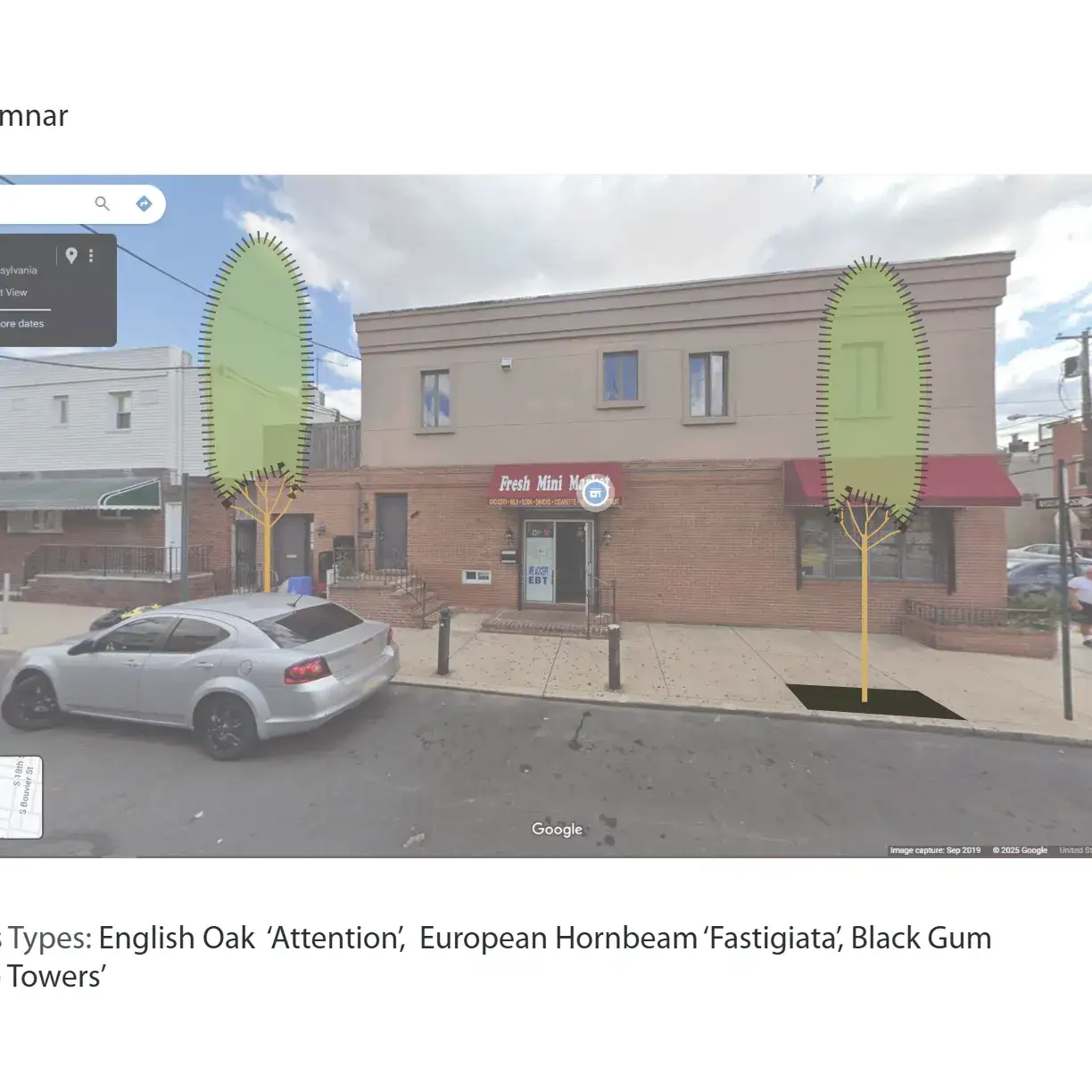
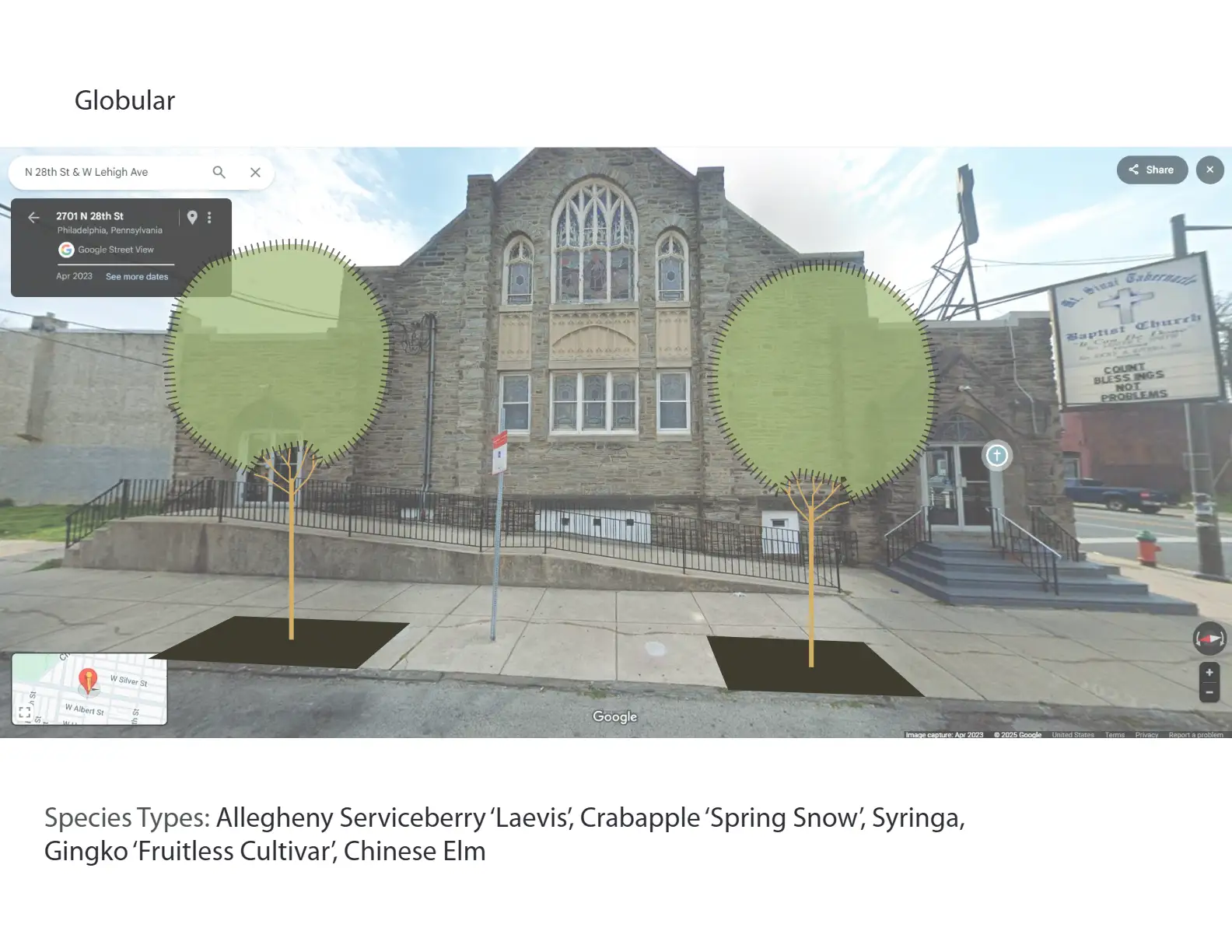
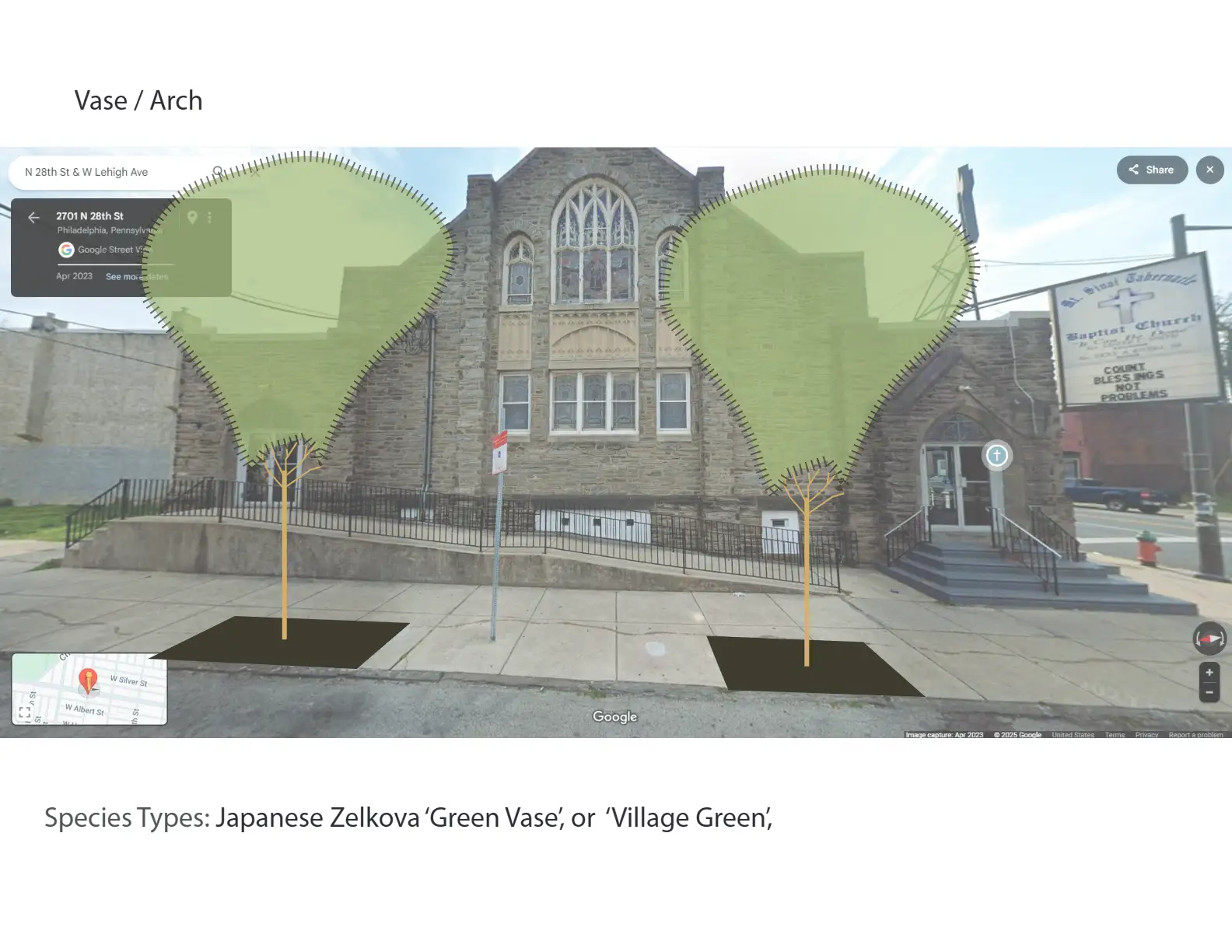
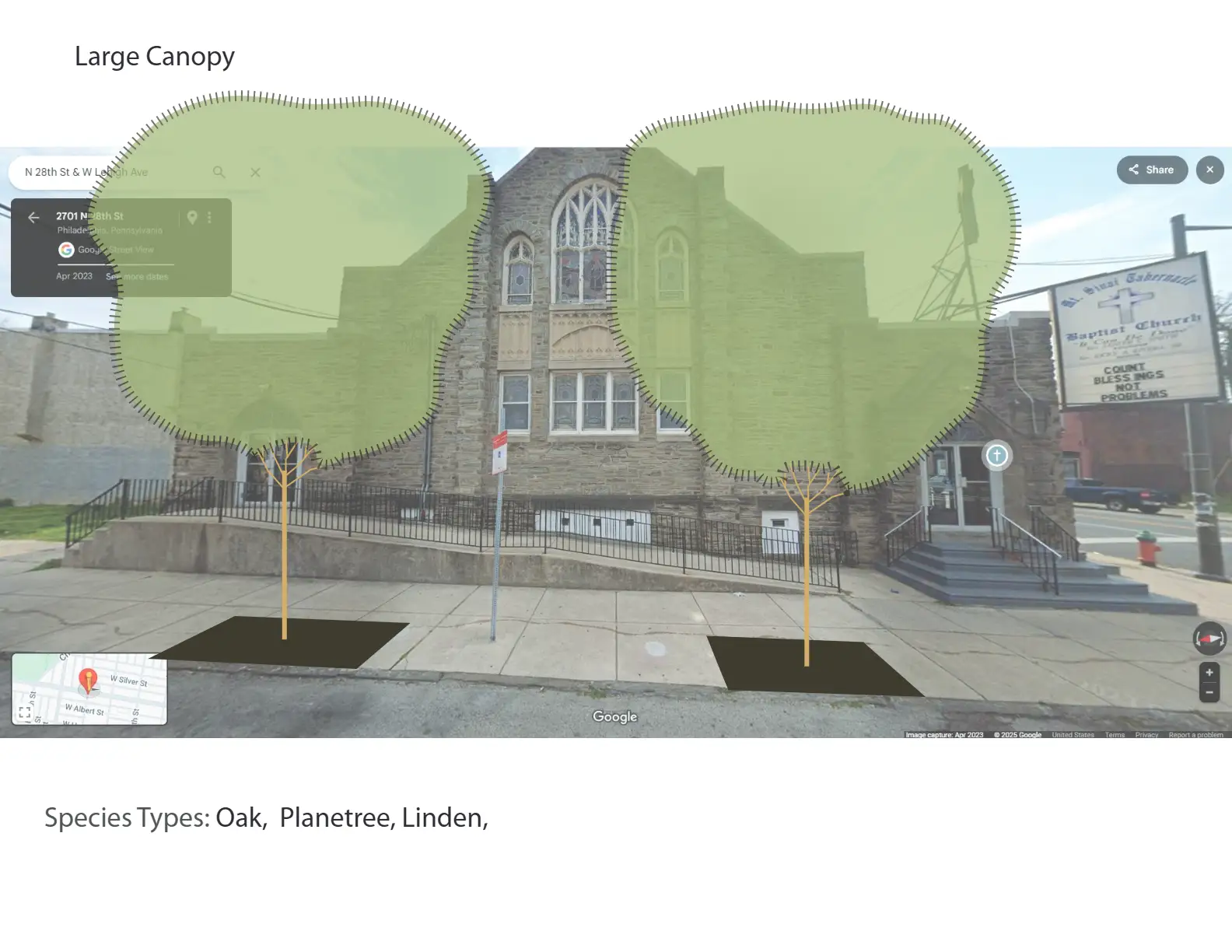
ADA Compliance - PROWAG
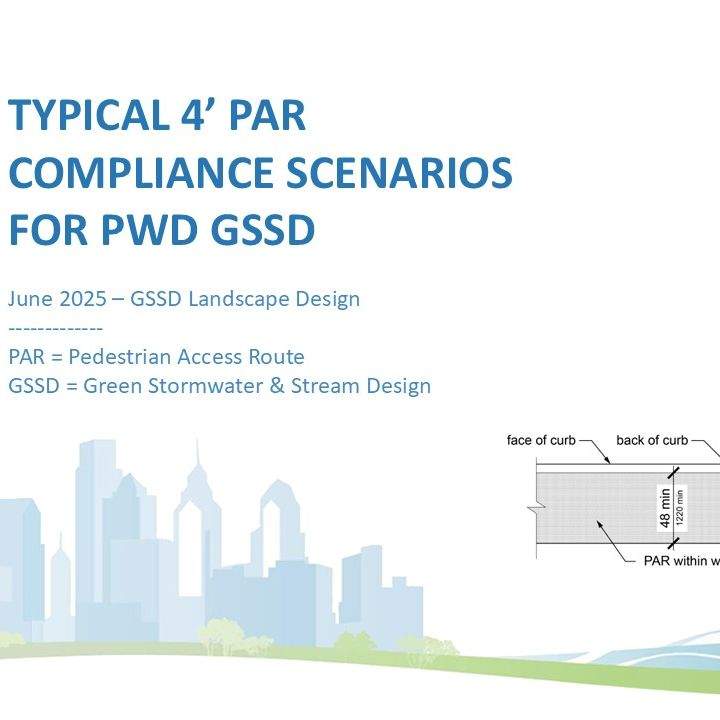
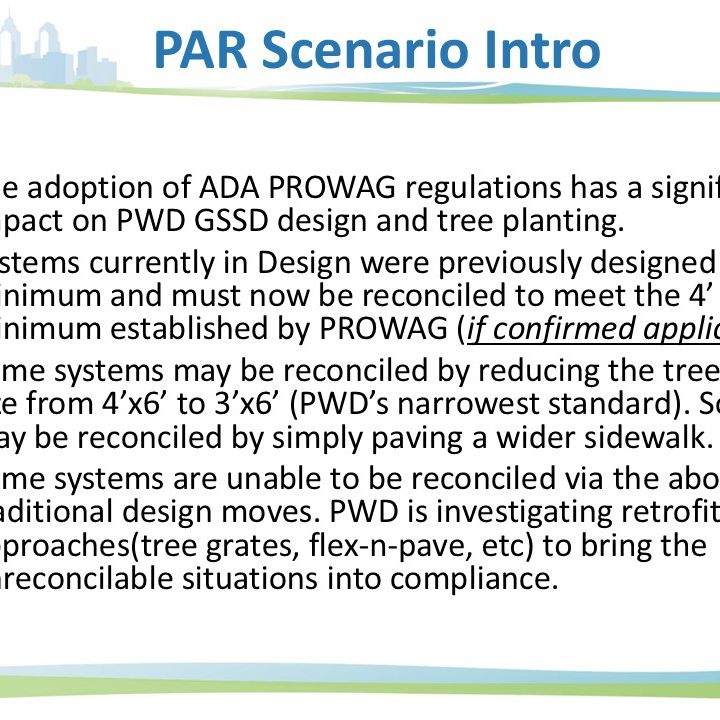
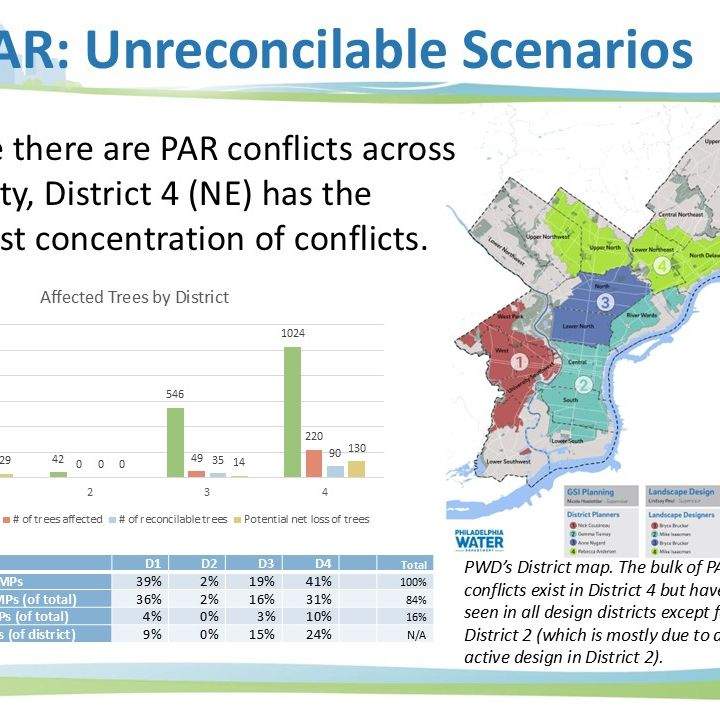
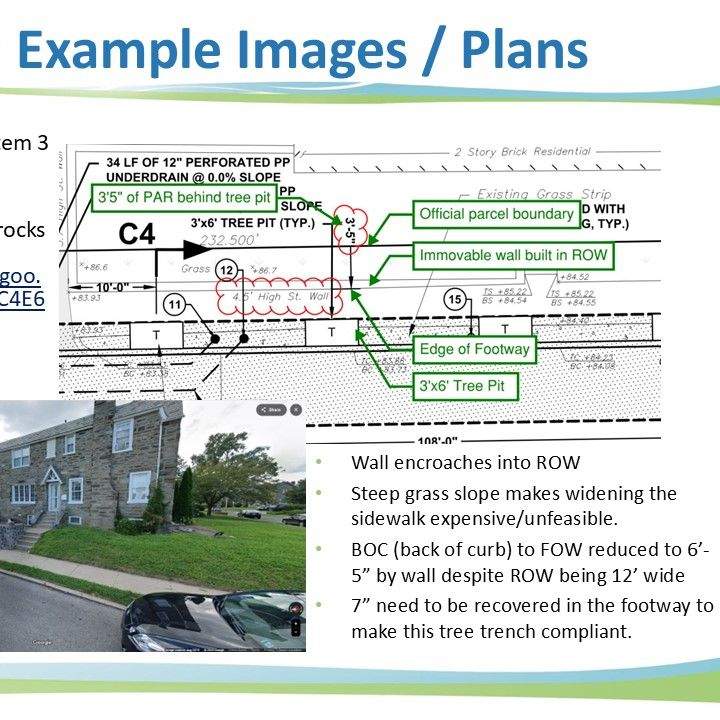
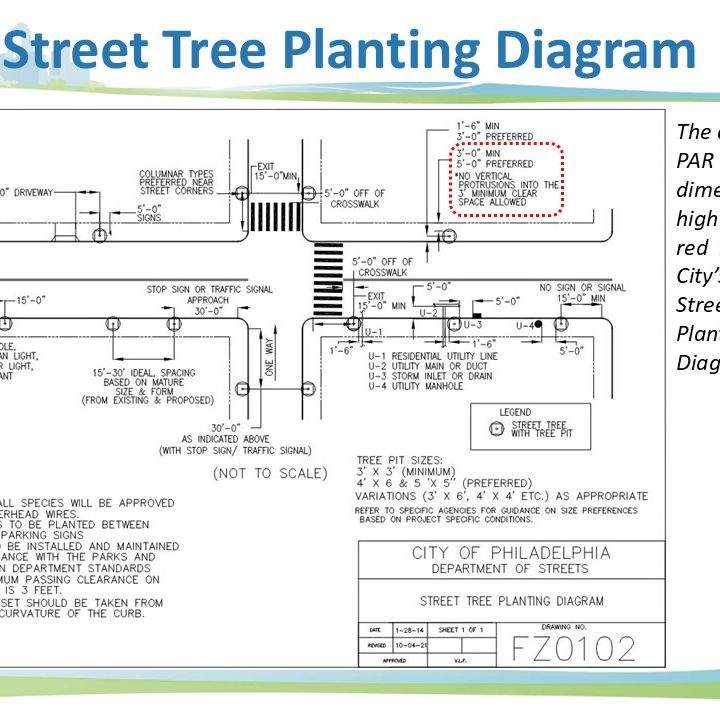
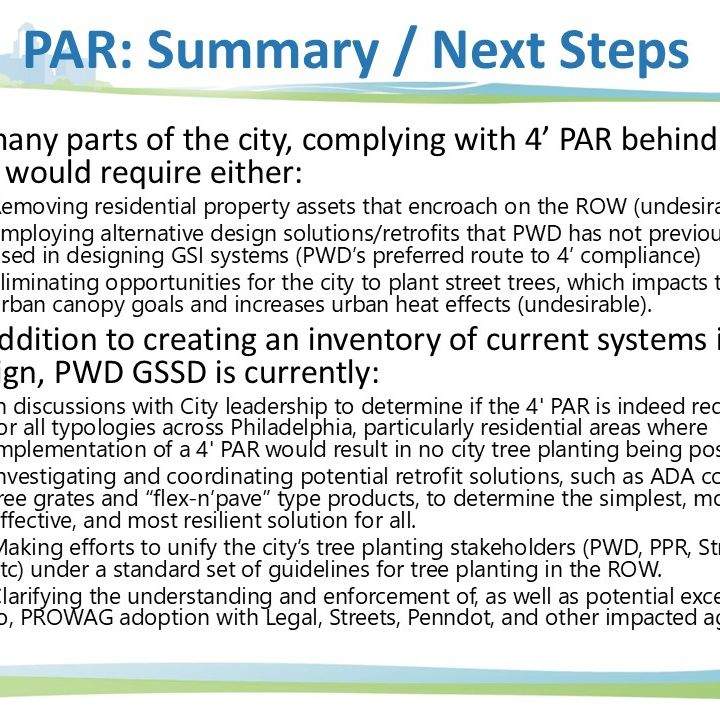
Due to Philadelphia's narrow footways and odd parcel arrangement, it can be difficult to achieve ADA compliance in the right of way when designing street trees. It became more difficult with the adoption of PROWAG, which widened the access route within the right-of-way from 3' to 4'. In response, myself and my staff investigated the number of systems and trees effected in our design pipeline, then worked with the design engineers to craft a solution. With a complicated contract structure that separates landscaping from general construction, as well as public procurement constraints, this was a much more convoluted task than it may seem on the surface, requiring coordination with planners and engineers form several city and state agencies. The below slides were developed as a primer for dialogue with other city and state agencies that are not as familiar with the unique circumstances of PWD's GSI Design.
Geotextile Alternatives Trial
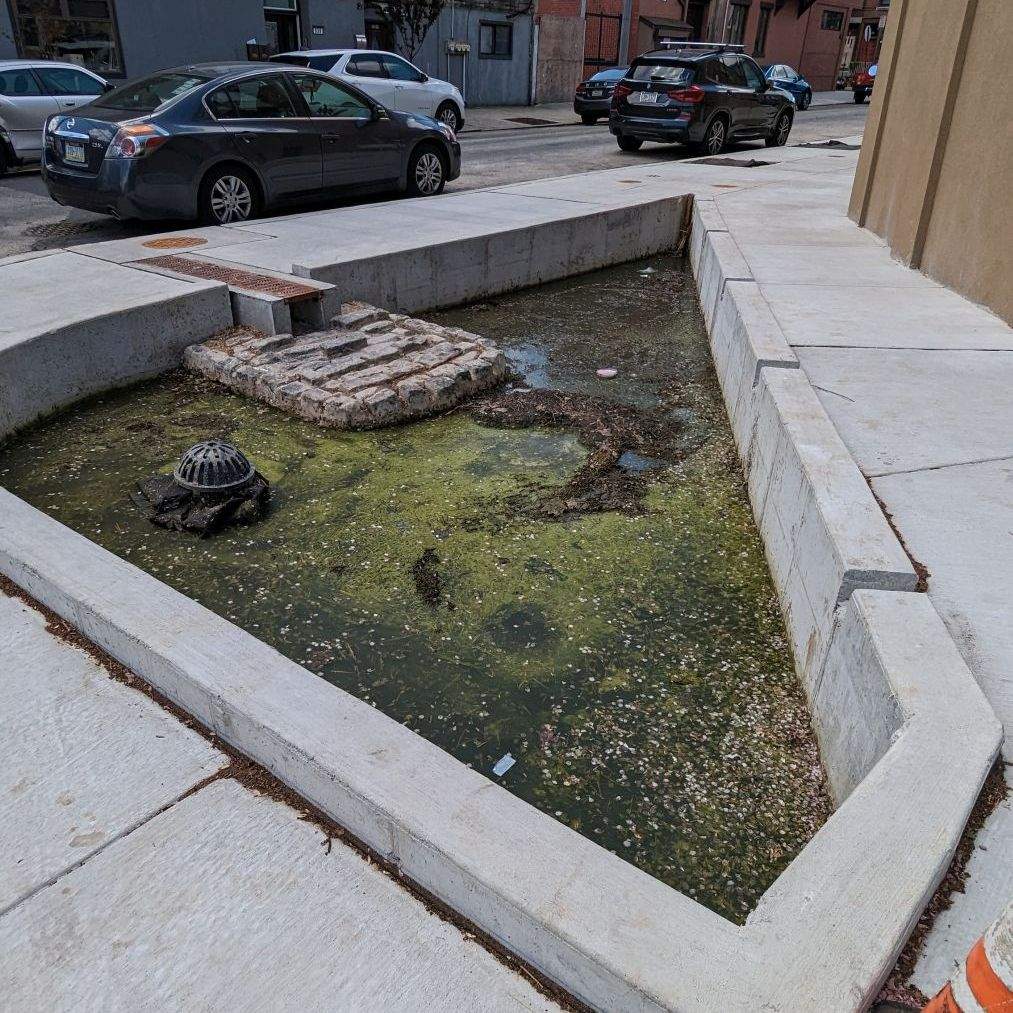
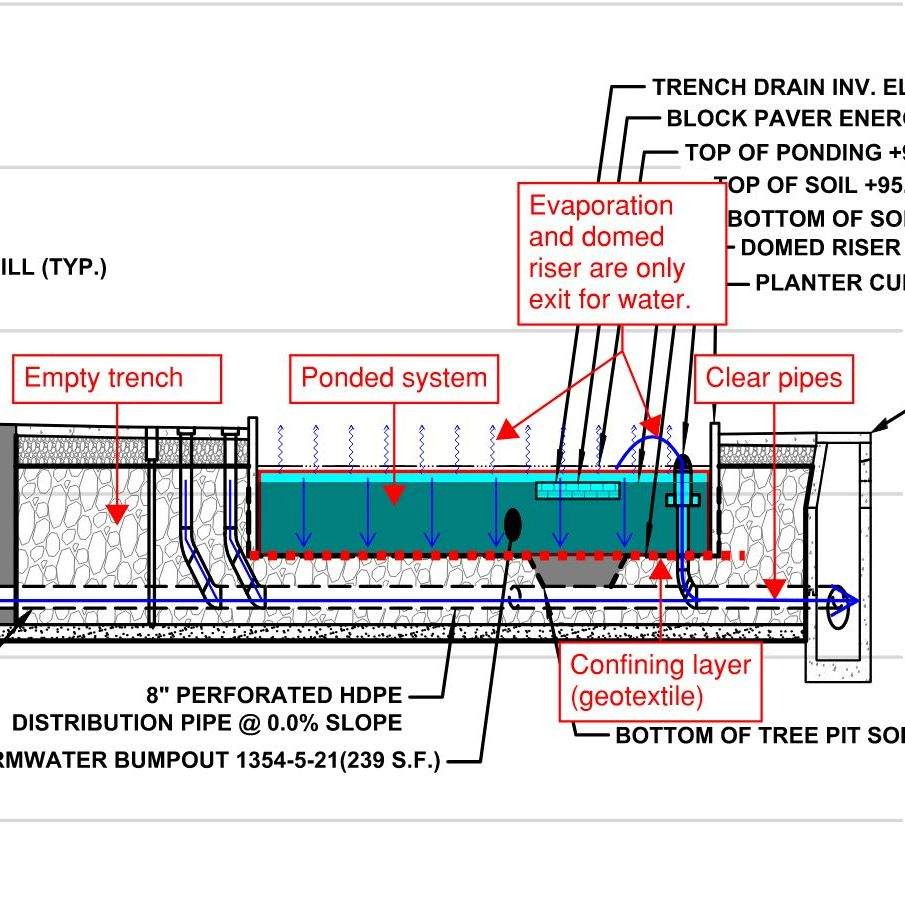
In response to drain down issues at several projects, I lead an investigation into the problem, designed a lab trial to test various materials, and helped author an eventual change of the design standards of our bumpouts and rain gardens. I was able to diagnose the problem by combining my previous education in soil sciences and experience in the golf industry to apply a solution to green infrastructure. Enacting such a novel change to a strongly established program required not only proof of concept, but careful consensus building skills in order to bring the idea to life.
Other Policy/Procedural Documents
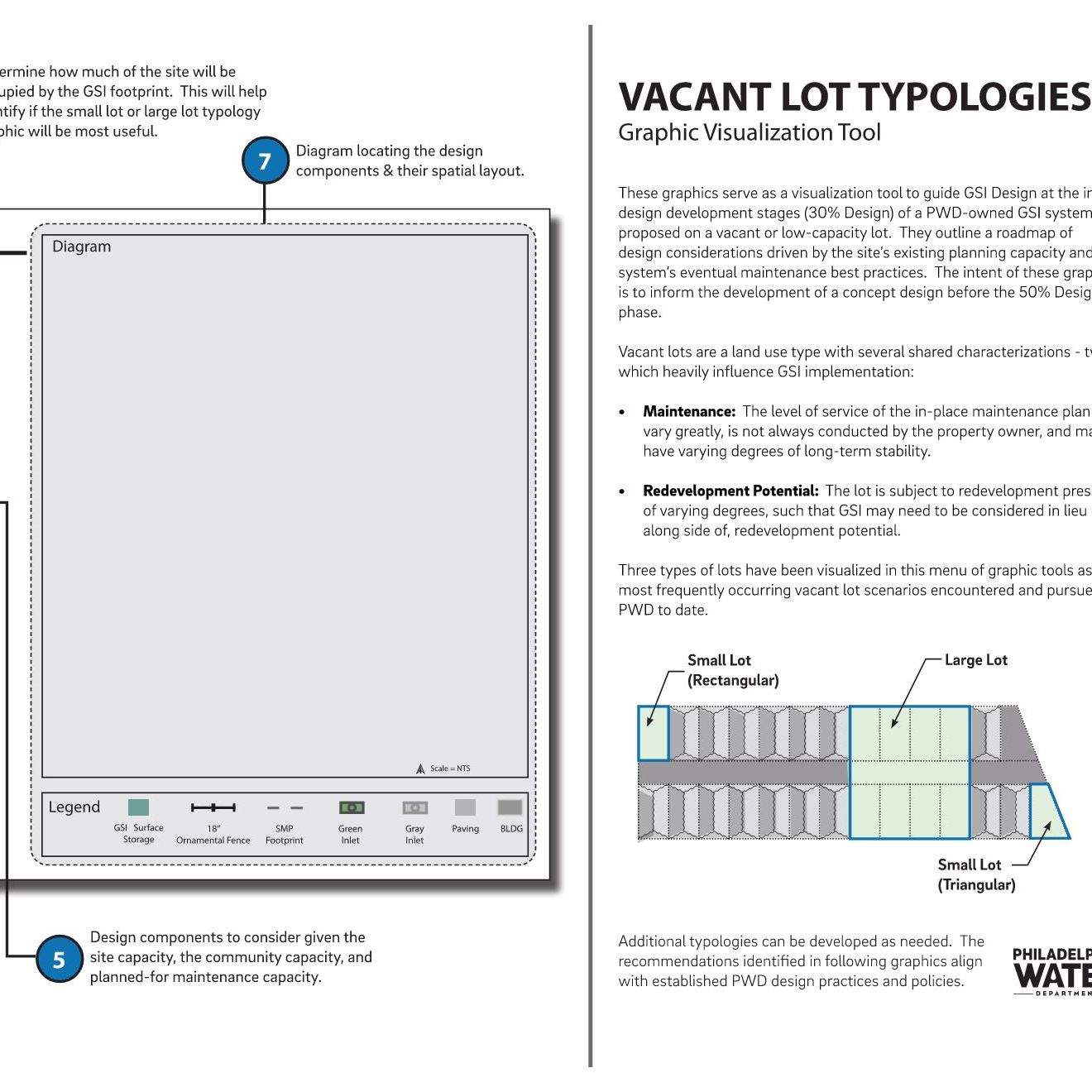
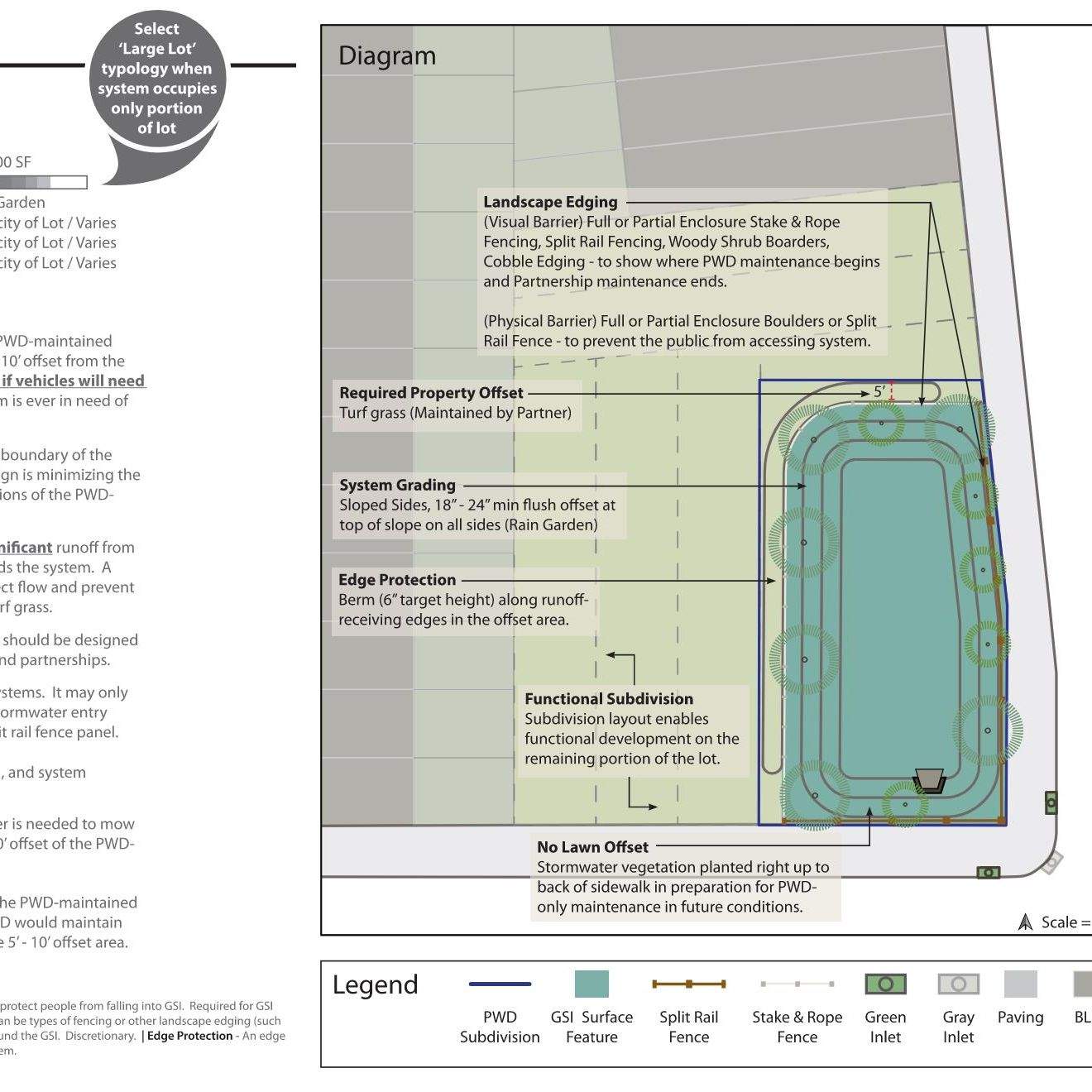
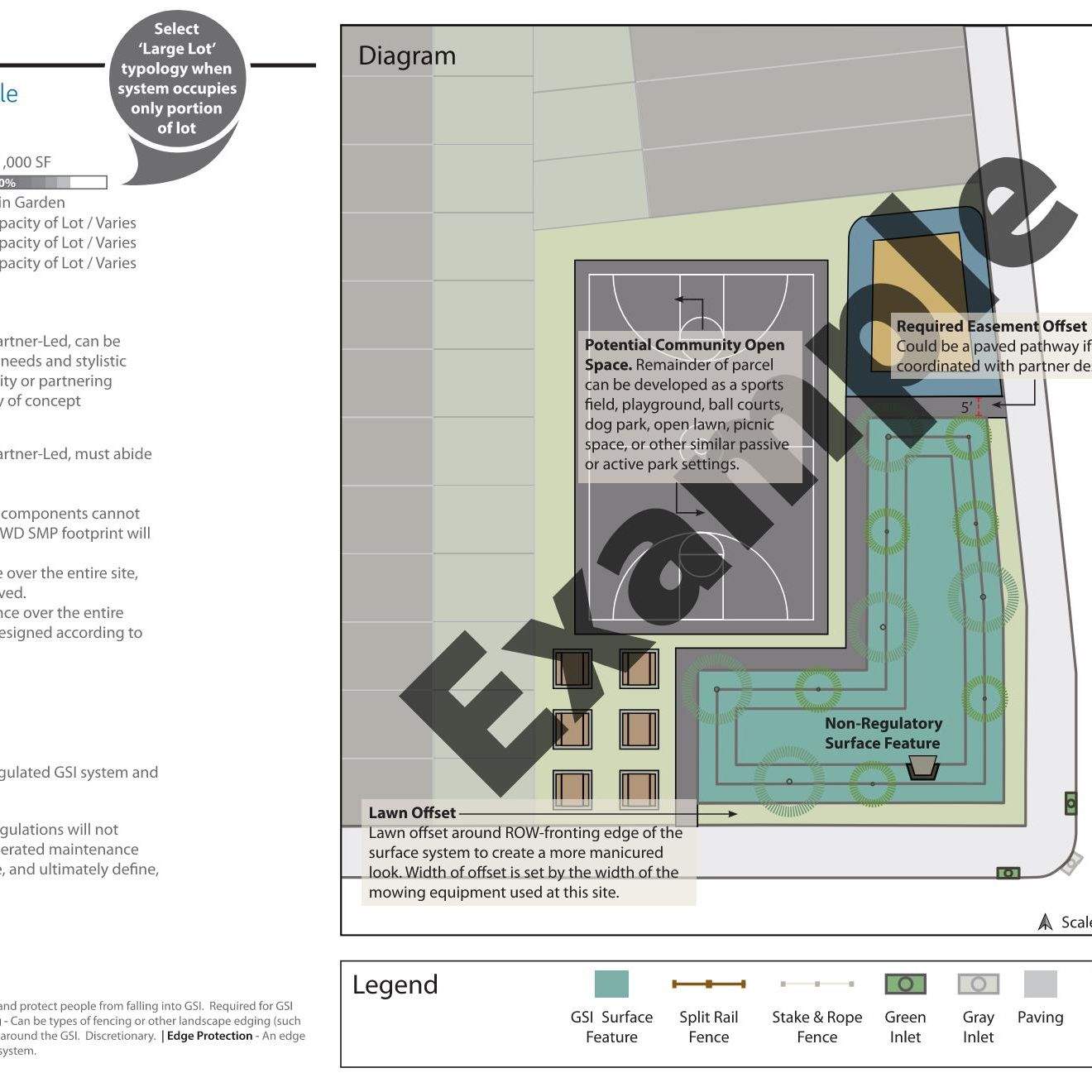
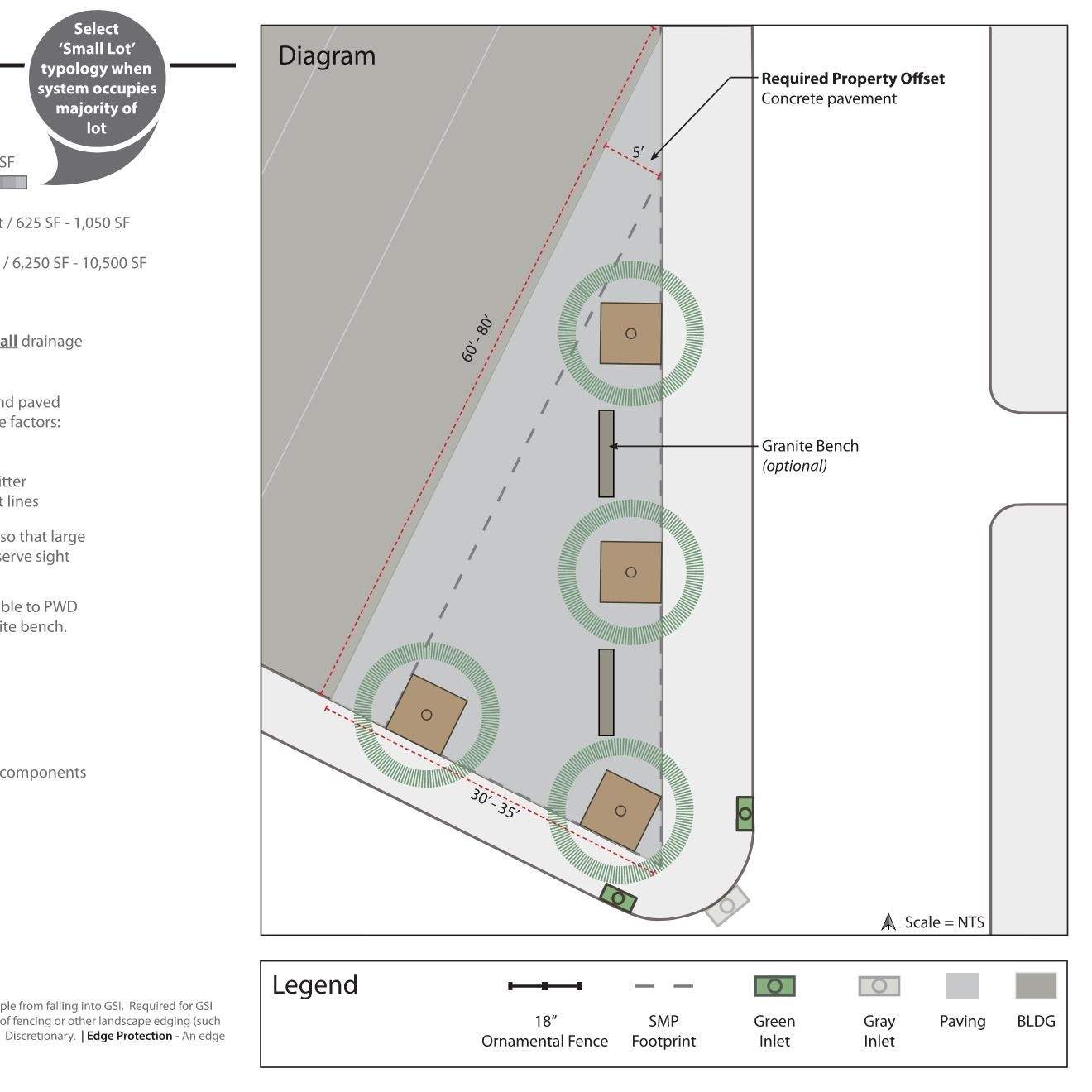
As a part of the municipal government, Landscape Architects at PWD play a role in setting policy for urban greening. This involves many initiatives, both within the department and with other agencies across the city. The topics of these documents range from conceptual to technical, encompassing items like vacant lot development typologies, minimum street tree offsets, climate change adaptation, specifications updates, and other public space design considerations.