Deep Ecologies
Project details
Thesis Statement
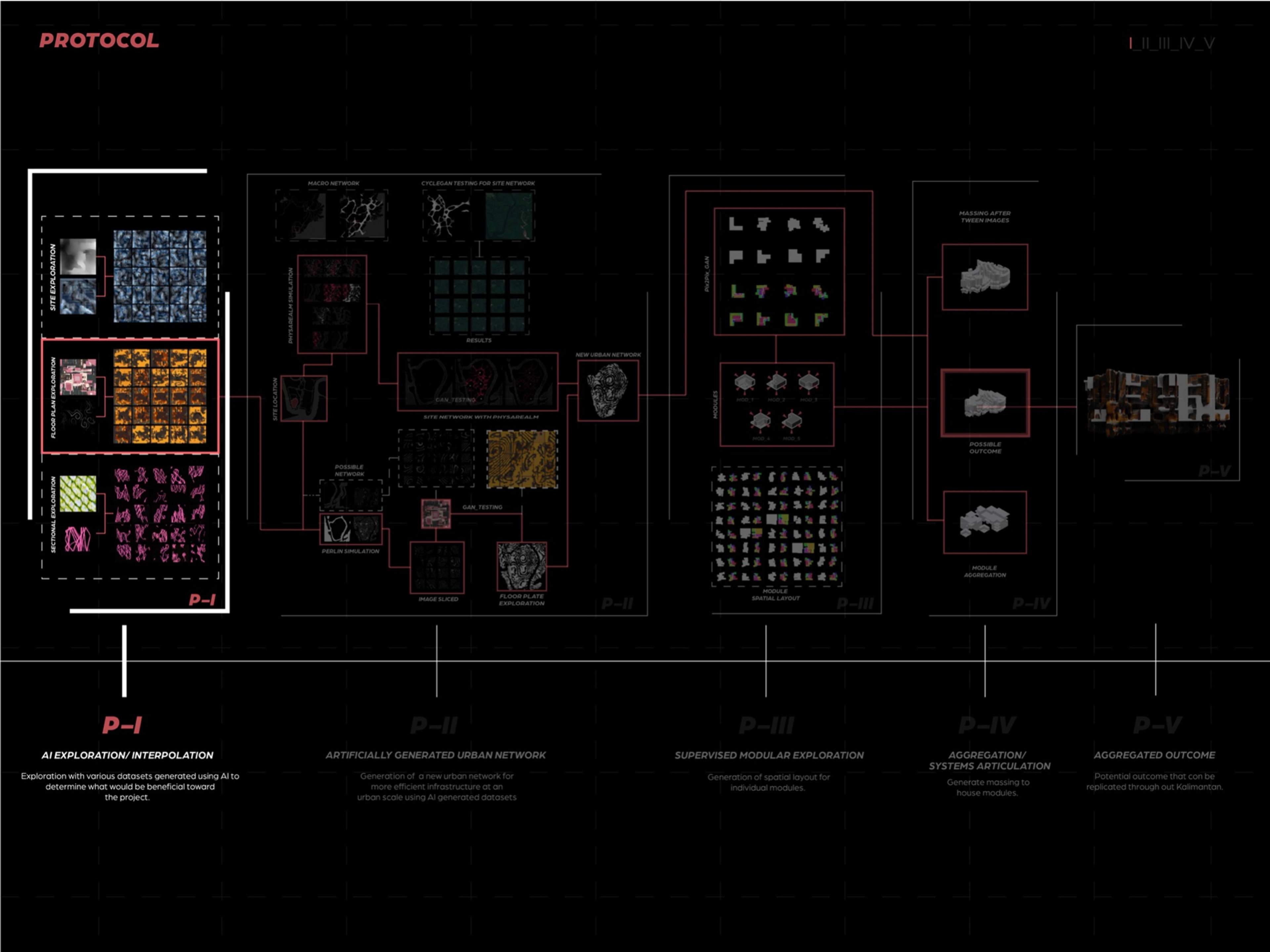
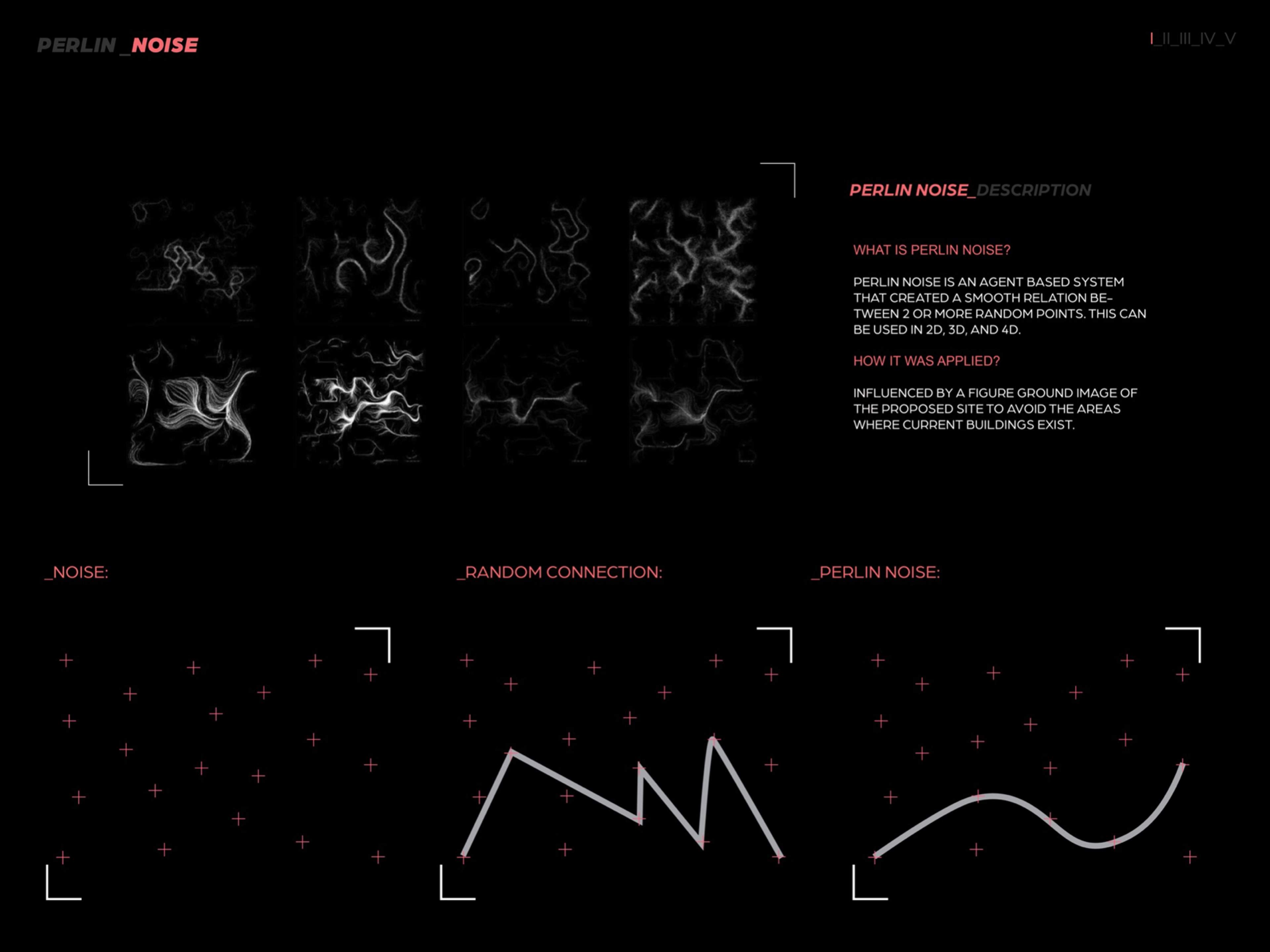
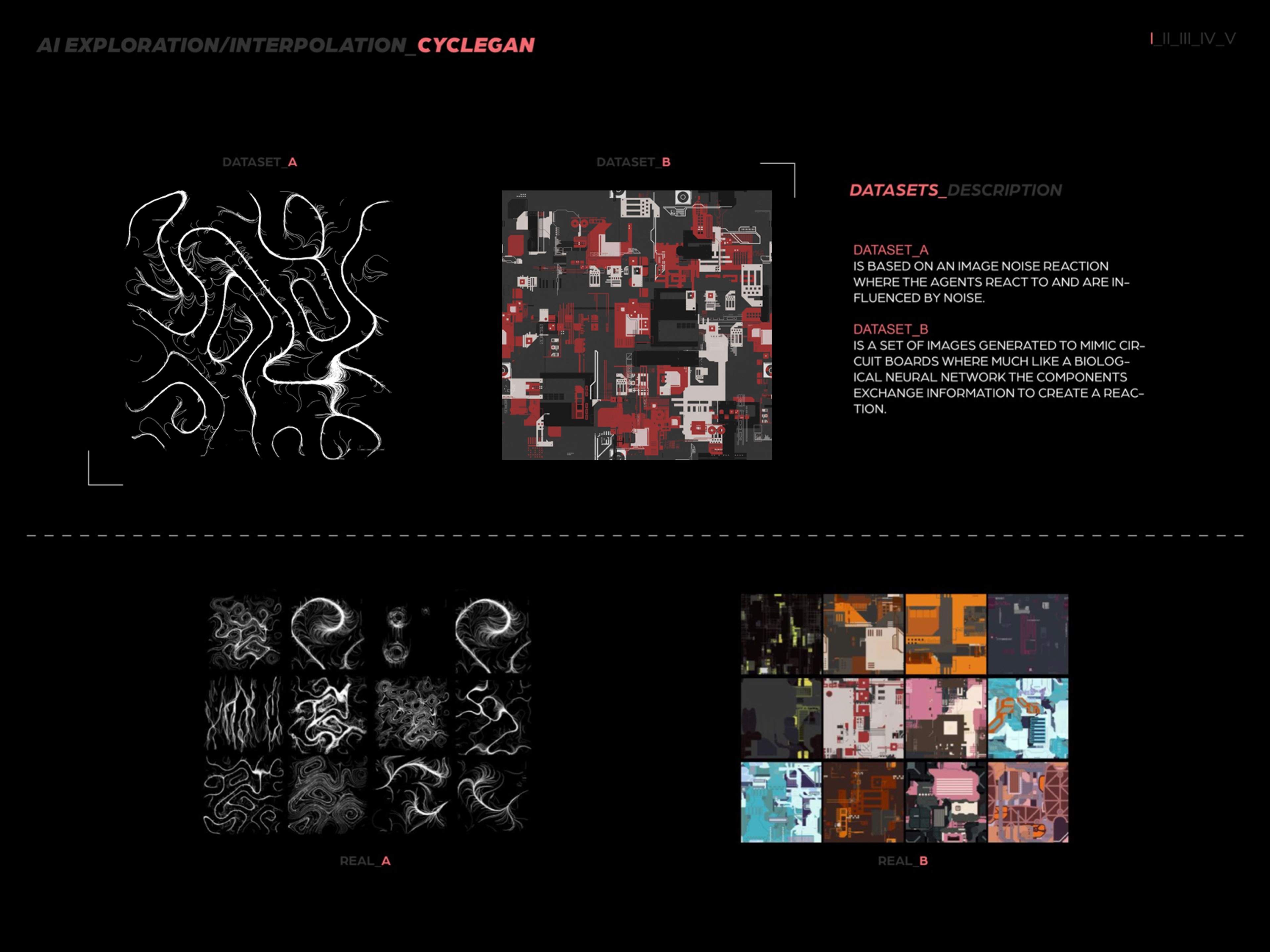
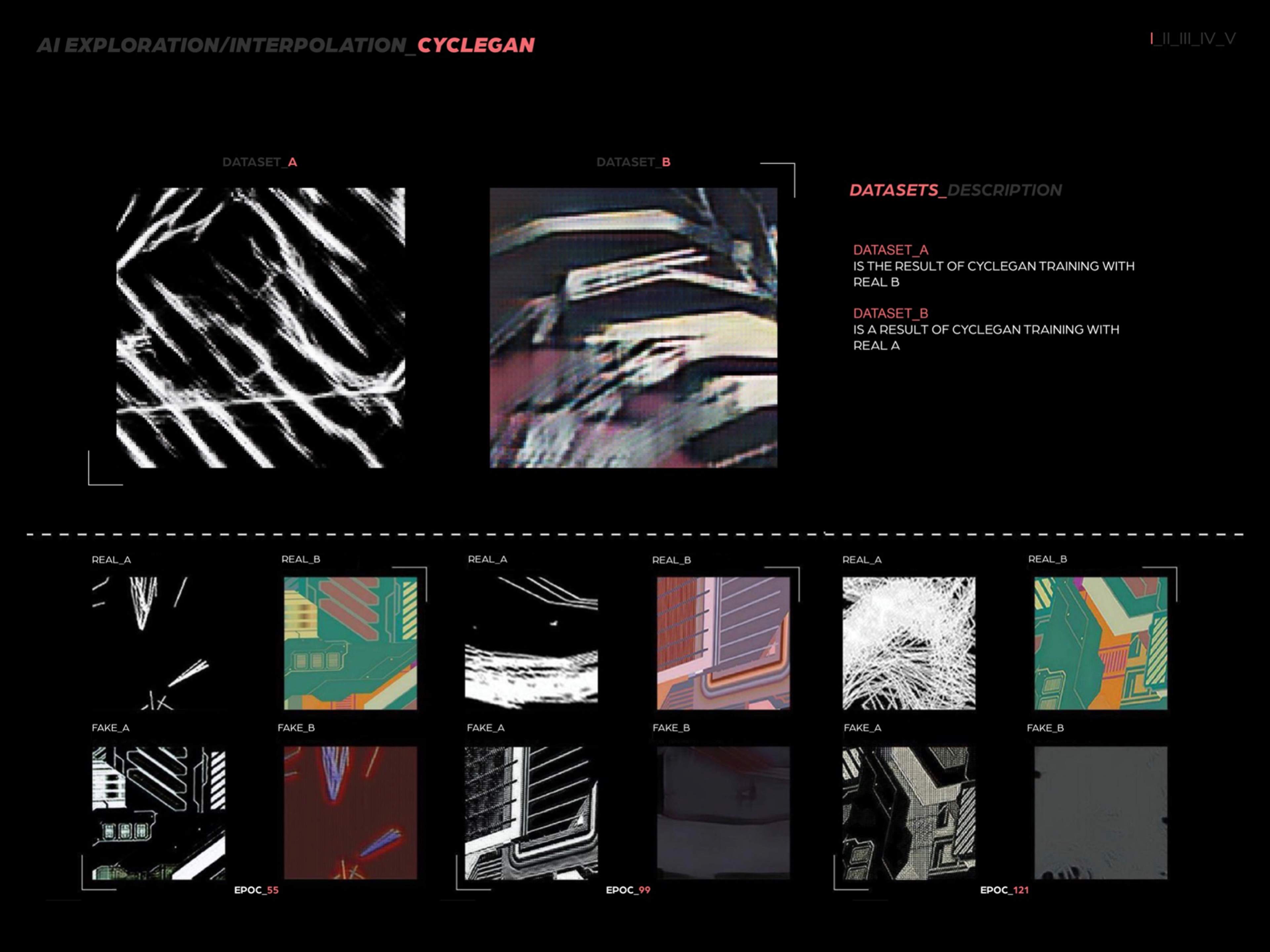
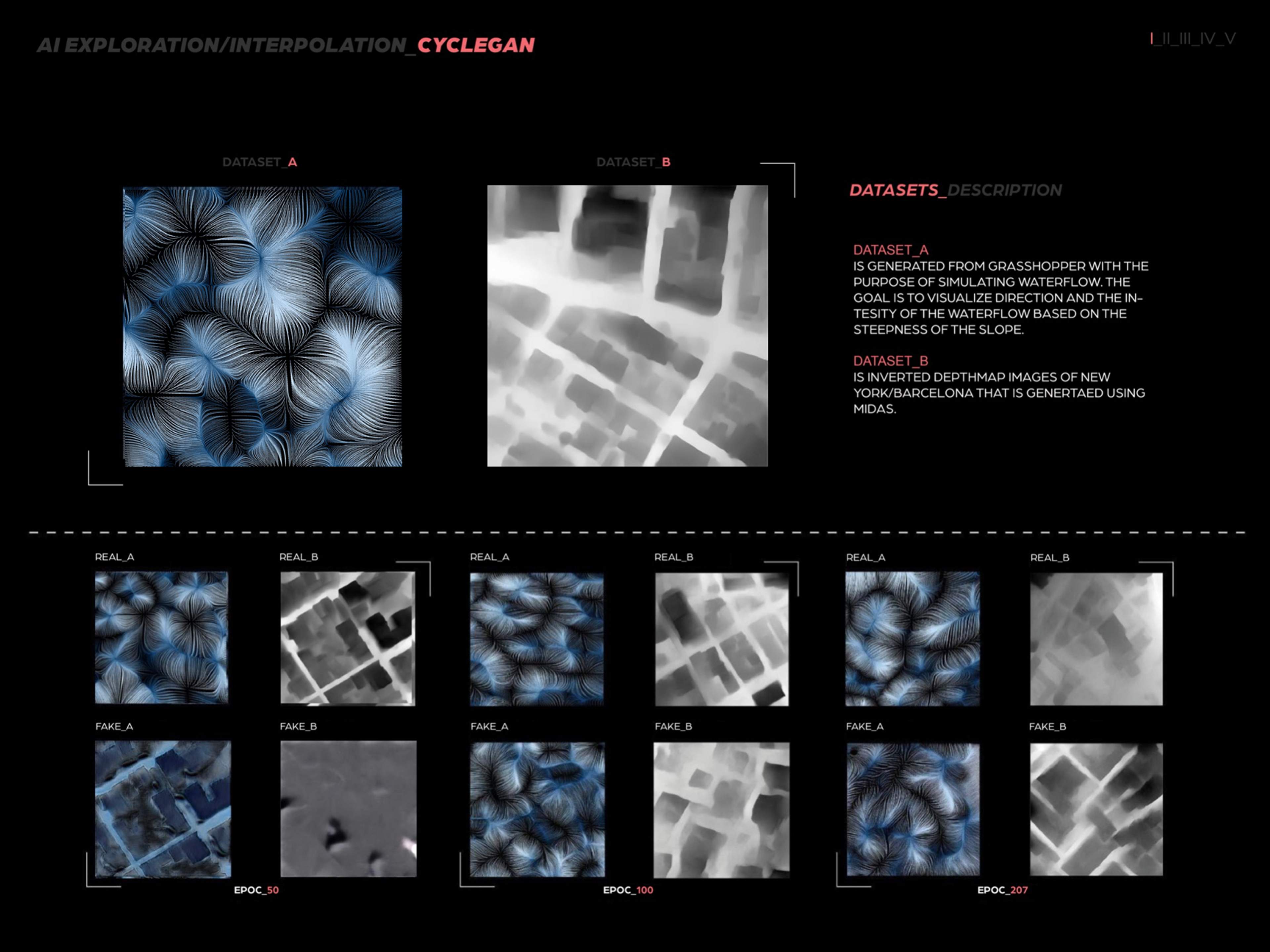
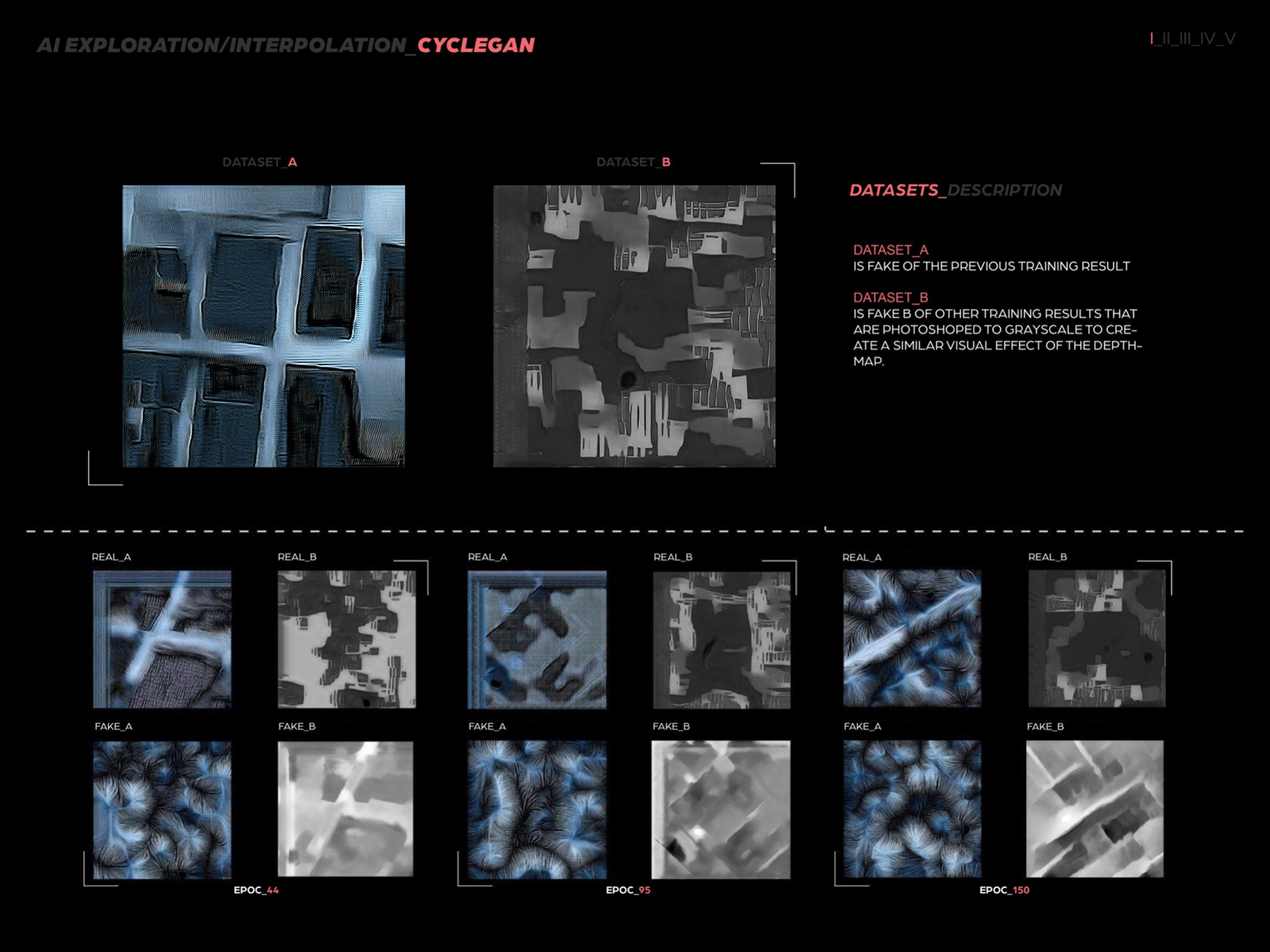
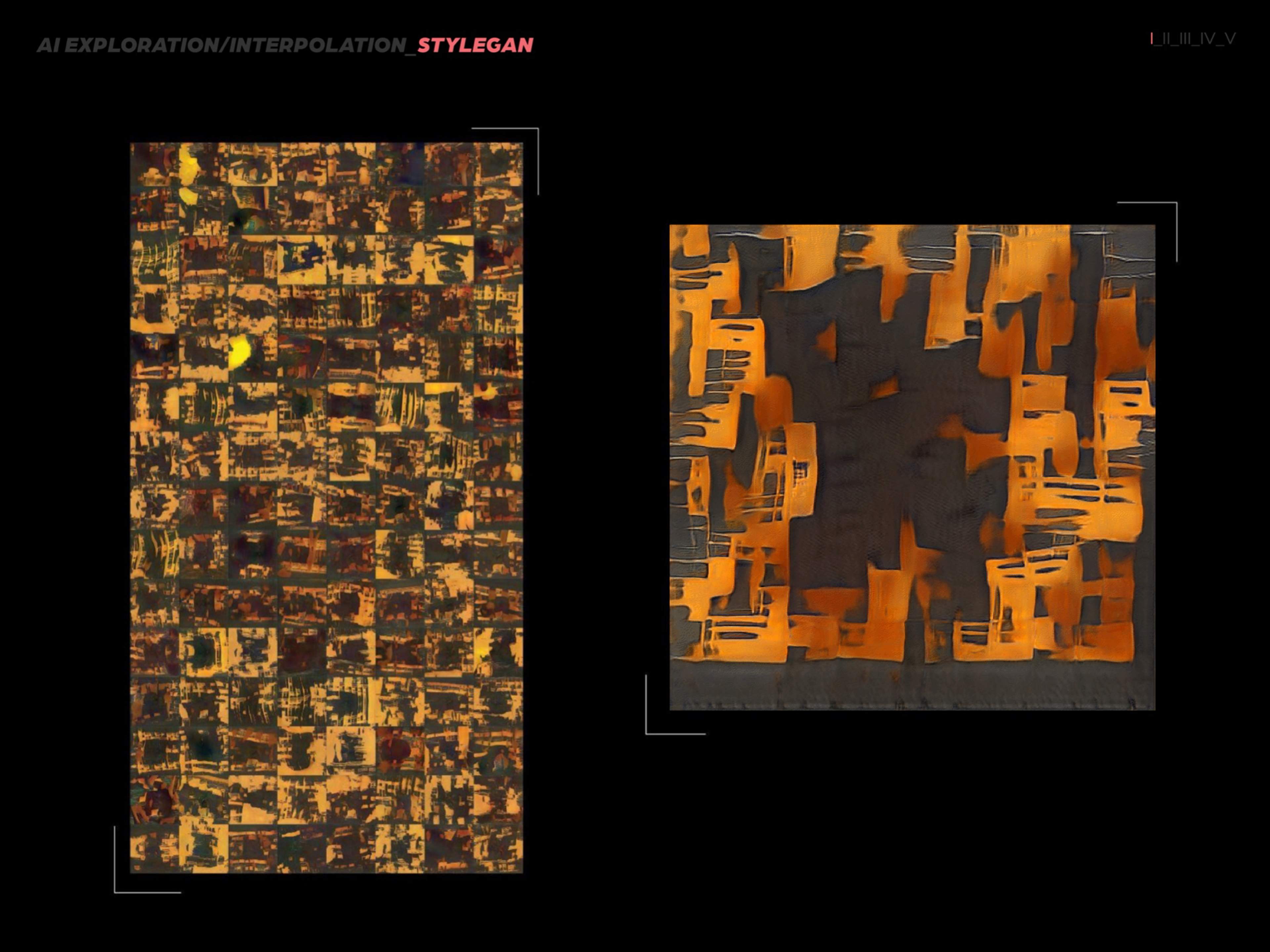
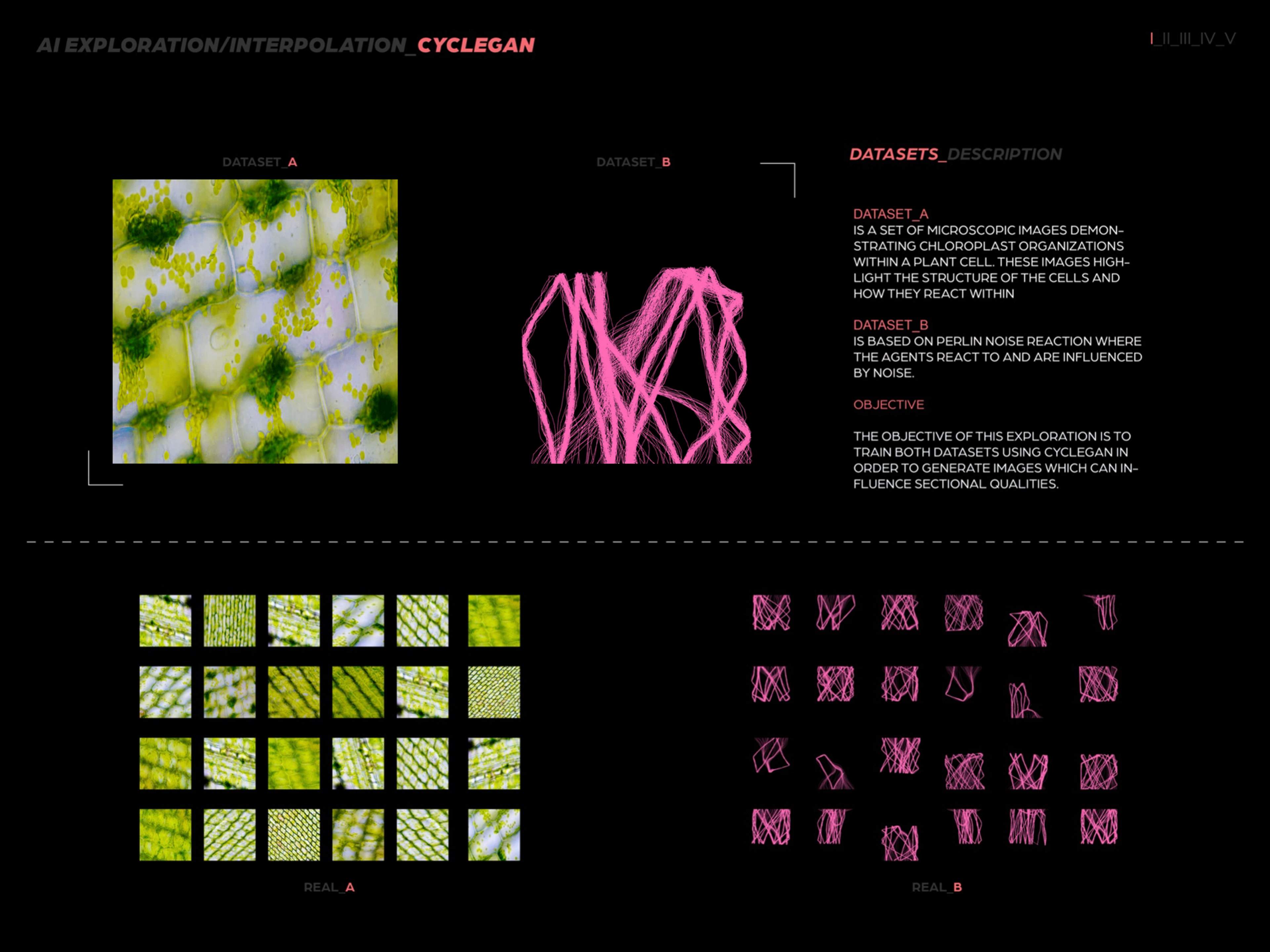
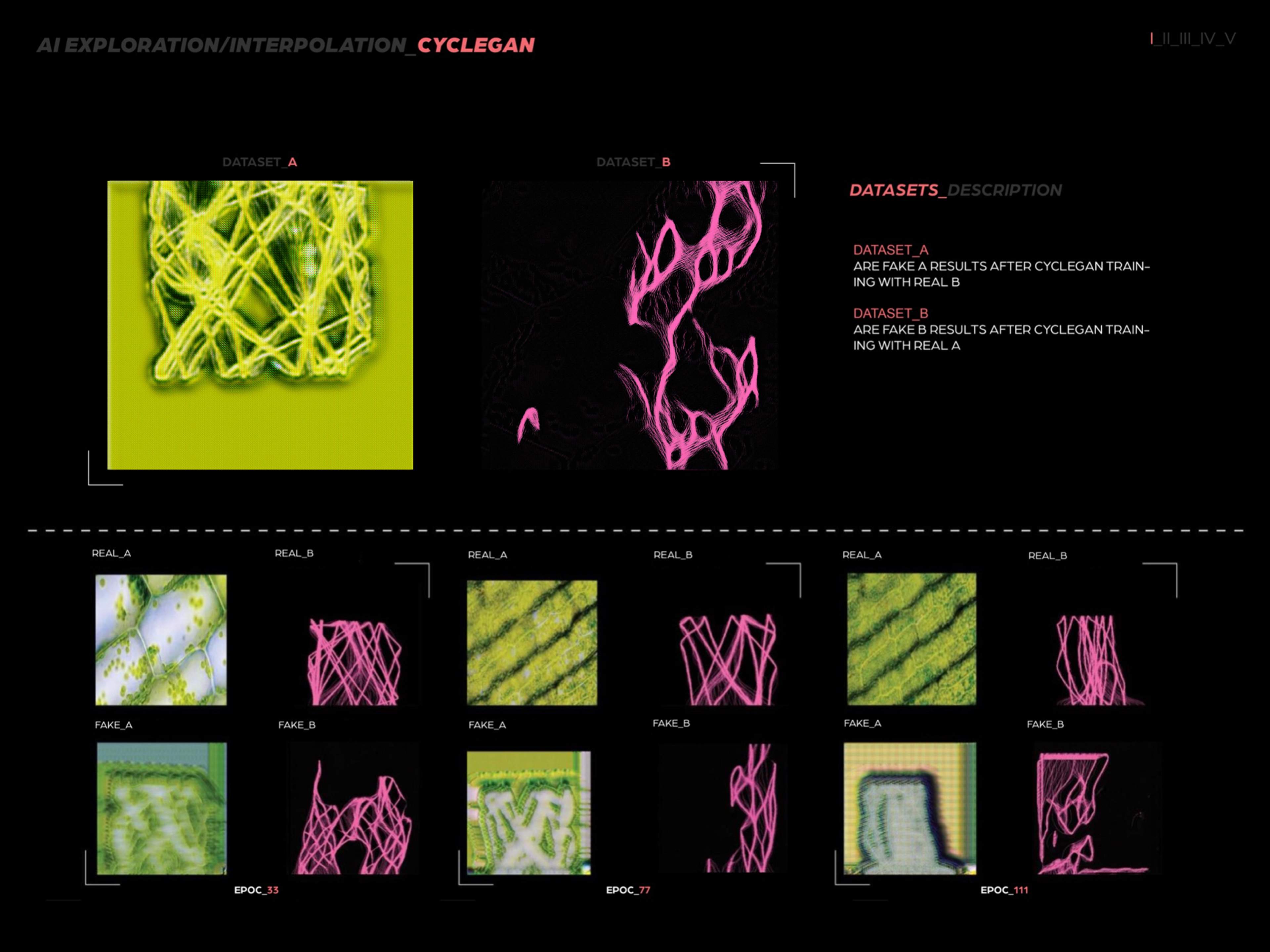
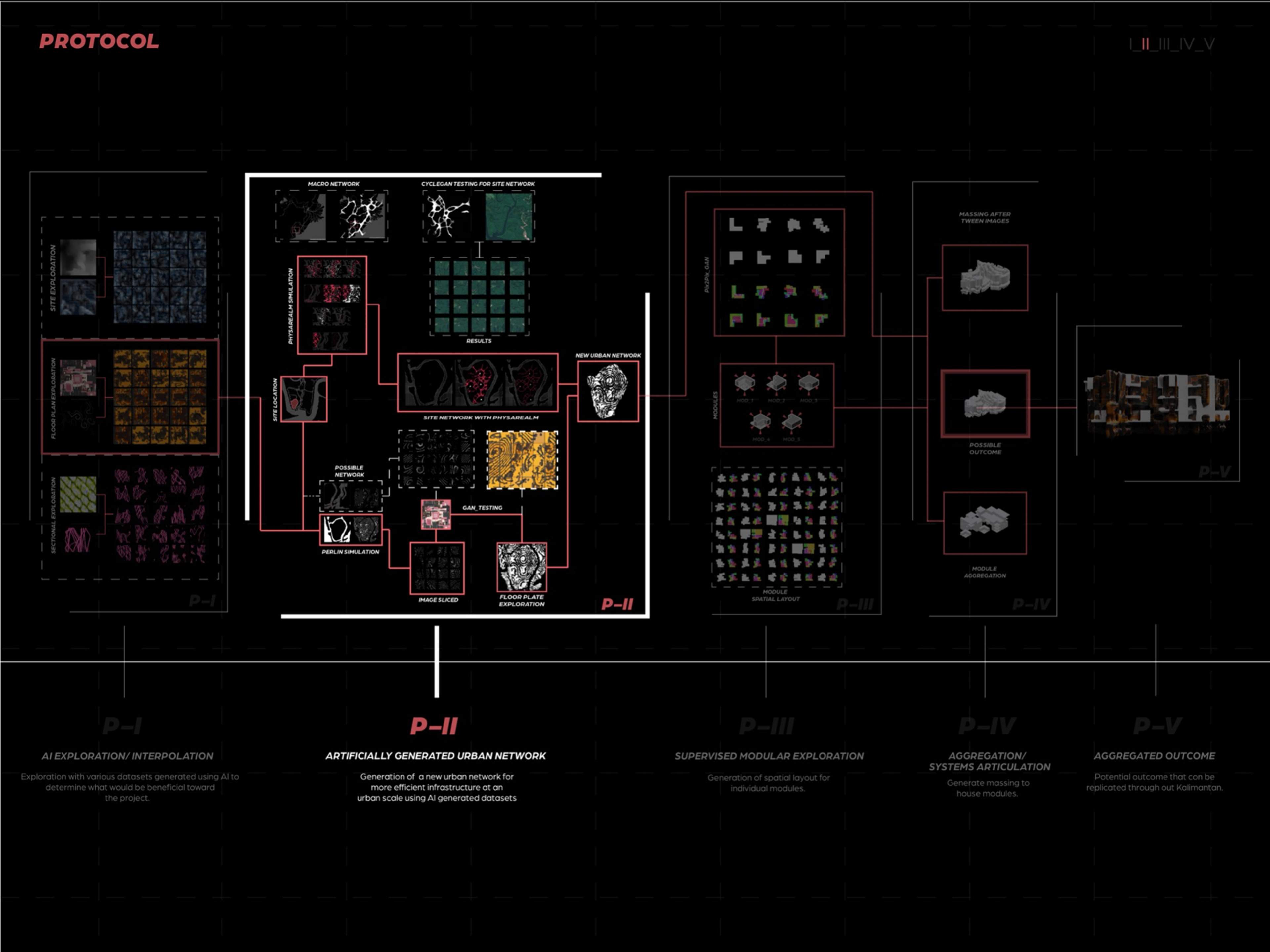
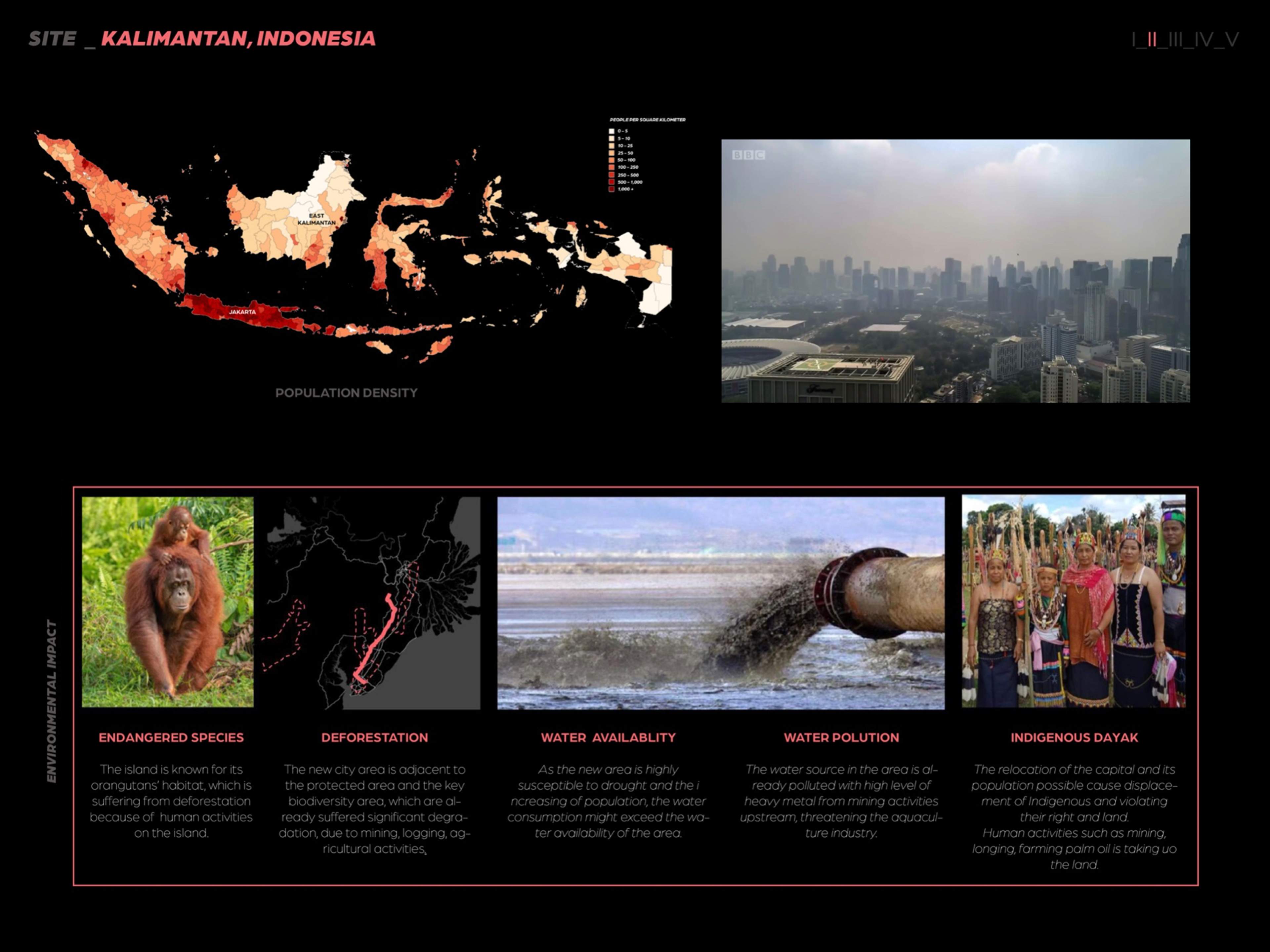
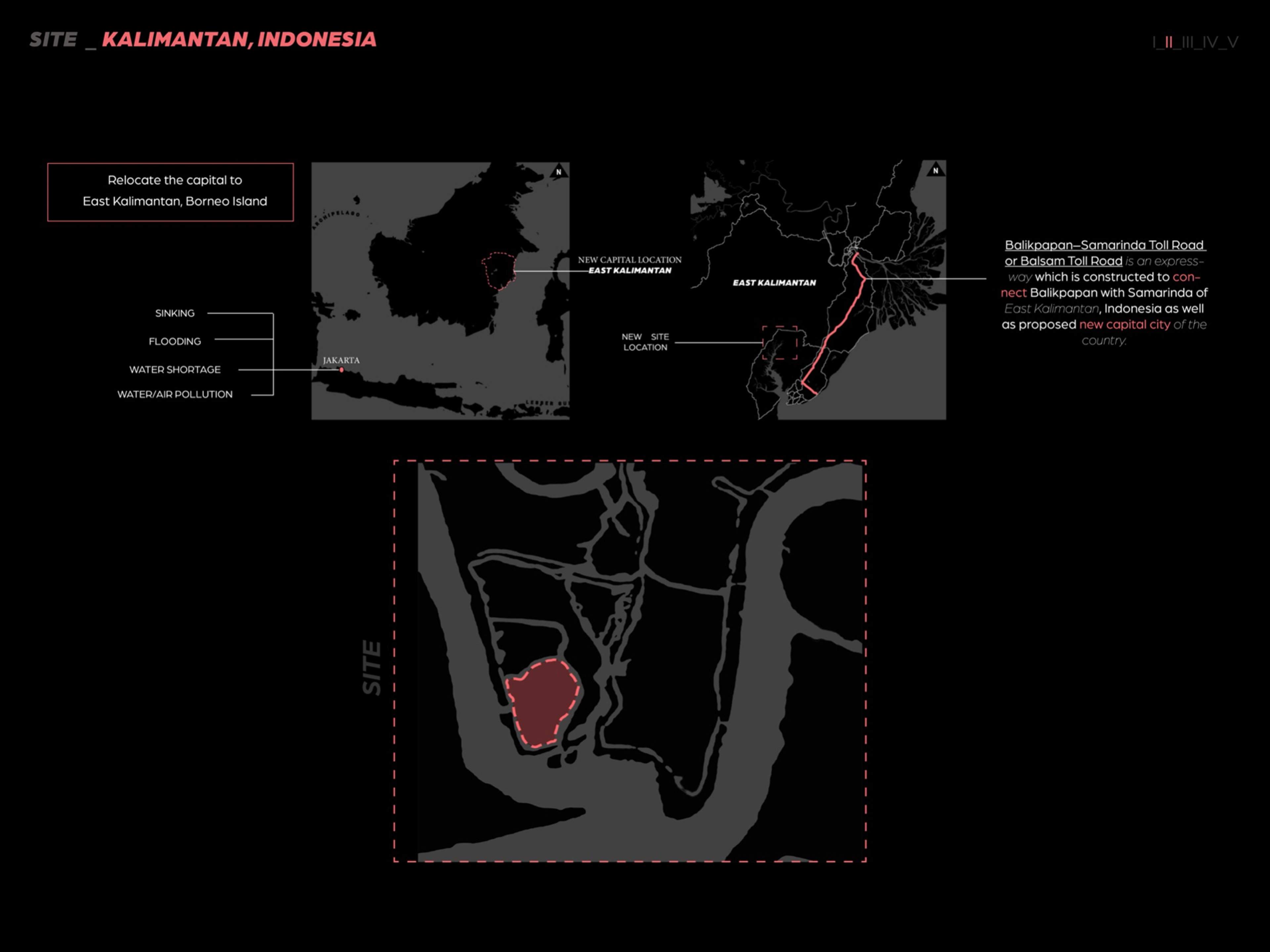
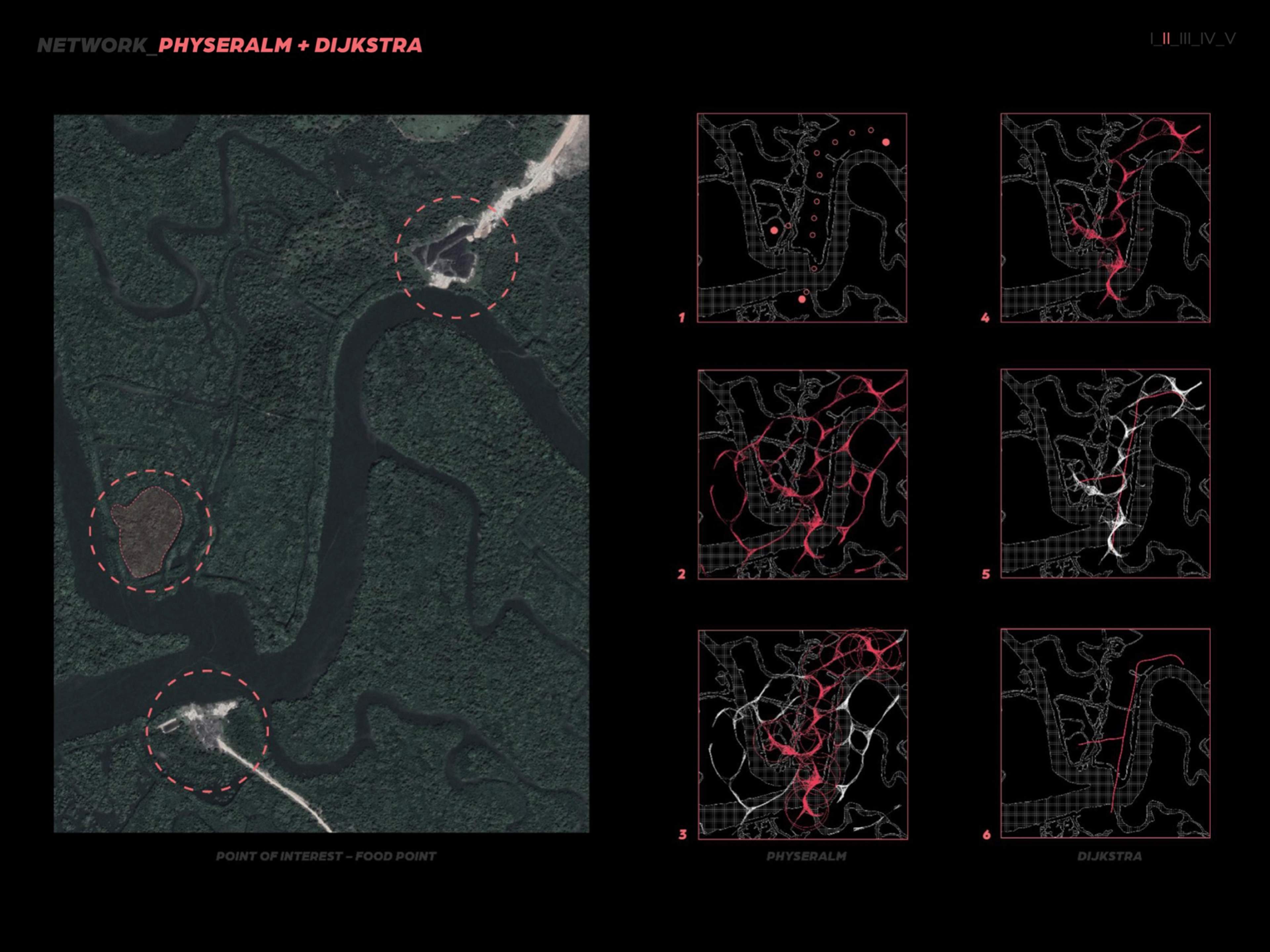
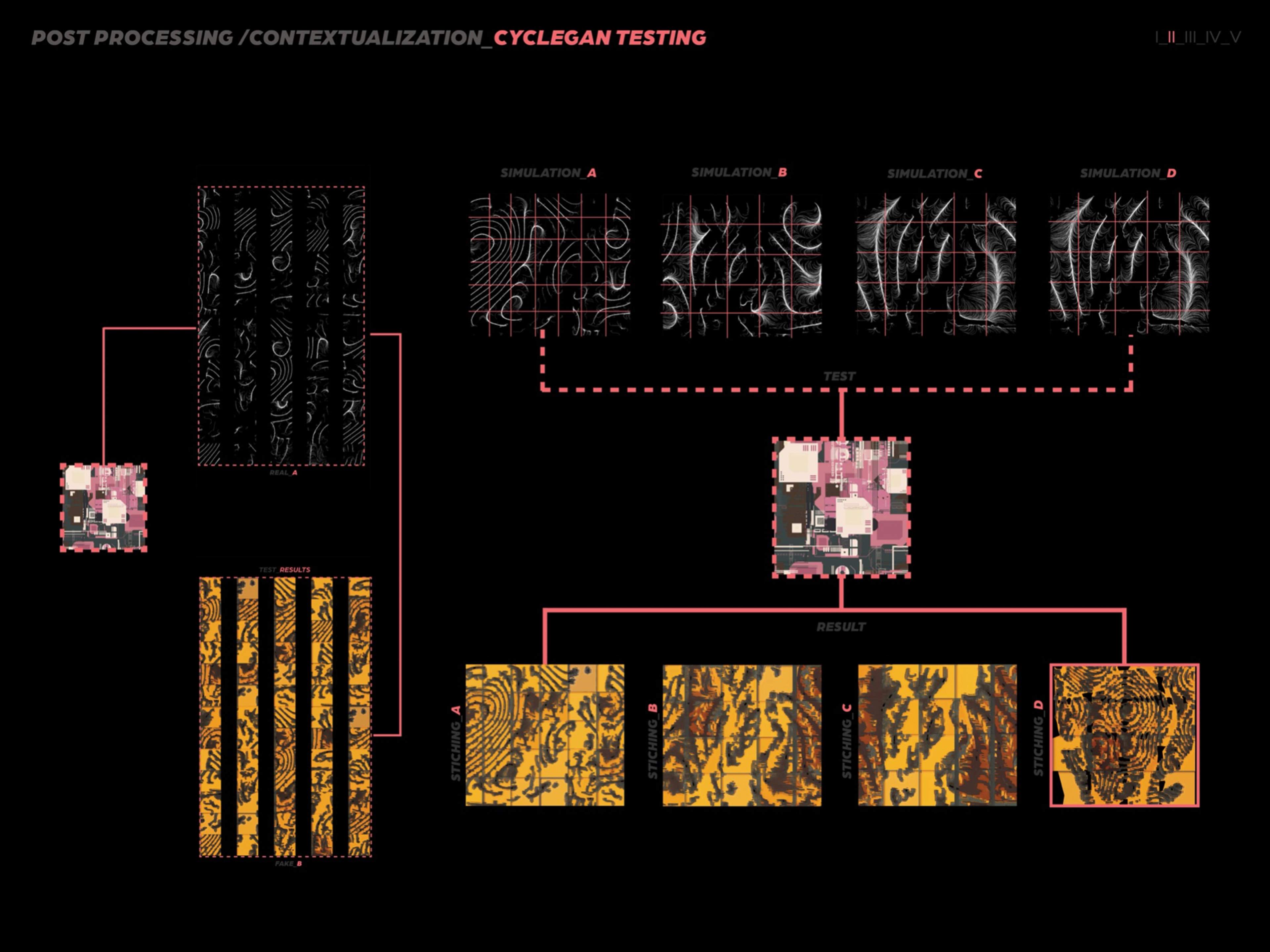
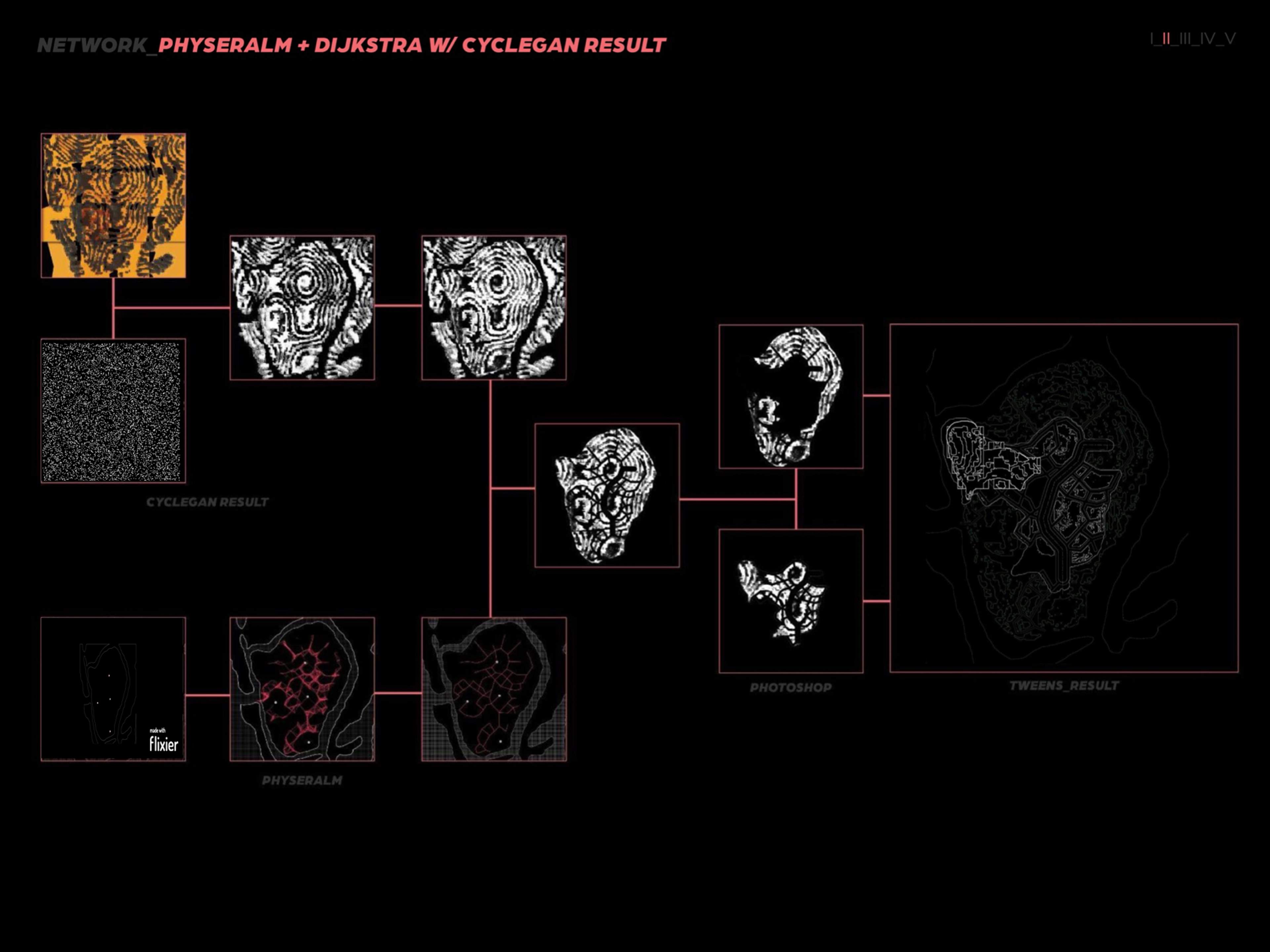
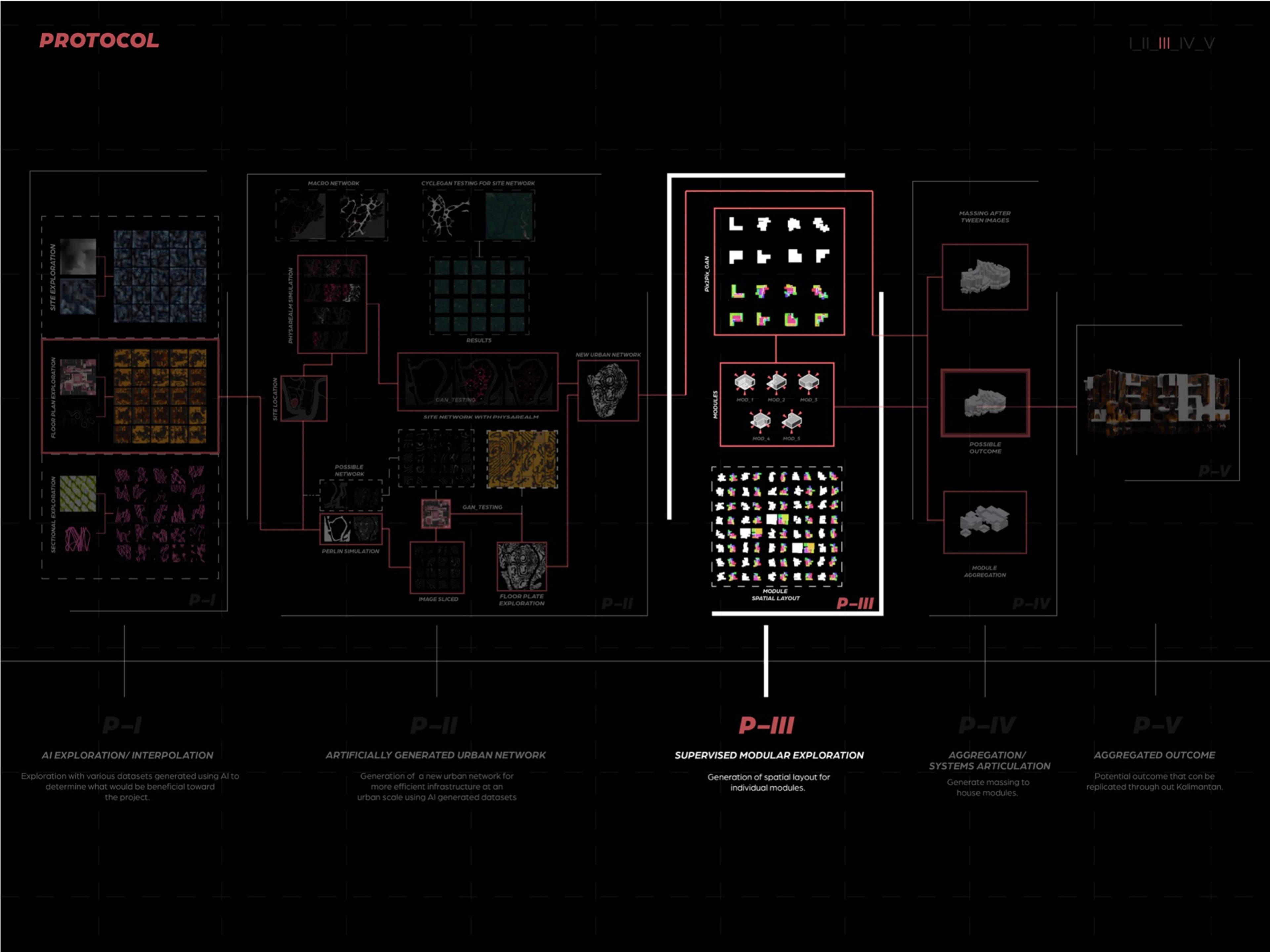
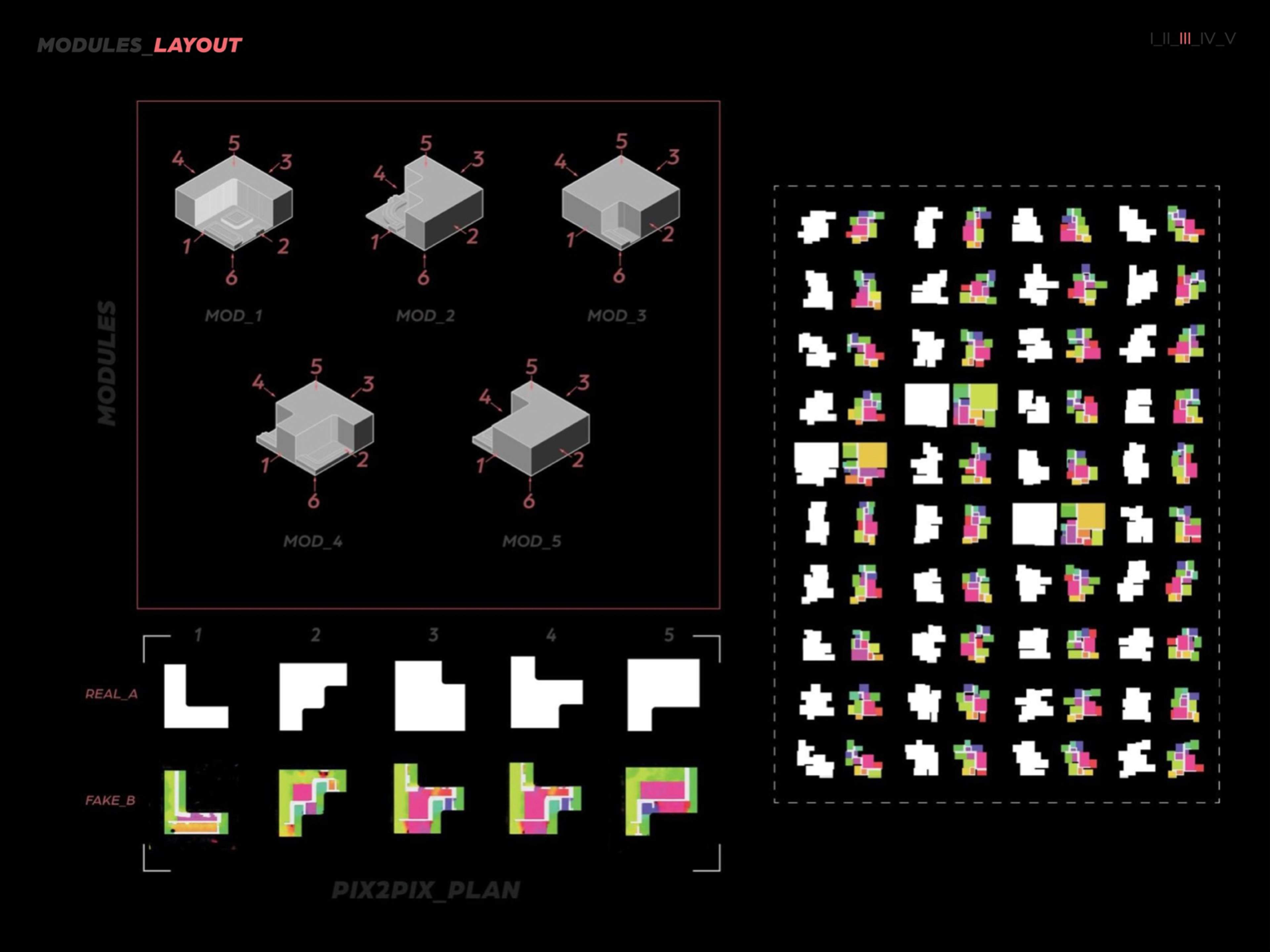
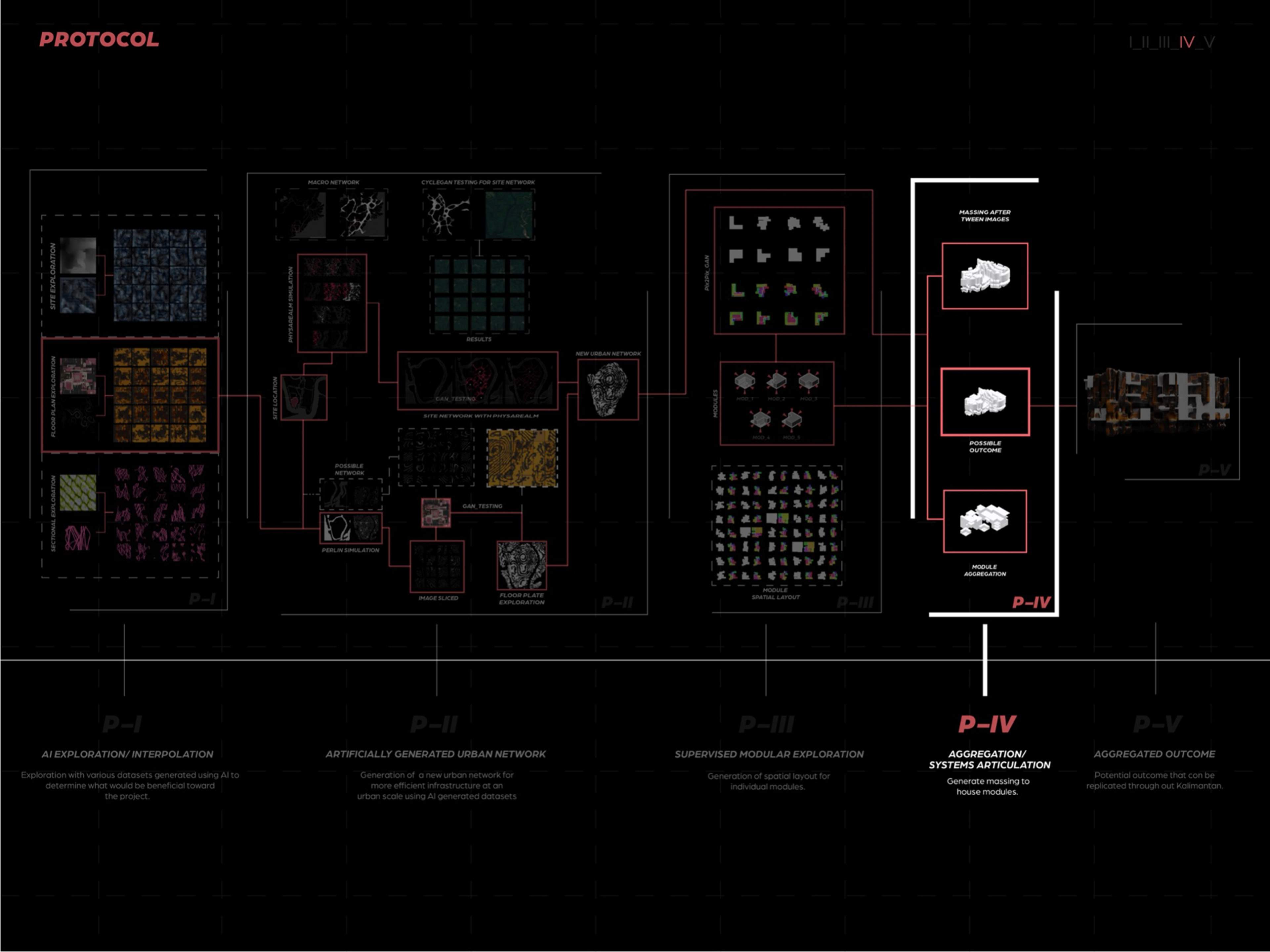
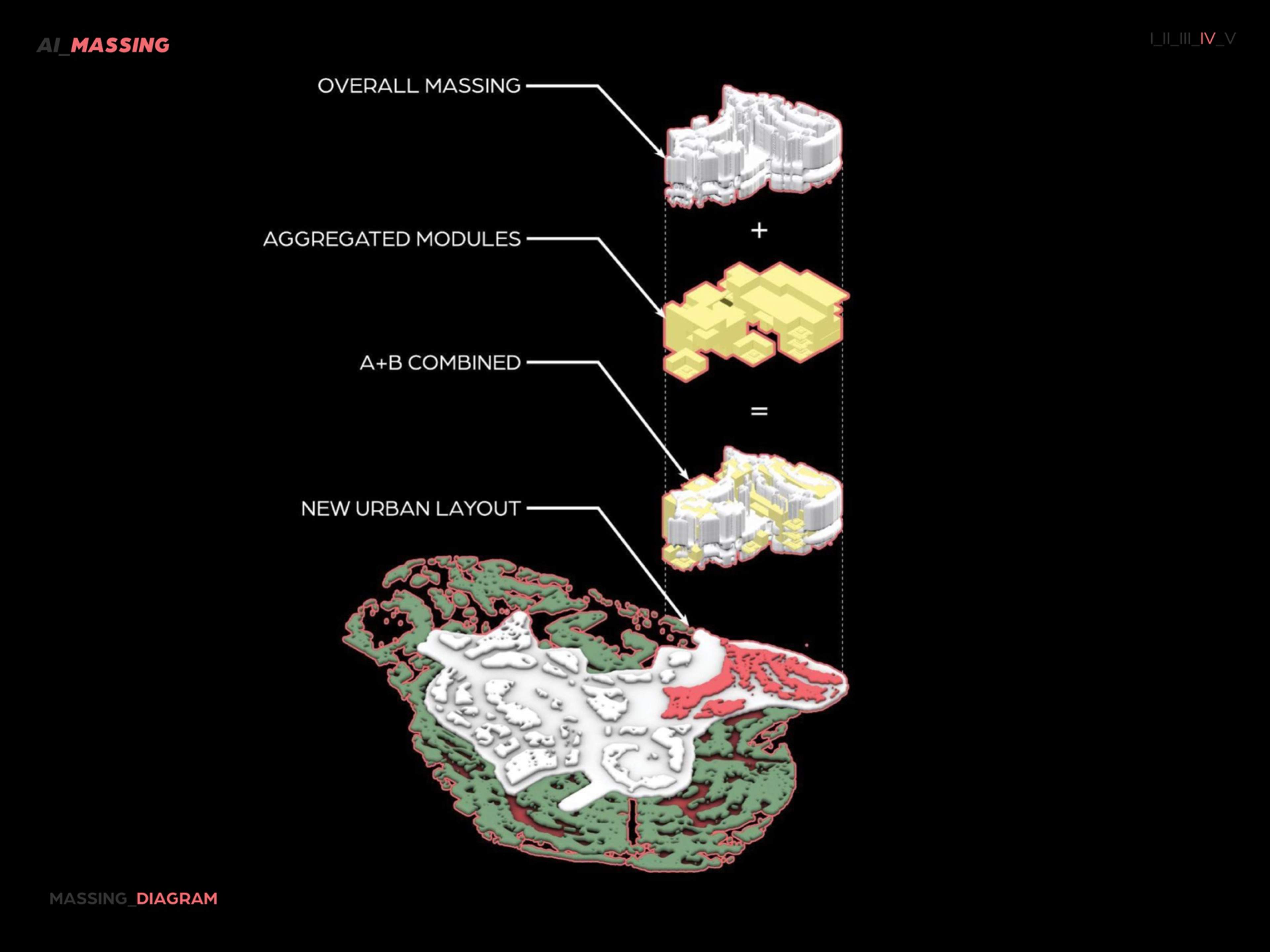
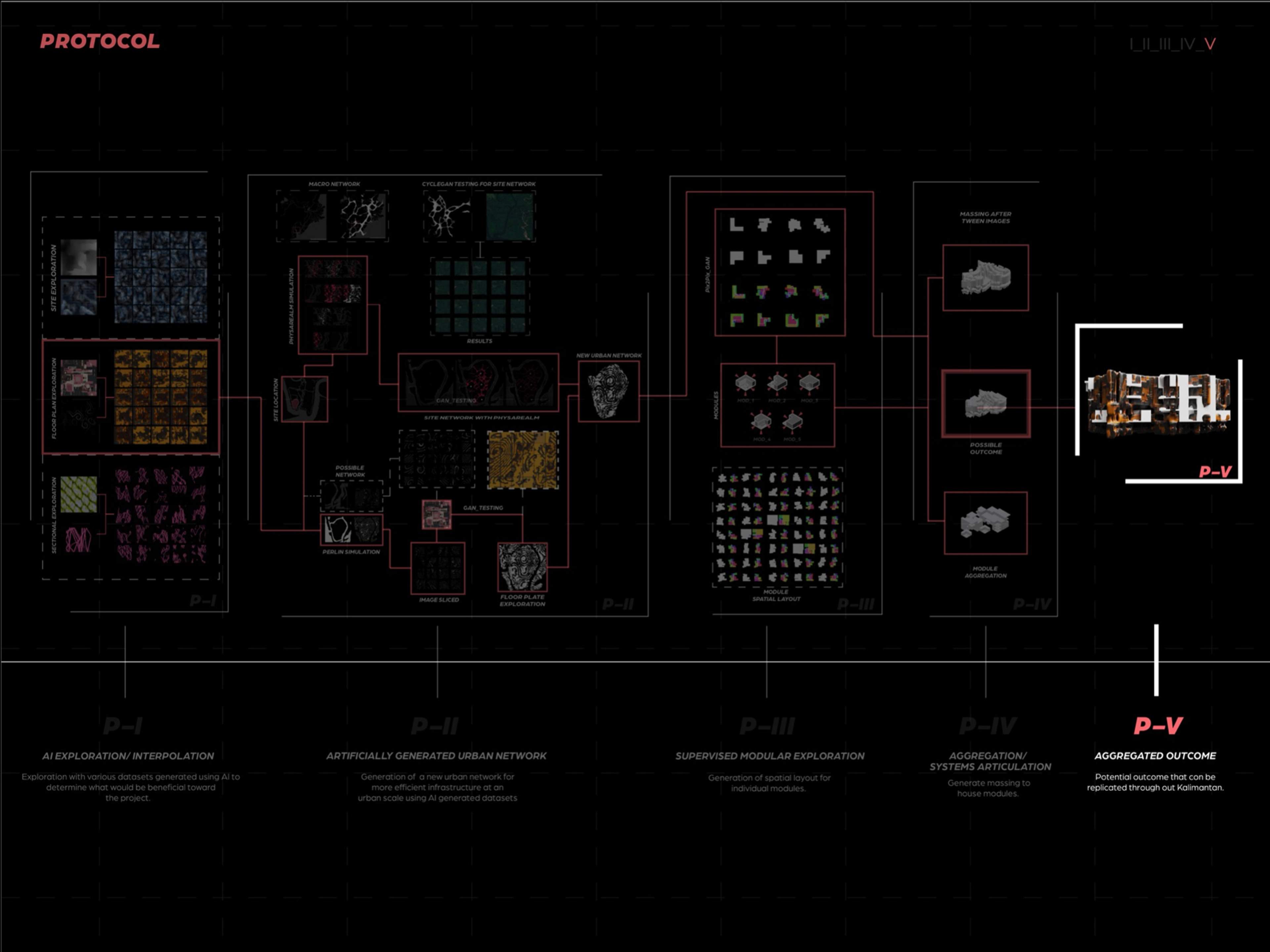
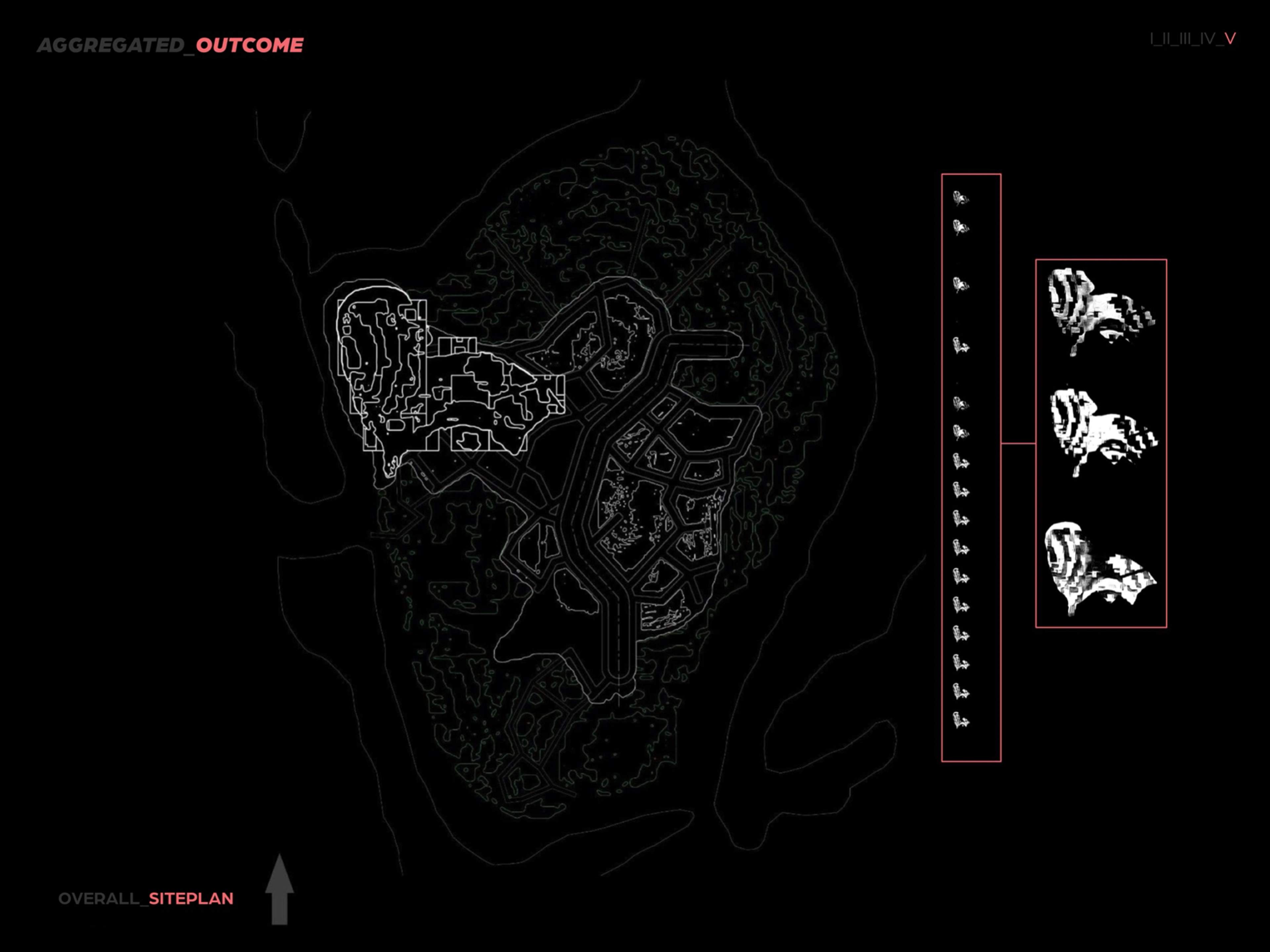
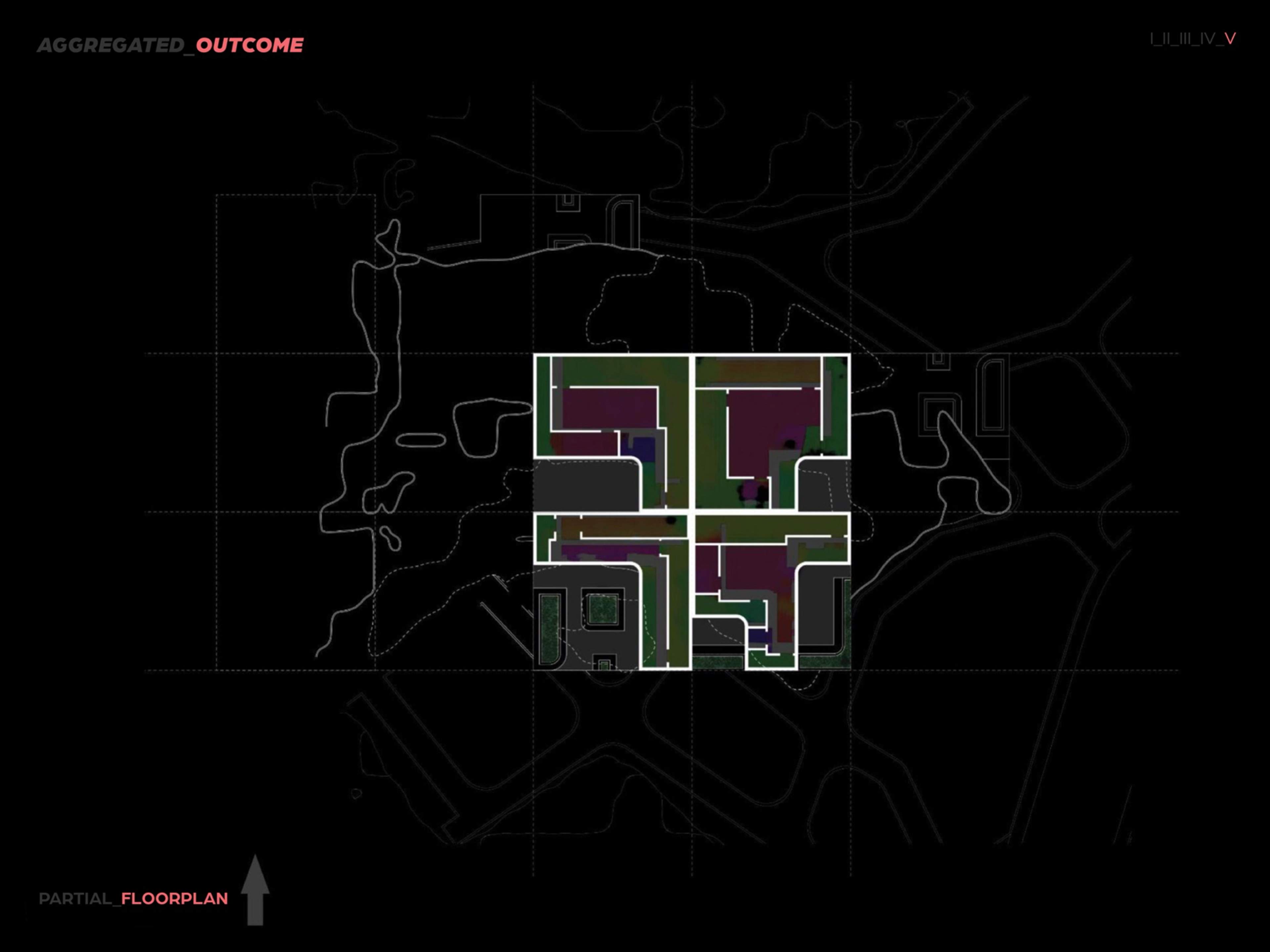
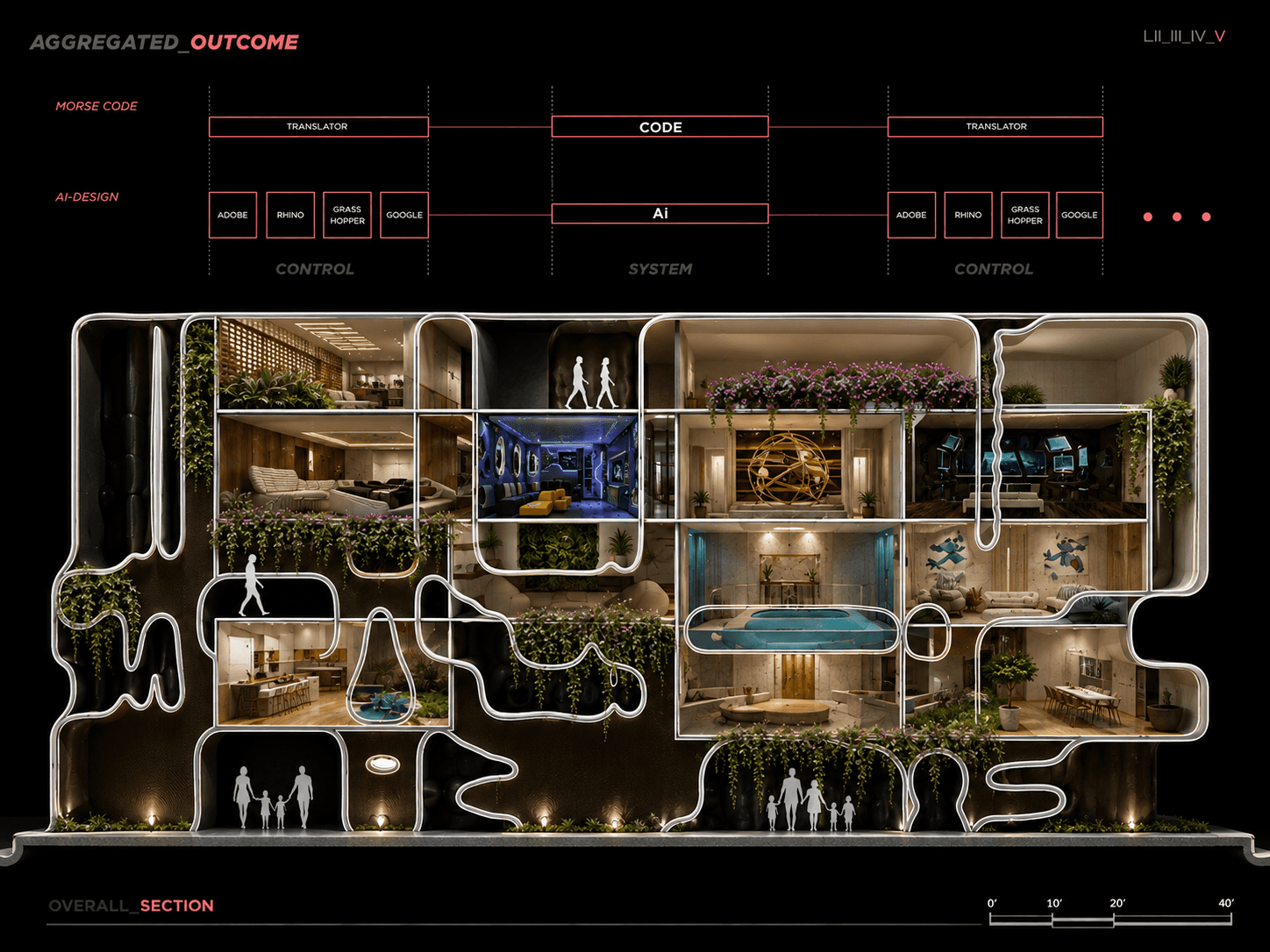
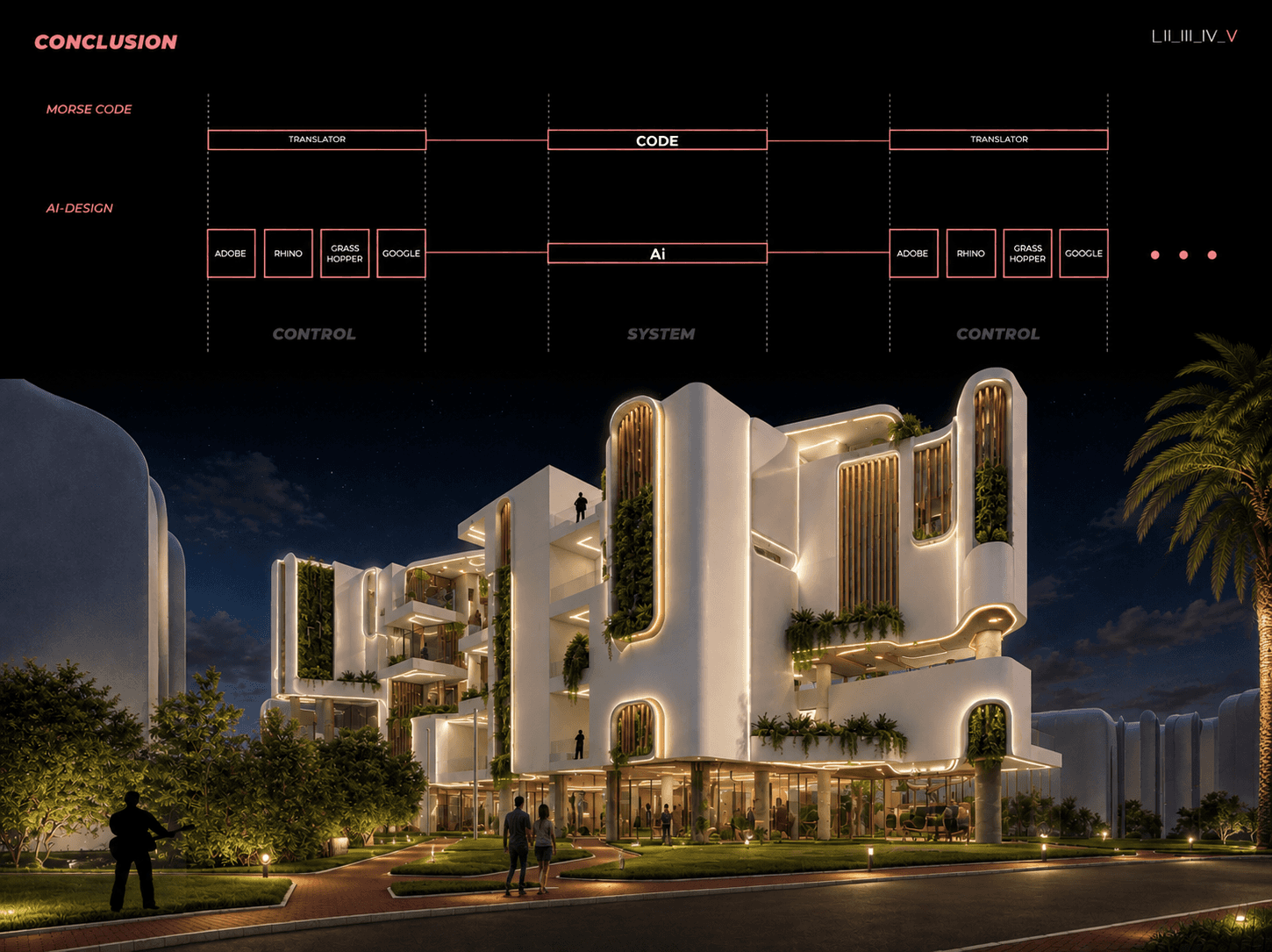
The intersection of artificial intelligence and architecture opens up limitless possibilities for the future of the built environment. This speculative project explores that very frontier, utilizing generative AI as a primary collaborative tool to design a resilient master plan for a community highly vulnerable to climate change. By shifting computational power into the early conceptual phases, the design process cross-referenced complex environmental data to autogenerate optimized architectural forms. The resulting concepts demonstrate how fully AI-influenced architecture can synthesize ecological urgency with visionary structural design.
Area of site | 10,000 ft2 |
Date | 2022 |
Location | Kalimantan, Indonesia |
Status of the project | Concept |
Tools used | Rhino 3D, Grasshopper, Culebra, Collab Notebook, Cyclegan, Adobe Creative Suite, Lumion |